
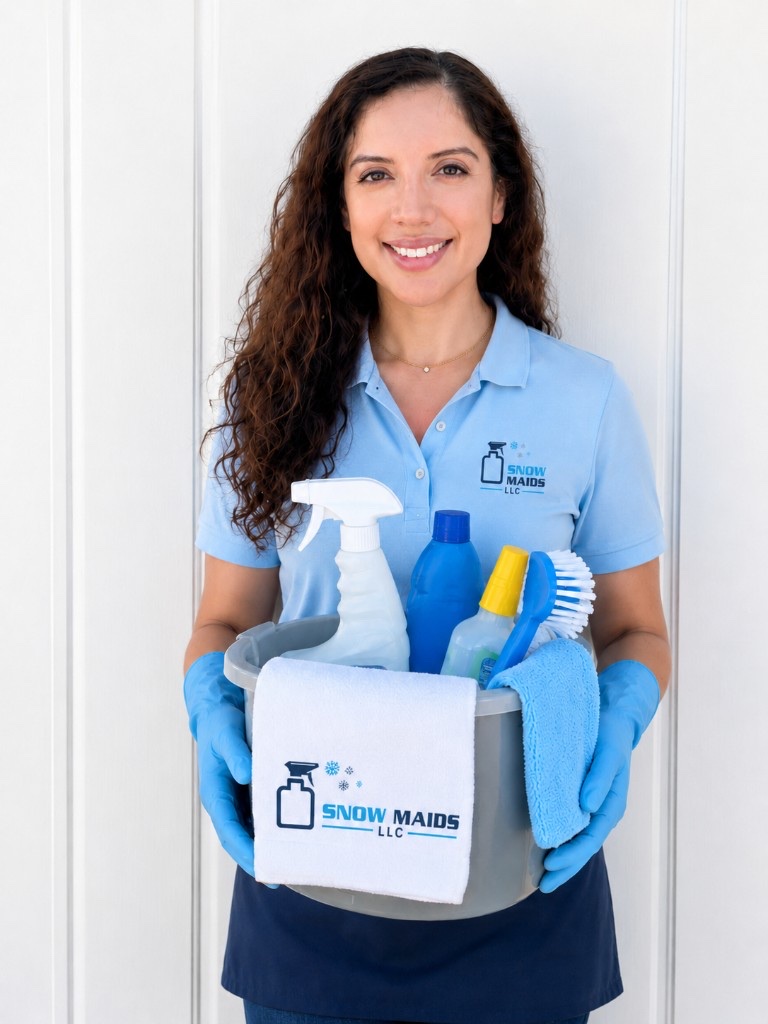
A–Z Guide to How Bonded and Insured Cleaners Protect Your Home

Why How Bonded and Insured Cleaners Protect Your Home Is Something Every Homeowner Should Understand

Understanding how bonded and insured cleaners protect your home can save you from unexpected financial and legal headaches. When you invite a cleaning crew into your home, you're trusting them with your belongings, your space, and your safety. But not every cleaning service carries the same protections — and the gap between a covered company and an unprotected one can mean the difference between a simple fix and a costly nightmare.

Here's a quick look at the core protections bonded and insured cleaners provide:

  • Liability insurance covers accidental damage to your home or belongings during a cleaning visit
  • Surety bond reimburses you if an employee steals from or defrauds you
  • Workers' compensation covers a cleaner's medical bills if they're injured in your home — so you aren't stuck with the bill
  • Professional accountability means there's a documented claims process if something goes wrong
  • Peace of mind that your home, valuables, and finances are protected before anyone walks through the door

Whether you're in Denver, Castle Rock, or anywhere in the Denver Metro Area, knowing what these terms actually mean — and how to verify them — is one of the smartest things you can do before booking a cleaning service.
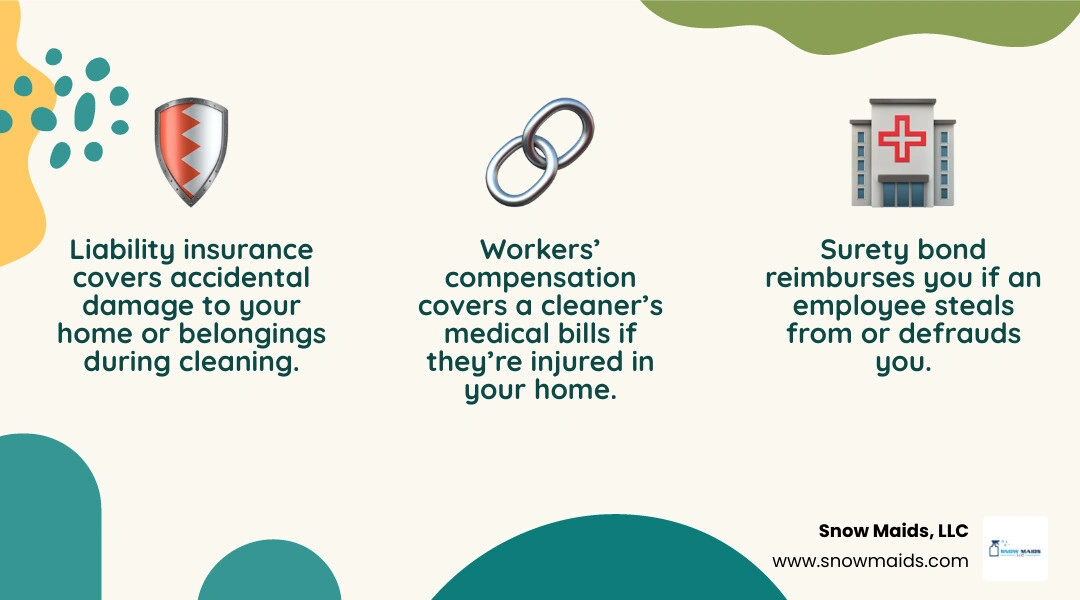
Infographic comparing bonding vs liability insurance vs workers compensation for home cleaning services infographic

Important how bonded and insured cleaners protect your home terms:

What Bonded and Insured Really Means for Homeowners

For homeowners, "bonded and insured" is not just marketing fluff. It refers to specific protections that can reduce your financial exposure if something goes wrong during a cleaning visit.

At a basic level:

  • Bonded usually refers to a surety bond that can help reimburse clients for certain dishonest acts, such as theft
  • Insured usually refers to general liability insurance for accidental damage
  • Workers' compensation is separate and covers injuries to the cleaner while working

That last part matters more than many people realize. A company can say it is insured, but if it only carries general liability and not workers' compensation, there may still be a gap in protection.

What does it mean for a cleaning company to be bonded and insured?

A bonded cleaning company has purchased a surety bond. In plain English, that bond is a financial backstop for specific losses, most often tied to employee dishonesty or failure to meet certain obligations. If property goes missing and the loss is confirmed, the bond may provide a path for reimbursement up to the bond amount.

An insured cleaning company carries business insurance policies that respond to accidents. The most common one homeowners care about is general liability insurance. If a cleaner uses the wrong product on a surface, knocks over decor, or causes water damage during service, that policy may help cover repairs or replacement.

If the company has employees, workers' compensation is also a big piece of the puzzle. In many cases, that is what protects you if a cleaner is hurt while working in your home.

The difference between general liability insurance, workers’ compensation, and bonding

These protections work together, but they are not interchangeable.

ProtectionWhat it usually coversWhat it usually does not cover
General liability insuranceAccidental property damage, some third-party injury claimsEmployee theft, worker injuries, every possible type of damage
Workers' compensationMedical bills and lost wages for employees injured on the jobDamage to your home, theft claims
Surety bondTheft or dishonest acts covered by the bond terms, sometimes service-related financial recourseAccidental breakage, most routine damage, unlimited reimbursement

A good rule of thumb is simple:

  • Insurance handles accidents
  • Workers' compensation handles worker injuries
  • Bonding helps with dishonest acts

Why “bonded and insured” does not mean every risk is covered

This phrase is helpful, but it is not magical. Coverage still depends on:

  • Policy limits
  • Exclusions
  • The type of incident
  • Whether the company actually has active, current coverage

For example, research shows the industry standard minimum for general liability is often $1 million per occurrence. That sounds large until you imagine serious damage to custom finishes, built-ins, or a luxury stone floor. A lower-limit policy may not be enough for high-value homes or specialty materials.

The same is true for bonds. A bond only pays up to its stated amount. If a company carries a $10,000 bond and the theft loss exceeds that, the bond is not an unlimited safety net.

How bonded and insured cleaners protect your home in real-life situations

cleaner protecting delicate surfaces in a home

The easiest way to understand how bonded and insured cleaners protect your home is to look at common real-world situations.

How bonded and insured cleaners protect your home from accidental damage

Accidents happen, even in careful hands. A vacuum can nick trim. The wrong cleaner can dull a natural stone surface. A bucket can tip and lead to water damage. A decorative item can slip during dusting.

This is where general liability insurance matters. If the cleaning company has proper coverage, there is a defined process for reporting the issue and seeking reimbursement or repair support.

Common examples include:

  • Broken lamps, frames, or decor
  • Etching on stone counters from the wrong product
  • Damage to hardwood, tile, or custom flooring
  • Water spills that affect cabinetry or baseboards
  • Scratches caused by moving light furniture or equipment

This is also one reason professional systems matter. Companies that use trained staff, documented procedures, and safer product selection reduce the odds of these problems in the first place. For a closer look at why professional methods matter, see how professional cleaners deliver a deeper clean than DIY.

How bonded and insured cleaners protect your home when theft or dishonesty happens

Bonding becomes important when the issue is not accidental damage, but dishonesty.

Say jewelry, cash, or electronics go missing after a cleaning visit. Without a bond, your options may be limited to filing a police report and trying to recover losses through court. That is stressful, slow, and far from ideal.

With a surety bond, there may be a structured claims path for proven theft or fraud. That does not mean every missing item automatically gets paid. Usually, there is an investigation, documentation, and a limit on how much the bond will cover. But it is still a layer of protection you do not have with an unbonded cleaner.

Important point: bonding generally does not cover accidental damage. If someone chips a vase by mistake, that is usually an insurance issue, not a bond issue.

Why homeowners can be financially responsible if a cleaner is injured without proper coverage

This is one of the biggest hidden risks in residential cleaning.

If a cleaner slips on a wet floor, strains their back lifting furniture, or is injured while working in your home, the question becomes: who pays?

If the company carries workers' compensation, that policy typically handles the employee's medical care and lost wages. If they do not, the homeowner may be exposed to claims depending on the facts and applicable law. At minimum, you could find yourself in an ugly dispute. At worst, you may face financial responsibility for medical bills or related damages.

Many homeowners assume their own homeowners insurance will simply step in. That is not always guaranteed, and even when a policy may respond, it can involve deductibles, exclusions, or claim complications. In other words: not the kind of surprise anyone wants on a Tuesday afternoon while just trying to have a clean kitchen.

What a bond covers that insurance does not

This is where confusion happens most often. People hear "bonded and insured" and think both terms mean the same thing. They do not.

What risks does a surety bond cover that insurance does not?

A surety bond is generally designed to protect the client from specific dishonest acts or failures covered by the bond terms.

That may include:

  • Employee theft
  • Fraud
  • Certain dishonest conduct
  • In some cases, failure tied to service obligations

For cleaning companies, the most relevant bond is often a janitorial or service bond. Its purpose is not to prevent theft, but to provide a financial recovery option if theft is proven.

Without that bond, your practical options may be much narrower.

What liability insurance protects that a bond usually will not

General liability insurance usually covers accidental loss, not dishonesty.

Examples include:

  • A cleaner cracks a sink fixture
  • A cleaning product damages a countertop finish
  • Equipment scratches flooring
  • A wet area contributes to a slip-and-fall claim by a third party

A bond generally does not cover those accidental events. So if a company only says it is bonded, that is not enough. You still want to know whether it carries general liability, and whether it has workers' compensation if it sends employees into your home.

Why bond limits and insurance limits both matter in high-value homes

Coverage amount matters just as much as having coverage at all.

Research commonly points to $1 million per occurrence as a standard minimum for general liability in this industry. That may be reasonable for many homes, but even that should be viewed in context. A single severe incident involving custom cabinetry, specialty surfaces, or luxury finishes can become expensive quickly.

Likewise, bond amounts matter. A bond with a lower limit may provide some protection, but only up to that cap.

If your home includes high-value materials or valuables, it is smart to ask not just "Are you bonded and insured?" but:

  • What types of coverage do you carry?
  • What are the limits?
  • Are there notable exclusions?
  • How are claims handled?

How to verify a cleaner’s bonding and insurance before booking

Verification is where careful homeowners separate real protection from a nice-sounding website phrase.

What homeowners should ask for before booking a cleaning service to ensure protection

Before scheduling service, we recommend asking for:

  • A certificate of insurance
  • Proof of bonding
  • Proof of workers' compensation if the company has employees
  • The business name listed exactly as it appears on paperwork
  • Effective dates for coverage
  • Coverage limits
  • A brief explanation of the claims process
  • Information about employee screening and background checks
  • A written service agreement or clear policies

Here is a simple must-ask checklist:

  1. Are you currently bonded and insured?
  2. Do you carry general liability insurance?
  3. Do you carry workers' compensation for employees?
  4. Can you provide current documentation?
  5. What happens if something is damaged?
  6. What happens if an item is reported missing?
  7. Are your cleaners background-checked?
  8. Who is my point of contact if there is a problem?

For more homeowner-focused hiring tips, see benefits of hiring a professional cleaning service.

How to confirm coverage is current and valid

Once you receive documentation, do not just glance at it and move on.

Check:

  • Policy effective dates
  • Expiration dates
  • The legal business name
  • Whether the document appears complete and professional
  • Whether the insurer or agency contact information is listed

If needed, call the insurer or issuing agency to confirm the policy is active. That is a normal step, not an awkward one. In fact, careful homeowners do this precisely because they understand how much is at stake.

Red flags that suggest a cleaning company may not be properly protected

Some warning signs are pretty clear once you know what to watch for.

Look out for:

  • Vague answers like "Don't worry, we're covered"
  • Refusal to provide documents
  • Expired or incomplete paperwork
  • No written policies or service agreement
  • Cash-only arrangements with little documentation
  • No explanation of how damage or theft claims are handled
  • No employee screening or background-check process
  • Prices that seem suspiciously low compared with professional service standards

Not every red flag proves there is a problem, but several together should make you pause.

Why professional cleaners charge more for better protection and peace of mind

Homeowners sometimes compare cleaning options only by the number at the bottom of the quote. We understand the temptation. But lower pricing can also reflect missing protections, less oversight, and fewer systems behind the service.

Why professional cleaning companies charge more, and how coverage relates to quality

Professional cleaning companies build more into their service than the cleaning itself.

That can include:

  • Insurance coverage
  • Bonding
  • Workers' compensation
  • Background checks
  • Safer products and processes
  • Administrative support
  • Clear policies and claims procedures
  • Better consistency and accountability

Those are not "extras." They are part of what protects your home and reduces your risk.

Peace of mind benefits that go beyond the cleaning itself

Protection is not only about worst-case scenarios. It also changes the entire experience of hiring help for your home.

You gain peace of mind from:

  • Knowing there is a documented process if something goes wrong
  • Feeling more comfortable providing home access
  • Having a clear business contact instead of chasing texts into the void
  • Working with a team that treats your home professionally
  • Building trust for recurring service over time

That kind of confidence is one reason many homeowners choose professional help over going it alone. If you are weighing the tradeoffs, read professional house maids vs DIY cleaning.

How protection fits into choosing the right cleaning service for your home

The right cleaning service is not just the one that can wipe counters the fastest. It is the one that combines skill, reliability, protection, and trust.

When choosing a cleaning partner, look at the full picture:

  • Proof of insurance and bonding
  • Workers' compensation where applicable
  • Reviews and professionalism
  • Communication quality
  • Clear expectations and policies
  • Fit for your schedule and household needs

Protection also connects to your everyday quality of life. A reliable cleaning service can save time, reduce stress, and support a healthier living environment. Learn more in how a professional cleaning saves you time and energy and how a clean home improves your health and wellbeing.

Frequently Asked Questions about how bonded and insured cleaners protect your home

Are all house cleaners bonded and insured?

No. Some independent cleaners or informal services may not carry any business coverage at all. Others may carry one type of protection but not all three. That is why it is important to ask directly and verify documentation.

Can I ask for proof of insurance and bonding?

Yes. Absolutely. This is standard and reasonable. Asking for proof does not make you difficult. It makes you informed.

Does bonding cover accidental damage to my home?

Usually no. Bonding typically focuses on theft, fraud, or other dishonest acts covered by the bond terms. Accidental damage is generally handled by general liability insurance, not by the bond.

Conclusion

Understanding how bonded and insured cleaners protect your home helps you hire smarter and feel safer. The right protections can shield you from accidental damage, give you recourse if dishonesty occurs, and reduce the risk of financial exposure if a cleaner is injured while working in your home.

For homeowners in Castle Rock and across the Denver Metro Area, this is not a small detail. It is part of choosing a service you can trust with your space, your belongings, and your peace of mind.

At Snow Maids, LLC, we believe professional cleaning should make life easier, not riskier. If you want to keep learning, explore our Ultimate Guide to Insured & Bonded Commercial Cleaners in Castle Rock. If you are ready to book tailored residential or commercial cleaning in Castle Rock or the Denver Metro Area, visit our cleaning services page.

Why How Bonded and Insured Cleaners Protect Your Home Is Something Every Homeowner Should Understand

Understanding how bonded and insured cleaners protect your home can save you from unexpected financial and legal headaches. When you invite a cleaning crew into your home, you're trusting them with your belongings, your space, and your safety. But not every cleaning service carries the same protections — and the gap between a covered company and an unprotected one can mean the difference between a simple fix and a costly nightmare.

Here's a quick look at the core protections bonded and insured cleaners provide:

  • Liability insurance covers accidental damage to your home or belongings during a cleaning visit
  • Surety bond reimburses you if an employee steals from or defrauds you
  • Workers' compensation covers a cleaner's medical bills if they're injured in your home — so you aren't stuck with the bill
  • Professional accountability means there's a documented claims process if something goes wrong
  • Peace of mind that your home, valuables, and finances are protected before anyone walks through the door

Whether you're in Denver, Castle Rock, or anywhere in the Denver Metro Area, knowing what these terms actually mean — and how to verify them — is one of the smartest things you can do before booking a cleaning service.

Infographic comparing bonding vs liability insurance vs workers compensation for home cleaning services infographic

Important how bonded and insured cleaners protect your home terms:

What Bonded and Insured Really Means for Homeowners

For homeowners, "bonded and insured" is not just marketing fluff. It refers to specific protections that can reduce your financial exposure if something goes wrong during a cleaning visit.

At a basic level:

  • Bonded usually refers to a surety bond that can help reimburse clients for certain dishonest acts, such as theft
  • Insured usually refers to general liability insurance for accidental damage
  • Workers' compensation is separate and covers injuries to the cleaner while working

That last part matters more than many people realize. A company can say it is insured, but if it only carries general liability and not workers' compensation, there may still be a gap in protection.

What does it mean for a cleaning company to be bonded and insured?

A bonded cleaning company has purchased a surety bond. In plain English, that bond is a financial backstop for specific losses, most often tied to employee dishonesty or failure to meet certain obligations. If property goes missing and the loss is confirmed, the bond may provide a path for reimbursement up to the bond amount.

An insured cleaning company carries business insurance policies that respond to accidents. The most common one homeowners care about is general liability insurance. If a cleaner uses the wrong product on a surface, knocks over decor, or causes water damage during service, that policy may help cover repairs or replacement.

If the company has employees, workers' compensation is also a big piece of the puzzle. In many cases, that is what protects you if a cleaner is hurt while working in your home.

The difference between general liability insurance, workers’ compensation, and bonding

These protections work together, but they are not interchangeable.

ProtectionWhat it usually coversWhat it usually does not cover
General liability insuranceAccidental property damage, some third-party injury claimsEmployee theft, worker injuries, every possible type of damage
Workers' compensationMedical bills and lost wages for employees injured on the jobDamage to your home, theft claims
Surety bondTheft or dishonest acts covered by the bond terms, sometimes service-related financial recourseAccidental breakage, most routine damage, unlimited reimbursement

A good rule of thumb is simple:

  • Insurance handles accidents
  • Workers' compensation handles worker injuries
  • Bonding helps with dishonest acts

Why “bonded and insured” does not mean every risk is covered

This phrase is helpful, but it is not magical. Coverage still depends on:

  • Policy limits
  • Exclusions
  • The type of incident
  • Whether the company actually has active, current coverage

For example, research shows the industry standard minimum for general liability is often $1 million per occurrence. That sounds large until you imagine serious damage to custom finishes, built-ins, or a luxury stone floor. A lower-limit policy may not be enough for high-value homes or specialty materials.

The same is true for bonds. A bond only pays up to its stated amount. If a company carries a $10,000 bond and the theft loss exceeds that, the bond is not an unlimited safety net.

How bonded and insured cleaners protect your home in real-life situations

cleaner protecting delicate surfaces in a home

The easiest way to understand how bonded and insured cleaners protect your home is to look at common real-world situations.

How bonded and insured cleaners protect your home from accidental damage

Accidents happen, even in careful hands. A vacuum can nick trim. The wrong cleaner can dull a natural stone surface. A bucket can tip and lead to water damage. A decorative item can slip during dusting.

This is where general liability insurance matters. If the cleaning company has proper coverage, there is a defined process for reporting the issue and seeking reimbursement or repair support.

Common examples include:

  • Broken lamps, frames, or decor
  • Etching on stone counters from the wrong product
  • Damage to hardwood, tile, or custom flooring
  • Water spills that affect cabinetry or baseboards
  • Scratches caused by moving light furniture or equipment

This is also one reason professional systems matter. Companies that use trained staff, documented procedures, and safer product selection reduce the odds of these problems in the first place. For a closer look at why professional methods matter, see how professional cleaners deliver a deeper clean than DIY.

How bonded and insured cleaners protect your home when theft or dishonesty happens

Bonding becomes important when the issue is not accidental damage, but dishonesty.

Say jewelry, cash, or electronics go missing after a cleaning visit. Without a bond, your options may be limited to filing a police report and trying to recover losses through court. That is stressful, slow, and far from ideal.

With a surety bond, there may be a structured claims path for proven theft or fraud. That does not mean every missing item automatically gets paid. Usually, there is an investigation, documentation, and a limit on how much the bond will cover. But it is still a layer of protection you do not have with an unbonded cleaner.

Important point: bonding generally does not cover accidental damage. If someone chips a vase by mistake, that is usually an insurance issue, not a bond issue.

Why homeowners can be financially responsible if a cleaner is injured without proper coverage

This is one of the biggest hidden risks in residential cleaning.

If a cleaner slips on a wet floor, strains their back lifting furniture, or is injured while working in your home, the question becomes: who pays?

If the company carries workers' compensation, that policy typically handles the employee's medical care and lost wages. If they do not, the homeowner may be exposed to claims depending on the facts and applicable law. At minimum, you could find yourself in an ugly dispute. At worst, you may face financial responsibility for medical bills or related damages.

Many homeowners assume their own homeowners insurance will simply step in. That is not always guaranteed, and even when a policy may respond, it can involve deductibles, exclusions, or claim complications. In other words: not the kind of surprise anyone wants on a Tuesday afternoon while just trying to have a clean kitchen.

What a bond covers that insurance does not

This is where confusion happens most often. People hear "bonded and insured" and think both terms mean the same thing. They do not.

What risks does a surety bond cover that insurance does not?

A surety bond is generally designed to protect the client from specific dishonest acts or failures covered by the bond terms.

That may include:

  • Employee theft
  • Fraud
  • Certain dishonest conduct
  • In some cases, failure tied to service obligations

For cleaning companies, the most relevant bond is often a janitorial or service bond. Its purpose is not to prevent theft, but to provide a financial recovery option if theft is proven.

Without that bond, your practical options may be much narrower.

What liability insurance protects that a bond usually will not

General liability insurance usually covers accidental loss, not dishonesty.

Examples include:

  • A cleaner cracks a sink fixture
  • A cleaning product damages a countertop finish
  • Equipment scratches flooring
  • A wet area contributes to a slip-and-fall claim by a third party

A bond generally does not cover those accidental events. So if a company only says it is bonded, that is not enough. You still want to know whether it carries general liability, and whether it has workers' compensation if it sends employees into your home.

Why bond limits and insurance limits both matter in high-value homes

Coverage amount matters just as much as having coverage at all.

Research commonly points to $1 million per occurrence as a standard minimum for general liability in this industry. That may be reasonable for many homes, but even that should be viewed in context. A single severe incident involving custom cabinetry, specialty surfaces, or luxury finishes can become expensive quickly.

Likewise, bond amounts matter. A bond with a lower limit may provide some protection, but only up to that cap.

If your home includes high-value materials or valuables, it is smart to ask not just "Are you bonded and insured?" but:

  • What types of coverage do you carry?
  • What are the limits?
  • Are there notable exclusions?
  • How are claims handled?

How to verify a cleaner’s bonding and insurance before booking

Verification is where careful homeowners separate real protection from a nice-sounding website phrase.

What homeowners should ask for before booking a cleaning service to ensure protection

Before scheduling service, we recommend asking for:

  • A certificate of insurance
  • Proof of bonding
  • Proof of workers' compensation if the company has employees
  • The business name listed exactly as it appears on paperwork
  • Effective dates for coverage
  • Coverage limits
  • A brief explanation of the claims process
  • Information about employee screening and background checks
  • A written service agreement or clear policies

Here is a simple must-ask checklist:

  1. Are you currently bonded and insured?
  2. Do you carry general liability insurance?
  3. Do you carry workers' compensation for employees?
  4. Can you provide current documentation?
  5. What happens if something is damaged?
  6. What happens if an item is reported missing?
  7. Are your cleaners background-checked?
  8. Who is my point of contact if there is a problem?

For more homeowner-focused hiring tips, see benefits of hiring a professional cleaning service.

How to confirm coverage is current and valid

Once you receive documentation, do not just glance at it and move on.

Check:

  • Policy effective dates
  • Expiration dates
  • The legal business name
  • Whether the document appears complete and professional
  • Whether the insurer or agency contact information is listed

If needed, call the insurer or issuing agency to confirm the policy is active. That is a normal step, not an awkward one. In fact, careful homeowners do this precisely because they understand how much is at stake.

Red flags that suggest a cleaning company may not be properly protected

Some warning signs are pretty clear once you know what to watch for.

Look out for:

  • Vague answers like "Don't worry, we're covered"
  • Refusal to provide documents
  • Expired or incomplete paperwork
  • No written policies or service agreement
  • Cash-only arrangements with little documentation
  • No explanation of how damage or theft claims are handled
  • No employee screening or background-check process
  • Prices that seem suspiciously low compared with professional service standards

Not every red flag proves there is a problem, but several together should make you pause.

Why professional cleaners charge more for better protection and peace of mind

Homeowners sometimes compare cleaning options only by the number at the bottom of the quote. We understand the temptation. But lower pricing can also reflect missing protections, less oversight, and fewer systems behind the service.

Why professional cleaning companies charge more, and how coverage relates to quality

Professional cleaning companies build more into their service than the cleaning itself.

That can include:

  • Insurance coverage
  • Bonding
  • Workers' compensation
  • Background checks
  • Safer products and processes
  • Administrative support
  • Clear policies and claims procedures
  • Better consistency and accountability

Those are not "extras." They are part of what protects your home and reduces your risk.

Peace of mind benefits that go beyond the cleaning itself

Protection is not only about worst-case scenarios. It also changes the entire experience of hiring help for your home.

You gain peace of mind from:

  • Knowing there is a documented process if something goes wrong
  • Feeling more comfortable providing home access
  • Having a clear business contact instead of chasing texts into the void
  • Working with a team that treats your home professionally
  • Building trust for recurring service over time

That kind of confidence is one reason many homeowners choose professional help over going it alone. If you are weighing the tradeoffs, read professional house maids vs DIY cleaning.

How protection fits into choosing the right cleaning service for your home

The right cleaning service is not just the one that can wipe counters the fastest. It is the one that combines skill, reliability, protection, and trust.

When choosing a cleaning partner, look at the full picture:

  • Proof of insurance and bonding
  • Workers' compensation where applicable
  • Reviews and professionalism
  • Communication quality
  • Clear expectations and policies
  • Fit for your schedule and household needs

Protection also connects to your everyday quality of life. A reliable cleaning service can save time, reduce stress, and support a healthier living environment. Learn more in how a professional cleaning saves you time and energy and how a clean home improves your health and wellbeing.

Frequently Asked Questions about how bonded and insured cleaners protect your home

Are all house cleaners bonded and insured?

No. Some independent cleaners or informal services may not carry any business coverage at all. Others may carry one type of protection but not all three. That is why it is important to ask directly and verify documentation.

Can I ask for proof of insurance and bonding?

Yes. Absolutely. This is standard and reasonable. Asking for proof does not make you difficult. It makes you informed.

Does bonding cover accidental damage to my home?

Usually no. Bonding typically focuses on theft, fraud, or other dishonest acts covered by the bond terms. Accidental damage is generally handled by general liability insurance, not by the bond.

Conclusion

Understanding how bonded and insured cleaners protect your home helps you hire smarter and feel safer. The right protections can shield you from accidental damage, give you recourse if dishonesty occurs, and reduce the risk of financial exposure if a cleaner is injured while working in your home.

For homeowners in Castle Rock and across the Denver Metro Area, this is not a small detail. It is part of choosing a service you can trust with your space, your belongings, and your peace of mind.

At Snow Maids, LLC, we believe professional cleaning should make life easier, not riskier. If you want to keep learning, explore our Ultimate Guide to Insured & Bonded Commercial Cleaners in Castle Rock. If you are ready to book tailored residential or commercial cleaning in Castle Rock or the Denver Metro Area, visit our cleaning services page.

Why How Bonded and Insured Cleaners Protect Your Home Is Something Every Homeowner Should Understand

Understanding how bonded and insured cleaners protect your home can save you from unexpected financial and legal headaches. When you invite a cleaning crew into your home, you're trusting them with your belongings, your space, and your safety. But not every cleaning service carries the same protections — and the gap between a covered company and an unprotected one can mean the difference between a simple fix and a costly nightmare.

Here's a quick look at the core protections bonded and insured cleaners provide:

  • Liability insurance covers accidental damage to your home or belongings during a cleaning visit
  • Surety bond reimburses you if an employee steals from or defrauds you
  • Workers' compensation covers a cleaner's medical bills if they're injured in your home — so you aren't stuck with the bill
  • Professional accountability means there's a documented claims process if something goes wrong
  • Peace of mind that your home, valuables, and finances are protected before anyone walks through the door

Whether you're in Denver, Castle Rock, or anywhere in the Denver Metro Area, knowing what these terms actually mean — and how to verify them — is one of the smartest things you can do before booking a cleaning service.

Infographic comparing bonding vs liability insurance vs workers compensation for home cleaning services infographic

Important how bonded and insured cleaners protect your home terms:

What Bonded and Insured Really Means for Homeowners

For homeowners, "bonded and insured" is not just marketing fluff. It refers to specific protections that can reduce your financial exposure if something goes wrong during a cleaning visit.

At a basic level:

  • Bonded usually refers to a surety bond that can help reimburse clients for certain dishonest acts, such as theft
  • Insured usually refers to general liability insurance for accidental damage
  • Workers' compensation is separate and covers injuries to the cleaner while working

That last part matters more than many people realize. A company can say it is insured, but if it only carries general liability and not workers' compensation, there may still be a gap in protection.

What does it mean for a cleaning company to be bonded and insured?

A bonded cleaning company has purchased a surety bond. In plain English, that bond is a financial backstop for specific losses, most often tied to employee dishonesty or failure to meet certain obligations. If property goes missing and the loss is confirmed, the bond may provide a path for reimbursement up to the bond amount.

An insured cleaning company carries business insurance policies that respond to accidents. The most common one homeowners care about is general liability insurance. If a cleaner uses the wrong product on a surface, knocks over decor, or causes water damage during service, that policy may help cover repairs or replacement.

If the company has employees, workers' compensation is also a big piece of the puzzle. In many cases, that is what protects you if a cleaner is hurt while working in your home.

The difference between general liability insurance, workers’ compensation, and bonding

These protections work together, but they are not interchangeable.

ProtectionWhat it usually coversWhat it usually does not cover
General liability insuranceAccidental property damage, some third-party injury claimsEmployee theft, worker injuries, every possible type of damage
Workers' compensationMedical bills and lost wages for employees injured on the jobDamage to your home, theft claims
Surety bondTheft or dishonest acts covered by the bond terms, sometimes service-related financial recourseAccidental breakage, most routine damage, unlimited reimbursement

A good rule of thumb is simple:

  • Insurance handles accidents
  • Workers' compensation handles worker injuries
  • Bonding helps with dishonest acts

Why “bonded and insured” does not mean every risk is covered

This phrase is helpful, but it is not magical. Coverage still depends on:

  • Policy limits
  • Exclusions
  • The type of incident
  • Whether the company actually has active, current coverage

For example, research shows the industry standard minimum for general liability is often $1 million per occurrence. That sounds large until you imagine serious damage to custom finishes, built-ins, or a luxury stone floor. A lower-limit policy may not be enough for high-value homes or specialty materials.

The same is true for bonds. A bond only pays up to its stated amount. If a company carries a $10,000 bond and the theft loss exceeds that, the bond is not an unlimited safety net.

How bonded and insured cleaners protect your home in real-life situations

cleaner protecting delicate surfaces in a home

The easiest way to understand how bonded and insured cleaners protect your home is to look at common real-world situations.

How bonded and insured cleaners protect your home from accidental damage

Accidents happen, even in careful hands. A vacuum can nick trim. The wrong cleaner can dull a natural stone surface. A bucket can tip and lead to water damage. A decorative item can slip during dusting.

This is where general liability insurance matters. If the cleaning company has proper coverage, there is a defined process for reporting the issue and seeking reimbursement or repair support.

Common examples include:

  • Broken lamps, frames, or decor
  • Etching on stone counters from the wrong product
  • Damage to hardwood, tile, or custom flooring
  • Water spills that affect cabinetry or baseboards
  • Scratches caused by moving light furniture or equipment

This is also one reason professional systems matter. Companies that use trained staff, documented procedures, and safer product selection reduce the odds of these problems in the first place. For a closer look at why professional methods matter, see how professional cleaners deliver a deeper clean than DIY.

How bonded and insured cleaners protect your home when theft or dishonesty happens

Bonding becomes important when the issue is not accidental damage, but dishonesty.

Say jewelry, cash, or electronics go missing after a cleaning visit. Without a bond, your options may be limited to filing a police report and trying to recover losses through court. That is stressful, slow, and far from ideal.

With a surety bond, there may be a structured claims path for proven theft or fraud. That does not mean every missing item automatically gets paid. Usually, there is an investigation, documentation, and a limit on how much the bond will cover. But it is still a layer of protection you do not have with an unbonded cleaner.

Important point: bonding generally does not cover accidental damage. If someone chips a vase by mistake, that is usually an insurance issue, not a bond issue.

Why homeowners can be financially responsible if a cleaner is injured without proper coverage

This is one of the biggest hidden risks in residential cleaning.

If a cleaner slips on a wet floor, strains their back lifting furniture, or is injured while working in your home, the question becomes: who pays?

If the company carries workers' compensation, that policy typically handles the employee's medical care and lost wages. If they do not, the homeowner may be exposed to claims depending on the facts and applicable law. At minimum, you could find yourself in an ugly dispute. At worst, you may face financial responsibility for medical bills or related damages.

Many homeowners assume their own homeowners insurance will simply step in. That is not always guaranteed, and even when a policy may respond, it can involve deductibles, exclusions, or claim complications. In other words: not the kind of surprise anyone wants on a Tuesday afternoon while just trying to have a clean kitchen.

What a bond covers that insurance does not

This is where confusion happens most often. People hear "bonded and insured" and think both terms mean the same thing. They do not.

What risks does a surety bond cover that insurance does not?

A surety bond is generally designed to protect the client from specific dishonest acts or failures covered by the bond terms.

That may include:

  • Employee theft
  • Fraud
  • Certain dishonest conduct
  • In some cases, failure tied to service obligations

For cleaning companies, the most relevant bond is often a janitorial or service bond. Its purpose is not to prevent theft, but to provide a financial recovery option if theft is proven.

Without that bond, your practical options may be much narrower.

What liability insurance protects that a bond usually will not

General liability insurance usually covers accidental loss, not dishonesty.

Examples include:

  • A cleaner cracks a sink fixture
  • A cleaning product damages a countertop finish
  • Equipment scratches flooring
  • A wet area contributes to a slip-and-fall claim by a third party

A bond generally does not cover those accidental events. So if a company only says it is bonded, that is not enough. You still want to know whether it carries general liability, and whether it has workers' compensation if it sends employees into your home.

Why bond limits and insurance limits both matter in high-value homes

Coverage amount matters just as much as having coverage at all.

Research commonly points to $1 million per occurrence as a standard minimum for general liability in this industry. That may be reasonable for many homes, but even that should be viewed in context. A single severe incident involving custom cabinetry, specialty surfaces, or luxury finishes can become expensive quickly.

Likewise, bond amounts matter. A bond with a lower limit may provide some protection, but only up to that cap.

If your home includes high-value materials or valuables, it is smart to ask not just "Are you bonded and insured?" but:

  • What types of coverage do you carry?
  • What are the limits?
  • Are there notable exclusions?
  • How are claims handled?

How to verify a cleaner’s bonding and insurance before booking

Verification is where careful homeowners separate real protection from a nice-sounding website phrase.

What homeowners should ask for before booking a cleaning service to ensure protection

Before scheduling service, we recommend asking for:

  • A certificate of insurance
  • Proof of bonding
  • Proof of workers' compensation if the company has employees
  • The business name listed exactly as it appears on paperwork
  • Effective dates for coverage
  • Coverage limits
  • A brief explanation of the claims process
  • Information about employee screening and background checks
  • A written service agreement or clear policies

Here is a simple must-ask checklist:

  1. Are you currently bonded and insured?
  2. Do you carry general liability insurance?
  3. Do you carry workers' compensation for employees?
  4. Can you provide current documentation?
  5. What happens if something is damaged?
  6. What happens if an item is reported missing?
  7. Are your cleaners background-checked?
  8. Who is my point of contact if there is a problem?

For more homeowner-focused hiring tips, see benefits of hiring a professional cleaning service.

How to confirm coverage is current and valid

Once you receive documentation, do not just glance at it and move on.

Check:

  • Policy effective dates
  • Expiration dates
  • The legal business name
  • Whether the document appears complete and professional
  • Whether the insurer or agency contact information is listed

If needed, call the insurer or issuing agency to confirm the policy is active. That is a normal step, not an awkward one. In fact, careful homeowners do this precisely because they understand how much is at stake.

Red flags that suggest a cleaning company may not be properly protected

Some warning signs are pretty clear once you know what to watch for.

Look out for:

  • Vague answers like "Don't worry, we're covered"
  • Refusal to provide documents
  • Expired or incomplete paperwork
  • No written policies or service agreement
  • Cash-only arrangements with little documentation
  • No explanation of how damage or theft claims are handled
  • No employee screening or background-check process
  • Prices that seem suspiciously low compared with professional service standards

Not every red flag proves there is a problem, but several together should make you pause.

Why professional cleaners charge more for better protection and peace of mind

Homeowners sometimes compare cleaning options only by the number at the bottom of the quote. We understand the temptation. But lower pricing can also reflect missing protections, less oversight, and fewer systems behind the service.

Why professional cleaning companies charge more, and how coverage relates to quality

Professional cleaning companies build more into their service than the cleaning itself.

That can include:

  • Insurance coverage
  • Bonding
  • Workers' compensation
  • Background checks
  • Safer products and processes
  • Administrative support
  • Clear policies and claims procedures
  • Better consistency and accountability

Those are not "extras." They are part of what protects your home and reduces your risk.

Peace of mind benefits that go beyond the cleaning itself

Protection is not only about worst-case scenarios. It also changes the entire experience of hiring help for your home.

You gain peace of mind from:

  • Knowing there is a documented process if something goes wrong
  • Feeling more comfortable providing home access
  • Having a clear business contact instead of chasing texts into the void
  • Working with a team that treats your home professionally
  • Building trust for recurring service over time

That kind of confidence is one reason many homeowners choose professional help over going it alone. If you are weighing the tradeoffs, read professional house maids vs DIY cleaning.

How protection fits into choosing the right cleaning service for your home

The right cleaning service is not just the one that can wipe counters the fastest. It is the one that combines skill, reliability, protection, and trust.

When choosing a cleaning partner, look at the full picture:

  • Proof of insurance and bonding
  • Workers' compensation where applicable
  • Reviews and professionalism
  • Communication quality
  • Clear expectations and policies
  • Fit for your schedule and household needs

Protection also connects to your everyday quality of life. A reliable cleaning service can save time, reduce stress, and support a healthier living environment. Learn more in how a professional cleaning saves you time and energy and how a clean home improves your health and wellbeing.

Frequently Asked Questions about how bonded and insured cleaners protect your home

Are all house cleaners bonded and insured?

No. Some independent cleaners or informal services may not carry any business coverage at all. Others may carry one type of protection but not all three. That is why it is important to ask directly and verify documentation.

Can I ask for proof of insurance and bonding?

Yes. Absolutely. This is standard and reasonable. Asking for proof does not make you difficult. It makes you informed.

Does bonding cover accidental damage to my home?

Usually no. Bonding typically focuses on theft, fraud, or other dishonest acts covered by the bond terms. Accidental damage is generally handled by general liability insurance, not by the bond.

Conclusion

Understanding how bonded and insured cleaners protect your home helps you hire smarter and feel safer. The right protections can shield you from accidental damage, give you recourse if dishonesty occurs, and reduce the risk of financial exposure if a cleaner is injured while working in your home.

For homeowners in Castle Rock and across the Denver Metro Area, this is not a small detail. It is part of choosing a service you can trust with your space, your belongings, and your peace of mind.

At Snow Maids, LLC, we believe professional cleaning should make life easier, not riskier. If you want to keep learning, explore our Ultimate Guide to Insured & Bonded Commercial Cleaners in Castle Rock. If you are ready to book tailored residential or commercial cleaning in Castle Rock or the Denver Metro Area, visit our cleaning services page.

A–Z Guide to How Bonded and Insured Cleaners Protect Your Home

Why How Bonded and Insured Cleaners Protect Your Home Is Something Every Homeowner Should Understand

Understanding how bonded and insured cleaners protect your home can save you from unexpected financial and legal headaches. When you invite a cleaning crew into your home, you're trusting them with your belongings, your space, and your safety. But not every cleaning service carries the same protections — and the gap between a covered company and an unprotected one can mean the difference between a simple fix and a costly nightmare.

Here's a quick look at the core protections bonded and insured cleaners provide:

  • Liability insurance covers accidental damage to your home or belongings during a cleaning visit
  • Surety bond reimburses you if an employee steals from or defrauds you
  • Workers' compensation covers a cleaner's medical bills if they're injured in your home — so you aren't stuck with the bill
  • Professional accountability means there's a documented claims process if something goes wrong
  • Peace of mind that your home, valuables, and finances are protected before anyone walks through the door

Whether you're in Denver, Castle Rock, or anywhere in the Denver Metro Area, knowing what these terms actually mean — and how to verify them — is one of the smartest things you can do before booking a cleaning service.

Infographic comparing bonding vs liability insurance vs workers compensation for home cleaning services infographic

Important how bonded and insured cleaners protect your home terms:

What Bonded and Insured Really Means for Homeowners

For homeowners, "bonded and insured" is not just marketing fluff. It refers to specific protections that can reduce your financial exposure if something goes wrong during a cleaning visit.

At a basic level:

  • Bonded usually refers to a surety bond that can help reimburse clients for certain dishonest acts, such as theft
  • Insured usually refers to general liability insurance for accidental damage
  • Workers' compensation is separate and covers injuries to the cleaner while working

That last part matters more than many people realize. A company can say it is insured, but if it only carries general liability and not workers' compensation, there may still be a gap in protection.

What does it mean for a cleaning company to be bonded and insured?

A bonded cleaning company has purchased a surety bond. In plain English, that bond is a financial backstop for specific losses, most often tied to employee dishonesty or failure to meet certain obligations. If property goes missing and the loss is confirmed, the bond may provide a path for reimbursement up to the bond amount.

An insured cleaning company carries business insurance policies that respond to accidents. The most common one homeowners care about is general liability insurance. If a cleaner uses the wrong product on a surface, knocks over decor, or causes water damage during service, that policy may help cover repairs or replacement.

If the company has employees, workers' compensation is also a big piece of the puzzle. In many cases, that is what protects you if a cleaner is hurt while working in your home.

The difference between general liability insurance, workers’ compensation, and bonding

These protections work together, but they are not interchangeable.

ProtectionWhat it usually coversWhat it usually does not cover
General liability insuranceAccidental property damage, some third-party injury claimsEmployee theft, worker injuries, every possible type of damage
Workers' compensationMedical bills and lost wages for employees injured on the jobDamage to your home, theft claims
Surety bondTheft or dishonest acts covered by the bond terms, sometimes service-related financial recourseAccidental breakage, most routine damage, unlimited reimbursement

A good rule of thumb is simple:

  • Insurance handles accidents
  • Workers' compensation handles worker injuries
  • Bonding helps with dishonest acts

Why “bonded and insured” does not mean every risk is covered

This phrase is helpful, but it is not magical. Coverage still depends on:

  • Policy limits
  • Exclusions
  • The type of incident
  • Whether the company actually has active, current coverage

For example, research shows the industry standard minimum for general liability is often $1 million per occurrence. That sounds large until you imagine serious damage to custom finishes, built-ins, or a luxury stone floor. A lower-limit policy may not be enough for high-value homes or specialty materials.

The same is true for bonds. A bond only pays up to its stated amount. If a company carries a $10,000 bond and the theft loss exceeds that, the bond is not an unlimited safety net.

How bonded and insured cleaners protect your home in real-life situations

cleaner protecting delicate surfaces in a home

The easiest way to understand how bonded and insured cleaners protect your home is to look at common real-world situations.

How bonded and insured cleaners protect your home from accidental damage

Accidents happen, even in careful hands. A vacuum can nick trim. The wrong cleaner can dull a natural stone surface. A bucket can tip and lead to water damage. A decorative item can slip during dusting.

This is where general liability insurance matters. If the cleaning company has proper coverage, there is a defined process for reporting the issue and seeking reimbursement or repair support.

Common examples include:

  • Broken lamps, frames, or decor
  • Etching on stone counters from the wrong product
  • Damage to hardwood, tile, or custom flooring
  • Water spills that affect cabinetry or baseboards
  • Scratches caused by moving light furniture or equipment

This is also one reason professional systems matter. Companies that use trained staff, documented procedures, and safer product selection reduce the odds of these problems in the first place. For a closer look at why professional methods matter, see how professional cleaners deliver a deeper clean than DIY.

How bonded and insured cleaners protect your home when theft or dishonesty happens

Bonding becomes important when the issue is not accidental damage, but dishonesty.

Say jewelry, cash, or electronics go missing after a cleaning visit. Without a bond, your options may be limited to filing a police report and trying to recover losses through court. That is stressful, slow, and far from ideal.

With a surety bond, there may be a structured claims path for proven theft or fraud. That does not mean every missing item automatically gets paid. Usually, there is an investigation, documentation, and a limit on how much the bond will cover. But it is still a layer of protection you do not have with an unbonded cleaner.

Important point: bonding generally does not cover accidental damage. If someone chips a vase by mistake, that is usually an insurance issue, not a bond issue.

Why homeowners can be financially responsible if a cleaner is injured without proper coverage

This is one of the biggest hidden risks in residential cleaning.

If a cleaner slips on a wet floor, strains their back lifting furniture, or is injured while working in your home, the question becomes: who pays?

If the company carries workers' compensation, that policy typically handles the employee's medical care and lost wages. If they do not, the homeowner may be exposed to claims depending on the facts and applicable law. At minimum, you could find yourself in an ugly dispute. At worst, you may face financial responsibility for medical bills or related damages.

Many homeowners assume their own homeowners insurance will simply step in. That is not always guaranteed, and even when a policy may respond, it can involve deductibles, exclusions, or claim complications. In other words: not the kind of surprise anyone wants on a Tuesday afternoon while just trying to have a clean kitchen.

What a bond covers that insurance does not

This is where confusion happens most often. People hear "bonded and insured" and think both terms mean the same thing. They do not.

What risks does a surety bond cover that insurance does not?

A surety bond is generally designed to protect the client from specific dishonest acts or failures covered by the bond terms.

That may include:

  • Employee theft
  • Fraud
  • Certain dishonest conduct
  • In some cases, failure tied to service obligations

For cleaning companies, the most relevant bond is often a janitorial or service bond. Its purpose is not to prevent theft, but to provide a financial recovery option if theft is proven.

Without that bond, your practical options may be much narrower.

What liability insurance protects that a bond usually will not

General liability insurance usually covers accidental loss, not dishonesty.

Examples include:

  • A cleaner cracks a sink fixture
  • A cleaning product damages a countertop finish
  • Equipment scratches flooring
  • A wet area contributes to a slip-and-fall claim by a third party

A bond generally does not cover those accidental events. So if a company only says it is bonded, that is not enough. You still want to know whether it carries general liability, and whether it has workers' compensation if it sends employees into your home.

Why bond limits and insurance limits both matter in high-value homes

Coverage amount matters just as much as having coverage at all.

Research commonly points to $1 million per occurrence as a standard minimum for general liability in this industry. That may be reasonable for many homes, but even that should be viewed in context. A single severe incident involving custom cabinetry, specialty surfaces, or luxury finishes can become expensive quickly.

Likewise, bond amounts matter. A bond with a lower limit may provide some protection, but only up to that cap.

If your home includes high-value materials or valuables, it is smart to ask not just "Are you bonded and insured?" but:

  • What types of coverage do you carry?
  • What are the limits?
  • Are there notable exclusions?
  • How are claims handled?

How to verify a cleaner’s bonding and insurance before booking

Verification is where careful homeowners separate real protection from a nice-sounding website phrase.

What homeowners should ask for before booking a cleaning service to ensure protection

Before scheduling service, we recommend asking for:

  • A certificate of insurance
  • Proof of bonding
  • Proof of workers' compensation if the company has employees
  • The business name listed exactly as it appears on paperwork
  • Effective dates for coverage
  • Coverage limits
  • A brief explanation of the claims process
  • Information about employee screening and background checks
  • A written service agreement or clear policies

Here is a simple must-ask checklist:

  1. Are you currently bonded and insured?
  2. Do you carry general liability insurance?
  3. Do you carry workers' compensation for employees?
  4. Can you provide current documentation?
  5. What happens if something is damaged?
  6. What happens if an item is reported missing?
  7. Are your cleaners background-checked?
  8. Who is my point of contact if there is a problem?

For more homeowner-focused hiring tips, see benefits of hiring a professional cleaning service.

How to confirm coverage is current and valid

Once you receive documentation, do not just glance at it and move on.

Check:

  • Policy effective dates
  • Expiration dates
  • The legal business name
  • Whether the document appears complete and professional
  • Whether the insurer or agency contact information is listed

If needed, call the insurer or issuing agency to confirm the policy is active. That is a normal step, not an awkward one. In fact, careful homeowners do this precisely because they understand how much is at stake.

Red flags that suggest a cleaning company may not be properly protected

Some warning signs are pretty clear once you know what to watch for.

Look out for:

  • Vague answers like "Don't worry, we're covered"
  • Refusal to provide documents
  • Expired or incomplete paperwork
  • No written policies or service agreement
  • Cash-only arrangements with little documentation
  • No explanation of how damage or theft claims are handled
  • No employee screening or background-check process
  • Prices that seem suspiciously low compared with professional service standards

Not every red flag proves there is a problem, but several together should make you pause.

Why professional cleaners charge more for better protection and peace of mind

Homeowners sometimes compare cleaning options only by the number at the bottom of the quote. We understand the temptation. But lower pricing can also reflect missing protections, less oversight, and fewer systems behind the service.

Why professional cleaning companies charge more, and how coverage relates to quality

Professional cleaning companies build more into their service than the cleaning itself.

That can include:

  • Insurance coverage
  • Bonding
  • Workers' compensation
  • Background checks
  • Safer products and processes
  • Administrative support
  • Clear policies and claims procedures
  • Better consistency and accountability

Those are not "extras." They are part of what protects your home and reduces your risk.

Peace of mind benefits that go beyond the cleaning itself

Protection is not only about worst-case scenarios. It also changes the entire experience of hiring help for your home.

You gain peace of mind from:

  • Knowing there is a documented process if something goes wrong
  • Feeling more comfortable providing home access
  • Having a clear business contact instead of chasing texts into the void
  • Working with a team that treats your home professionally
  • Building trust for recurring service over time

That kind of confidence is one reason many homeowners choose professional help over going it alone. If you are weighing the tradeoffs, read professional house maids vs DIY cleaning.

How protection fits into choosing the right cleaning service for your home

The right cleaning service is not just the one that can wipe counters the fastest. It is the one that combines skill, reliability, protection, and trust.

When choosing a cleaning partner, look at the full picture:

  • Proof of insurance and bonding
  • Workers' compensation where applicable
  • Reviews and professionalism
  • Communication quality
  • Clear expectations and policies
  • Fit for your schedule and household needs

Protection also connects to your everyday quality of life. A reliable cleaning service can save time, reduce stress, and support a healthier living environment. Learn more in how a professional cleaning saves you time and energy and how a clean home improves your health and wellbeing.

Frequently Asked Questions about how bonded and insured cleaners protect your home

Are all house cleaners bonded and insured?

No. Some independent cleaners or informal services may not carry any business coverage at all. Others may carry one type of protection but not all three. That is why it is important to ask directly and verify documentation.

Can I ask for proof of insurance and bonding?

Yes. Absolutely. This is standard and reasonable. Asking for proof does not make you difficult. It makes you informed.

Does bonding cover accidental damage to my home?

Usually no. Bonding typically focuses on theft, fraud, or other dishonest acts covered by the bond terms. Accidental damage is generally handled by general liability insurance, not by the bond.

Conclusion

Understanding how bonded and insured cleaners protect your home helps you hire smarter and feel safer. The right protections can shield you from accidental damage, give you recourse if dishonesty occurs, and reduce the risk of financial exposure if a cleaner is injured while working in your home.

For homeowners in Castle Rock and across the Denver Metro Area, this is not a small detail. It is part of choosing a service you can trust with your space, your belongings, and your peace of mind.

At Snow Maids, LLC, we believe professional cleaning should make life easier, not riskier. If you want to keep learning, explore our Ultimate Guide to Insured & Bonded Commercial Cleaners in Castle Rock. If you are ready to book tailored residential or commercial cleaning in Castle Rock or the Denver Metro Area, visit our cleaning services page.

Why How Bonded and Insured Cleaners Protect Your Home Is Something Every Homeowner Should Understand

Understanding how bonded and insured cleaners protect your home can save you from unexpected financial and legal headaches. When you invite a cleaning crew into your home, you're trusting them with your belongings, your space, and your safety. But not every cleaning service carries the same protections — and the gap between a covered company and an unprotected one can mean the difference between a simple fix and a costly nightmare.

Here's a quick look at the core protections bonded and insured cleaners provide:

  • Liability insurance covers accidental damage to your home or belongings during a cleaning visit
  • Surety bond reimburses you if an employee steals from or defrauds you
  • Workers' compensation covers a cleaner's medical bills if they're injured in your home — so you aren't stuck with the bill
  • Professional accountability means there's a documented claims process if something goes wrong
  • Peace of mind that your home, valuables, and finances are protected before anyone walks through the door

Whether you're in Denver, Castle Rock, or anywhere in the Denver Metro Area, knowing what these terms actually mean — and how to verify them — is one of the smartest things you can do before booking a cleaning service.

Infographic comparing bonding vs liability insurance vs workers compensation for home cleaning services infographic

Important how bonded and insured cleaners protect your home terms:

What Bonded and Insured Really Means for Homeowners

For homeowners, "bonded and insured" is not just marketing fluff. It refers to specific protections that can reduce your financial exposure if something goes wrong during a cleaning visit.

At a basic level:

  • Bonded usually refers to a surety bond that can help reimburse clients for certain dishonest acts, such as theft
  • Insured usually refers to general liability insurance for accidental damage
  • Workers' compensation is separate and covers injuries to the cleaner while working

That last part matters more than many people realize. A company can say it is insured, but if it only carries general liability and not workers' compensation, there may still be a gap in protection.

What does it mean for a cleaning company to be bonded and insured?

A bonded cleaning company has purchased a surety bond. In plain English, that bond is a financial backstop for specific losses, most often tied to employee dishonesty or failure to meet certain obligations. If property goes missing and the loss is confirmed, the bond may provide a path for reimbursement up to the bond amount.

An insured cleaning company carries business insurance policies that respond to accidents. The most common one homeowners care about is general liability insurance. If a cleaner uses the wrong product on a surface, knocks over decor, or causes water damage during service, that policy may help cover repairs or replacement.

If the company has employees, workers' compensation is also a big piece of the puzzle. In many cases, that is what protects you if a cleaner is hurt while working in your home.

The difference between general liability insurance, workers’ compensation, and bonding

These protections work together, but they are not interchangeable.

ProtectionWhat it usually coversWhat it usually does not cover
General liability insuranceAccidental property damage, some third-party injury claimsEmployee theft, worker injuries, every possible type of damage
Workers' compensationMedical bills and lost wages for employees injured on the jobDamage to your home, theft claims
Surety bondTheft or dishonest acts covered by the bond terms, sometimes service-related financial recourseAccidental breakage, most routine damage, unlimited reimbursement

A good rule of thumb is simple:

  • Insurance handles accidents
  • Workers' compensation handles worker injuries
  • Bonding helps with dishonest acts

Why “bonded and insured” does not mean every risk is covered

This phrase is helpful, but it is not magical. Coverage still depends on:

  • Policy limits
  • Exclusions
  • The type of incident
  • Whether the company actually has active, current coverage

For example, research shows the industry standard minimum for general liability is often $1 million per occurrence. That sounds large until you imagine serious damage to custom finishes, built-ins, or a luxury stone floor. A lower-limit policy may not be enough for high-value homes or specialty materials.

The same is true for bonds. A bond only pays up to its stated amount. If a company carries a $10,000 bond and the theft loss exceeds that, the bond is not an unlimited safety net.

How bonded and insured cleaners protect your home in real-life situations

cleaner protecting delicate surfaces in a home

The easiest way to understand how bonded and insured cleaners protect your home is to look at common real-world situations.

How bonded and insured cleaners protect your home from accidental damage

Accidents happen, even in careful hands. A vacuum can nick trim. The wrong cleaner can dull a natural stone surface. A bucket can tip and lead to water damage. A decorative item can slip during dusting.

This is where general liability insurance matters. If the cleaning company has proper coverage, there is a defined process for reporting the issue and seeking reimbursement or repair support.

Common examples include:

  • Broken lamps, frames, or decor
  • Etching on stone counters from the wrong product
  • Damage to hardwood, tile, or custom flooring
  • Water spills that affect cabinetry or baseboards
  • Scratches caused by moving light furniture or equipment

This is also one reason professional systems matter. Companies that use trained staff, documented procedures, and safer product selection reduce the odds of these problems in the first place. For a closer look at why professional methods matter, see how professional cleaners deliver a deeper clean than DIY.

How bonded and insured cleaners protect your home when theft or dishonesty happens

Bonding becomes important when the issue is not accidental damage, but dishonesty.

Say jewelry, cash, or electronics go missing after a cleaning visit. Without a bond, your options may be limited to filing a police report and trying to recover losses through court. That is stressful, slow, and far from ideal.

With a surety bond, there may be a structured claims path for proven theft or fraud. That does not mean every missing item automatically gets paid. Usually, there is an investigation, documentation, and a limit on how much the bond will cover. But it is still a layer of protection you do not have with an unbonded cleaner.

Important point: bonding generally does not cover accidental damage. If someone chips a vase by mistake, that is usually an insurance issue, not a bond issue.

Why homeowners can be financially responsible if a cleaner is injured without proper coverage

This is one of the biggest hidden risks in residential cleaning.

If a cleaner slips on a wet floor, strains their back lifting furniture, or is injured while working in your home, the question becomes: who pays?

If the company carries workers' compensation, that policy typically handles the employee's medical care and lost wages. If they do not, the homeowner may be exposed to claims depending on the facts and applicable law. At minimum, you could find yourself in an ugly dispute. At worst, you may face financial responsibility for medical bills or related damages.

Many homeowners assume their own homeowners insurance will simply step in. That is not always guaranteed, and even when a policy may respond, it can involve deductibles, exclusions, or claim complications. In other words: not the kind of surprise anyone wants on a Tuesday afternoon while just trying to have a clean kitchen.

What a bond covers that insurance does not

This is where confusion happens most often. People hear "bonded and insured" and think both terms mean the same thing. They do not.

What risks does a surety bond cover that insurance does not?

A surety bond is generally designed to protect the client from specific dishonest acts or failures covered by the bond terms.

That may include:

  • Employee theft
  • Fraud
  • Certain dishonest conduct
  • In some cases, failure tied to service obligations

For cleaning companies, the most relevant bond is often a janitorial or service bond. Its purpose is not to prevent theft, but to provide a financial recovery option if theft is proven.

Without that bond, your practical options may be much narrower.

What liability insurance protects that a bond usually will not

General liability insurance usually covers accidental loss, not dishonesty.

Examples include:

  • A cleaner cracks a sink fixture
  • A cleaning product damages a countertop finish
  • Equipment scratches flooring
  • A wet area contributes to a slip-and-fall claim by a third party

A bond generally does not cover those accidental events. So if a company only says it is bonded, that is not enough. You still want to know whether it carries general liability, and whether it has workers' compensation if it sends employees into your home.

Why bond limits and insurance limits both matter in high-value homes

Coverage amount matters just as much as having coverage at all.

Research commonly points to $1 million per occurrence as a standard minimum for general liability in this industry. That may be reasonable for many homes, but even that should be viewed in context. A single severe incident involving custom cabinetry, specialty surfaces, or luxury finishes can become expensive quickly.

Likewise, bond amounts matter. A bond with a lower limit may provide some protection, but only up to that cap.

If your home includes high-value materials or valuables, it is smart to ask not just "Are you bonded and insured?" but:

  • What types of coverage do you carry?
  • What are the limits?
  • Are there notable exclusions?
  • How are claims handled?

How to verify a cleaner’s bonding and insurance before booking

Verification is where careful homeowners separate real protection from a nice-sounding website phrase.

What homeowners should ask for before booking a cleaning service to ensure protection

Before scheduling service, we recommend asking for:

  • A certificate of insurance
  • Proof of bonding
  • Proof of workers' compensation if the company has employees
  • The business name listed exactly as it appears on paperwork
  • Effective dates for coverage
  • Coverage limits
  • A brief explanation of the claims process
  • Information about employee screening and background checks
  • A written service agreement or clear policies

Here is a simple must-ask checklist:

  1. Are you currently bonded and insured?
  2. Do you carry general liability insurance?
  3. Do you carry workers' compensation for employees?
  4. Can you provide current documentation?
  5. What happens if something is damaged?
  6. What happens if an item is reported missing?
  7. Are your cleaners background-checked?
  8. Who is my point of contact if there is a problem?

For more homeowner-focused hiring tips, see benefits of hiring a professional cleaning service.

How to confirm coverage is current and valid

Once you receive documentation, do not just glance at it and move on.

Check:

  • Policy effective dates
  • Expiration dates
  • The legal business name
  • Whether the document appears complete and professional
  • Whether the insurer or agency contact information is listed

If needed, call the insurer or issuing agency to confirm the policy is active. That is a normal step, not an awkward one. In fact, careful homeowners do this precisely because they understand how much is at stake.

Red flags that suggest a cleaning company may not be properly protected

Some warning signs are pretty clear once you know what to watch for.

Look out for:

  • Vague answers like "Don't worry, we're covered"
  • Refusal to provide documents
  • Expired or incomplete paperwork
  • No written policies or service agreement
  • Cash-only arrangements with little documentation
  • No explanation of how damage or theft claims are handled
  • No employee screening or background-check process
  • Prices that seem suspiciously low compared with professional service standards

Not every red flag proves there is a problem, but several together should make you pause.

Why professional cleaners charge more for better protection and peace of mind

Homeowners sometimes compare cleaning options only by the number at the bottom of the quote. We understand the temptation. But lower pricing can also reflect missing protections, less oversight, and fewer systems behind the service.

Why professional cleaning companies charge more, and how coverage relates to quality

Professional cleaning companies build more into their service than the cleaning itself.

That can include:

  • Insurance coverage
  • Bonding
  • Workers' compensation
  • Background checks
  • Safer products and processes
  • Administrative support
  • Clear policies and claims procedures
  • Better consistency and accountability

Those are not "extras." They are part of what protects your home and reduces your risk.

Peace of mind benefits that go beyond the cleaning itself

Protection is not only about worst-case scenarios. It also changes the entire experience of hiring help for your home.

You gain peace of mind from:

  • Knowing there is a documented process if something goes wrong
  • Feeling more comfortable providing home access
  • Having a clear business contact instead of chasing texts into the void
  • Working with a team that treats your home professionally
  • Building trust for recurring service over time

That kind of confidence is one reason many homeowners choose professional help over going it alone. If you are weighing the tradeoffs, read professional house maids vs DIY cleaning.

How protection fits into choosing the right cleaning service for your home

The right cleaning service is not just the one that can wipe counters the fastest. It is the one that combines skill, reliability, protection, and trust.

When choosing a cleaning partner, look at the full picture:

  • Proof of insurance and bonding
  • Workers' compensation where applicable
  • Reviews and professionalism
  • Communication quality
  • Clear expectations and policies
  • Fit for your schedule and household needs

Protection also connects to your everyday quality of life. A reliable cleaning service can save time, reduce stress, and support a healthier living environment. Learn more in how a professional cleaning saves you time and energy and how a clean home improves your health and wellbeing.

Frequently Asked Questions about how bonded and insured cleaners protect your home

Are all house cleaners bonded and insured?

No. Some independent cleaners or informal services may not carry any business coverage at all. Others may carry one type of protection but not all three. That is why it is important to ask directly and verify documentation.

Can I ask for proof of insurance and bonding?

Yes. Absolutely. This is standard and reasonable. Asking for proof does not make you difficult. It makes you informed.

Does bonding cover accidental damage to my home?

Usually no. Bonding typically focuses on theft, fraud, or other dishonest acts covered by the bond terms. Accidental damage is generally handled by general liability insurance, not by the bond.

Conclusion

Understanding how bonded and insured cleaners protect your home helps you hire smarter and feel safer. The right protections can shield you from accidental damage, give you recourse if dishonesty occurs, and reduce the risk of financial exposure if a cleaner is injured while working in your home.

For homeowners in Castle Rock and across the Denver Metro Area, this is not a small detail. It is part of choosing a service you can trust with your space, your belongings, and your peace of mind.

At Snow Maids, LLC, we believe professional cleaning should make life easier, not riskier. If you want to keep learning, explore our Ultimate Guide to Insured & Bonded Commercial Cleaners in Castle Rock. If you are ready to book tailored residential or commercial cleaning in Castle Rock or the Denver Metro Area, visit our cleaning services page.

 Recent Posts
Dark Background Circular Design | Snow Maids LLC

Customer Testimonials

Read what our happy customers have to say about their experiences and how our products and services have made a difference!

"Katy is always amazing. Next time, however, I would prefer she knock on my office door to let me know she is ready to clean my office before she goes. Thank you!"

Whitney Y.

"Amazed by their service! House looked amazing and immediately planned on scheduling a future cleaning. Estimate process and scheduling was very easy - they were available quickly to do a deep clean. You can tell they put effort into their work and the results showed. Thanks so much for a clean house!"

Emily F.

"Did a deep clean with Snow Maids and it was amazing sight to come home to. Can't wait to have them clean our home regularly to keep up with the day to day grind. Their team did a great job and worth it so much!"

Brandon C.

"Katy is always amazing. Next time, however, I would prefer she knock on my office door to let me know she is ready to clean my office before she goes. Thank you!"

Whitney Y.

"Amazed by their service! House looked amazing and immediately planned on scheduling a future cleaning. Estimate process and scheduling was very easy - they were available quickly to do a deep clean. You can tell they put effort into their work and the results showed. Thanks so much for a clean house!"

Emily F.

"Did a deep clean with Snow Maids and it was amazing sight to come home to. Can't wait to have them clean our home regularly to keep up with the day to day grind. Their team did a great job and worth it so much!"

Brandon C.