
How to Keep Pollen and Dirt Out Indoors

Why Pollen and Dirt Keep Finding Their Way Into Your Denver Home

How seasonal pollen and outdoor activities bring dirt inside is something most Denver families deal with every single day — often without realizing how much is actually coming in. You wipe down the counters, vacuum the floors, and still wake up sneezing. The house feels dusty again within days. That's not a cleaning failure. That's biology, weather, and daily life working against you.

Every time a door opens, a dog trots in, or a jacket gets tossed on a chair, a fresh wave of outdoor particles enters your home. Pollen, mold spores, soil microbes, and fine dust all hitch a ride — on shoes, clothing, pet fur, and even the air itself. And in Denver, with its dry climate, extended growing season, and wide range of native vegetation, the problem runs from early spring all the way through fall.

Here's a quick look at the main ways outdoor allergens and dirt get inside:

  • Shoes and feet track in soil, pollen, and microbes from sidewalks, grass, and trails
  • Clothing and hair collect fine pollen grains that shed onto furniture, bedding, and floors
  • Pets carry pollen, mold spores, and outdoor debris on their fur and paws
  • Open windows and doors allow airborne pollen and fungal spores to drift directly inside
  • HVAC systems pull in outdoor air and distribute particles throughout the home
  • Bags, packages, and gear brought in from outside add another layer of contamination

For a deeper look at how Colorado's unique climate makes this worse, see How Colorado Altitude and Dry Air Affect Your Home Cleanliness.
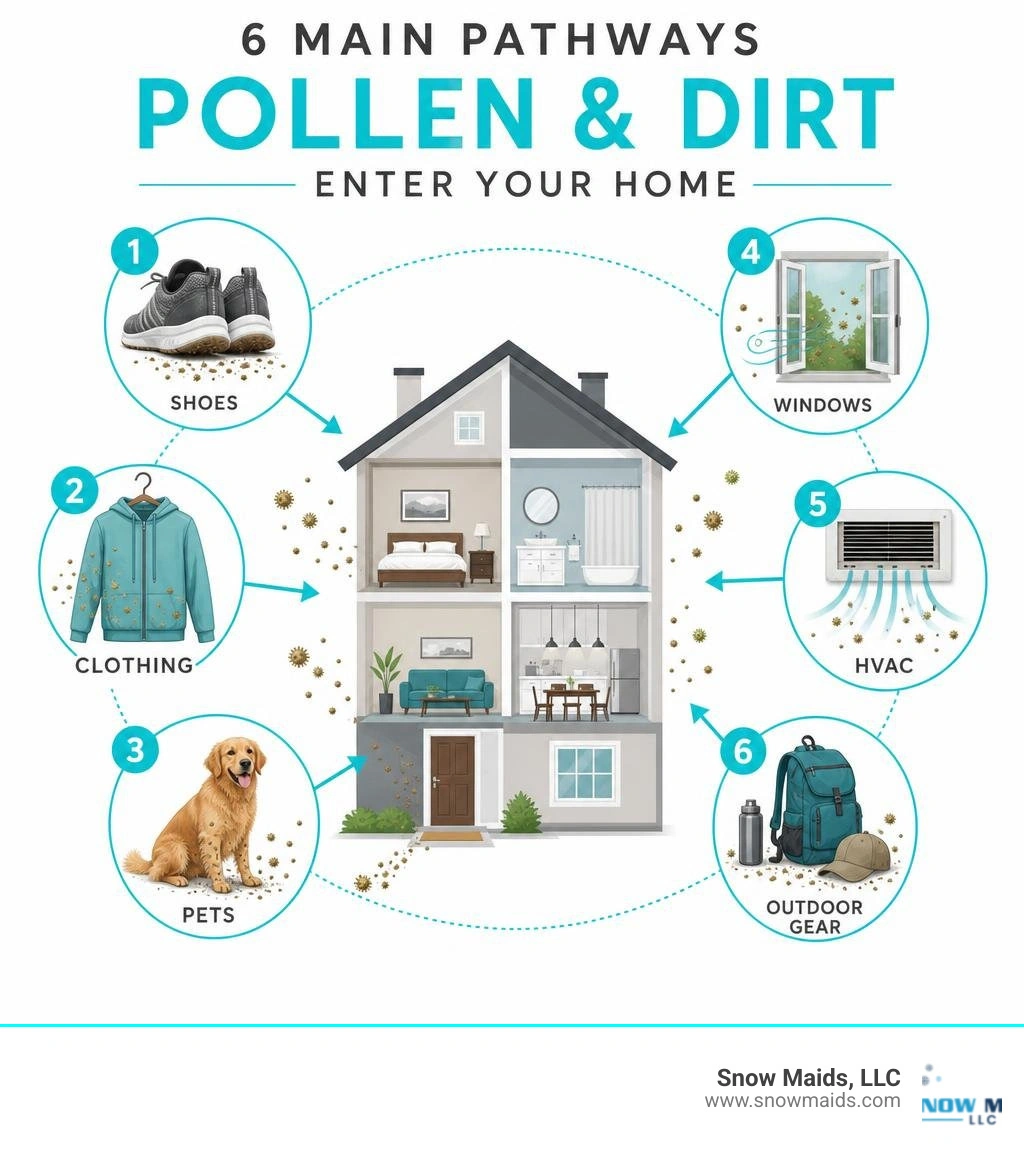
Infographic showing 6 main pathways outdoor pollen and dirt enter a home: shoes, clothing, pets, windows, HVAC, and outdoor

How seasonal pollen and outdoor activities bring dirt inside vocab explained:

How Seasonal Pollen and Outdoor Activities Bring Dirt Inside

Colorado is an outdoor lover’s paradise. Whether you are hiking the trails in Castle Rock, walking through the open spaces of Highlands Ranch, or enjoying a sunny afternoon in a Denver park, outdoor recreation is a massive part of our lifestyle. However, this active lifestyle has a hidden side effect: it turns our bodies, clothing, and gear into highly efficient transport vehicles for outdoor debris.

When we hit the trails or work in our gardens, we stir up soil and pollen. These particles don’t just fall off when we step across the threshold. Fine dust, dried mud, and microscopic allergens cling to the tread of our shoes, the fabric of our pants, and even our skin. Once inside, they detach and settle into our carpets, rugs, and upholstery.

This constant influx of outdoor matter does more than just make your floors look dirty. It introduces a complex mixture of allergens that can settle deep into your home's fabrics. This is a primary driver behind respiratory irritation for many local families. To understand how these tracked-in particles impact your breathing, check out our detailed guide on How Dust Allergens and Pet Dander Affect Your Respiratory Health.

The Science of How Seasonal Pollen and Outdoor Activities Bring Dirt Inside

When we look at how seasonal pollen and outdoor activities bring dirt inside, we have to look at the microscopic level. Scientific research shows a continuous, dynamic "microbial exchange" between our outdoor environment and our indoor living spaces. The air and soil outside are teeming with microscopic life, including airborne bacteria, fungal spores, and pollen grains.

Interestingly, studies have shown that outdoor air serves as a significantly more influential source for indoor airborne microbiota than soil, regardless of the season. However, the concentration and behavior of these microbes change dramatically between summer and winter:

  • Summer Dynamics: During the warm summer months, indoor airborne bacteria concentrations are significantly higher than outdoor levels. Research has recorded average summer indoor levels of 647 ± 849 CFU/m³ (colony-forming units per cubic meter) compared to outdoor levels of 330 ± 276 CFU/m³. This is largely because higher temperatures, open windows, and increased foot traffic from outdoor activities bring a steady stream of biological material indoors, where it thrives in warm, occupied spaces.
  • Winter Dynamics: In the cold winter months, when homes in Parker or Littleton are sealed tight against the chill, concentrations drop. Winter indoor levels average around 214 ± 180 CFU/m³ compared to outdoor levels of 182 ± 149 CFU/m³.

Because summer brings such a massive spike in biological activity and indoor-outdoor exchange, staying on top of cleaning is vital. Regular sanitizing and vacuuming prevent these microscopic guests from setting up permanent colonies in your carpets and corners. Learn more about this biological battle in our article on How Regular Cleaning Prevents Mold and Bacteria Growth.

How Seasonal Pollen and Outdoor Activities Bring Dirt Inside via Pets and Clothing

While we might try to be conscious of wiping our feet, our clothes and our pets operate on a completely different level of allergen transport.

Clothing acts like a giant, static-charged duster. Synthetic fabrics can hold a charge that pulls lightweight pollen grains right out of the air. Natural fibers like cotton and wool have a high physical affinity for pollen; their rough, textured fibers grab and trap microscopic particles. When you walk inside and sit on your couch, you act like a pollen stamp, transferring those trapped particles directly onto your soft furnishings.

Our pets are even bigger contributors. Think about a golden retriever running through a field in Centennial or a cat exploring a backyard in Englewood. Their fur is a magnet for:

  • Fine grass and weed pollens
  • Loose soil and mud
  • Tree sap and sticky plant residues
  • Microscopic mold spores from damp grass or fallen leaves

Once your pet comes inside, they shake, roll on the carpet, and climb onto the furniture, dispersing these allergens throughout your living space. In fact, national surveys show that about 1 in 2 pet owners allow their pets on their beds, which directly introduces outdoor allergens into the place where you sleep.

For practical, pet-safe strategies to manage this constant biological influx, dive into our Pet Owners Guide to Deep House Cleaning.

The Surprising Impact of Weather and Rain on Indoor Air Quality

Many people assume that a good rainstorm is the ultimate cure for seasonal allergies. It seems logical: rain washes the pollen out of the air, cleans the streets, and dampens the soil. While a light, steady rain can indeed wash pollen from the air and temporarily lower counts, sudden heavy downpours and thunderstorms do the exact opposite.

During a severe summer thunderstorm along the Front Range, high winds and rapid humidity changes create a phenomenon known as "thunderstorm asthma." The moisture in the air causes dry pollen clumps to absorb water. As they swell, they don't just stay whole; they rupture, breaking down into thousands of microscopic fragments.

These tiny, shattered pollen particles are incredibly light. Instead of settling quickly, they remain suspended in the air and are easily carried by strong winds. Because they are so small, they easily bypass natural nasal filtration systems and slip through standard window screens and gaps around doors. This leads to sudden, severe spikes in indoor allergy symptoms right after a storm.

Furthermore, the sudden spike in humidity that follows Colorado summer rains creates the perfect breeding ground for outdoor mold spores. These spores thrive in damp conditions and are easily tracked inside on wet shoes and pet paws. For families managing asthma or severe allergies, maintaining a clean indoor environment during these weather shifts is critical. Discover how professional-grade cleaning can help manage these triggers in our guide on The Impact of Professional Cleaning on Asthma Management.

Seasonal Microbial Shifts: Summer vs. Winter Indoor Environments

The air we breathe indoors is not static; its biological makeup shifts dramatically with the seasons. As we transition from the snowy winter months in Castle Pines to the hot, dry summers of Denver, the types and volumes of microbes in our homes undergo a massive transformation.

To visualize how these environments differ, let's look at the average concentration of airborne bacteria (measured in Colony-Forming Units per cubic meter, or CFU/m³) and the primary environmental drivers behind them:

Seasonal MetricSummer Indoor EnvironmentWinter Indoor Environment
Indoor Airborne BacteriaHigh (647 ± 849 CFU/m³)Low to Moderate (214 ± 180 CFU/m³)
Outdoor Airborne BacteriaModerate (330 ± 276 CFU/m³)Low (182 ± 149 CFU/m³)
Primary Entry PathwaysOpen windows, high foot traffic, pets, active HVACAir leaks, minimal door traffic, tracked-in snow slush
Microbial Assembly ProcessStochastic (highly random, driven by active wind/air exchange)Deterministic (driven by indoor heating, humidity, occupancy)
Fungal/Mold RiskHigh (linked to summer humidity and heavy summer storms)Low (limited by dry, heated indoor air)

As the table illustrates, summer homes are highly dynamic biological environments. Because we are constantly moving in and out, the boundary between "outside" and "inside" virtually disappears. This is why a simple weekly sweep often isn't enough to maintain true indoor air quality. Removing these settled biological loads requires targeted, deep cleaning methods. You can read more about how this works in How Deep Cleaning Improves Indoor Air Quality.

Practical Strategies to Keep Outdoor Allergens and Dirt Out

While you can't control the pollen counts in the Denver Metro Area, you can control how much of that pollen makes its home in your living room. Implementing a few deliberate, daily habits can drastically reduce the amount of outdoor debris that crosses your threshold.

Here are the most effective, practical steps you can take to protect your home:

  • Establish a Strict Shoes-Off Policy: This is the single most effective way to stop soil and heavy outdoor dust from spreading. Set up a designated shoe station in your entryway or mudroom.
  • Wipe Pet Paws at the Door: Keep a damp microfiber cloth or a pet-safe paw wipe near the entryway. Giving your dog's paws and underbelly a quick wipe down after walks in Lone Tree or Franktown prevents outdoor mold and grass pollen from reaching your carpets and furniture.
  • Ditch the Dry Duster: Dry dusting or sweeping simply flings fine pollen grains and dust back into the air, where they hang for hours before settling again. Always use a damp microfiber cloth or a damp mop. The moisture traps the particles, physically removing them from the surface.
  • Vacuum Slowly with a HEPA Filter: Standard vacuums often blow fine dust and pollen right back out through their exhaust vents. Use a vacuum equipped with a sealed HEPA filter, which traps 99.97% of particles down to 0.3 microns. Move slowly to allow the vacuum's brush roll to lift deeply embedded dirt from carpet fibers.
  • Avoid Line-Drying Laundry: While drying your sheets in the warm Colorado breeze sounds lovely, wet fabric acts like a giant pollen trap. Use an indoor dryer instead during high-pollen seasons.

While daily maintenance is incredibly helpful, microscopic particles still find ways to accumulate in deep carpet fibers and upholstery over time. Understanding the difference between what you can achieve with daily chores versus what professional tools can handle is key to managing your home's air quality. For a side-by-side comparison, check out our article on Comparing Air Quality After DIY vs Professional Cleaning.

To learn more about the broader benefits of keeping a pristine home, read How a Clean Home Improves Your Health and Wellbeing.

Frequently Asked Questions about Indoor Pollen and Dirt

How long does pollen stay on clothing indoors?

Pollen is surprisingly resilient. Once trapped in clothing fibers, pollen can remain active and allergen-inducing for several hours to multiple days, depending on your home's humidity and temperature.

Synthetic fabrics like polyester and nylon shed pollen relatively easily, but natural fibers like cotton and wool can hold onto microscopic pollen grains tightly. If you wear your outdoor clothes around the house, you will continuously shed these allergens onto your sofa, bed, and chairs. Shaking your clothes outside before washing them and laundering them in warm water is the best way to break down and flush away these stubborn particles.

Why does my house get dusty so fast during pollen season?

If you feel like you are dusting constantly but seeing a yellow or grey film return within 48 hours, you aren't imagining things. During high-pollen seasons, several factors accelerate dust buildup:

  • Window Tracks: Pollen settles in window tracks when windows are open. When you open or close the window, or when the wind blows, that accumulated pollen is blown directly into your living spaces.
  • Ceiling Fans: When ceiling fans run continuously in the summer, their blades act like magnets for static dust and pollen. Once coated, they redistribute these particles across the entire room.
  • HVAC Airflow: Your heating and cooling system constantly circulates air. If your air filters are dirty or have a low MERV rating, the system simply recirculates fine pollen and dust from room to room.

If you notice dust accumulating faster than you can keep up with, it might be a sign that your home has built up a significant baseline of hidden allergens. Learn more about these warning signs in Signs Your Home Needs More Frequent Professional Cleaning.

When should I seek medical care for seasonal allergy symptoms?

While keeping a clean home can drastically reduce your exposure, indoor cleaning is only one part of managing your health. You should consult a medical professional or a board-certified allergist if:

  • Your allergy symptoms (sneezing, congestion, itchy eyes) do not improve with over-the-counter treatments.
  • You experience wheezing, shortness of breath, a persistent cough, or chest tightness.
  • Your symptoms interfere with your sleep, daily activities, or overall quality of life.
  • You develop signs of a sinus infection, such as severe facial pain, pressure, or a fever.

Conclusion

Managing how seasonal pollen and outdoor activities bring dirt inside is a constant battle for homeowners in the Denver Metro Area. From the high-altitude dry air that keeps dust airborne to the active outdoor lifestyles of our families and pets, our homes are constantly being introduced to outdoor allergens and soil.

At Snow Maids, LLC, we understand that you want to enjoy the beautiful Colorado outdoors without bringing the entire trail back into your living room. We provide professional, reliable, "squeaky cleanings" tailored to your home and your routine, giving you your valuable time back. Whether you live in Castle Rock, Centennial, Littleton, Highlands Ranch, or Parker, we are here to help you breathe easier.

Let us handle the deep, allergen-removing work so you can focus on enjoying our beautiful state. Reach out to us today to schedule your next service: Deep House Cleaning Services Denver CO.

Why Pollen and Dirt Keep Finding Their Way Into Your Denver Home

How seasonal pollen and outdoor activities bring dirt inside is something most Denver families deal with every single day — often without realizing how much is actually coming in. You wipe down the counters, vacuum the floors, and still wake up sneezing. The house feels dusty again within days. That's not a cleaning failure. That's biology, weather, and daily life working against you.

Every time a door opens, a dog trots in, or a jacket gets tossed on a chair, a fresh wave of outdoor particles enters your home. Pollen, mold spores, soil microbes, and fine dust all hitch a ride — on shoes, clothing, pet fur, and even the air itself. And in Denver, with its dry climate, extended growing season, and wide range of native vegetation, the problem runs from early spring all the way through fall.

Here's a quick look at the main ways outdoor allergens and dirt get inside:

  • Shoes and feet track in soil, pollen, and microbes from sidewalks, grass, and trails
  • Clothing and hair collect fine pollen grains that shed onto furniture, bedding, and floors
  • Pets carry pollen, mold spores, and outdoor debris on their fur and paws
  • Open windows and doors allow airborne pollen and fungal spores to drift directly inside
  • HVAC systems pull in outdoor air and distribute particles throughout the home
  • Bags, packages, and gear brought in from outside add another layer of contamination

For a deeper look at how Colorado's unique climate makes this worse, see How Colorado Altitude and Dry Air Affect Your Home Cleanliness.

Infographic showing 6 main pathways outdoor pollen and dirt enter a home: shoes, clothing, pets, windows, HVAC, and outdoor

How seasonal pollen and outdoor activities bring dirt inside vocab explained:

How Seasonal Pollen and Outdoor Activities Bring Dirt Inside

Colorado is an outdoor lover’s paradise. Whether you are hiking the trails in Castle Rock, walking through the open spaces of Highlands Ranch, or enjoying a sunny afternoon in a Denver park, outdoor recreation is a massive part of our lifestyle. However, this active lifestyle has a hidden side effect: it turns our bodies, clothing, and gear into highly efficient transport vehicles for outdoor debris.

When we hit the trails or work in our gardens, we stir up soil and pollen. These particles don’t just fall off when we step across the threshold. Fine dust, dried mud, and microscopic allergens cling to the tread of our shoes, the fabric of our pants, and even our skin. Once inside, they detach and settle into our carpets, rugs, and upholstery.

This constant influx of outdoor matter does more than just make your floors look dirty. It introduces a complex mixture of allergens that can settle deep into your home's fabrics. This is a primary driver behind respiratory irritation for many local families. To understand how these tracked-in particles impact your breathing, check out our detailed guide on How Dust Allergens and Pet Dander Affect Your Respiratory Health.

The Science of How Seasonal Pollen and Outdoor Activities Bring Dirt Inside

When we look at how seasonal pollen and outdoor activities bring dirt inside, we have to look at the microscopic level. Scientific research shows a continuous, dynamic "microbial exchange" between our outdoor environment and our indoor living spaces. The air and soil outside are teeming with microscopic life, including airborne bacteria, fungal spores, and pollen grains.

Interestingly, studies have shown that outdoor air serves as a significantly more influential source for indoor airborne microbiota than soil, regardless of the season. However, the concentration and behavior of these microbes change dramatically between summer and winter:

  • Summer Dynamics: During the warm summer months, indoor airborne bacteria concentrations are significantly higher than outdoor levels. Research has recorded average summer indoor levels of 647 ± 849 CFU/m³ (colony-forming units per cubic meter) compared to outdoor levels of 330 ± 276 CFU/m³. This is largely because higher temperatures, open windows, and increased foot traffic from outdoor activities bring a steady stream of biological material indoors, where it thrives in warm, occupied spaces.
  • Winter Dynamics: In the cold winter months, when homes in Parker or Littleton are sealed tight against the chill, concentrations drop. Winter indoor levels average around 214 ± 180 CFU/m³ compared to outdoor levels of 182 ± 149 CFU/m³.

Because summer brings such a massive spike in biological activity and indoor-outdoor exchange, staying on top of cleaning is vital. Regular sanitizing and vacuuming prevent these microscopic guests from setting up permanent colonies in your carpets and corners. Learn more about this biological battle in our article on How Regular Cleaning Prevents Mold and Bacteria Growth.

How Seasonal Pollen and Outdoor Activities Bring Dirt Inside via Pets and Clothing

While we might try to be conscious of wiping our feet, our clothes and our pets operate on a completely different level of allergen transport.

Clothing acts like a giant, static-charged duster. Synthetic fabrics can hold a charge that pulls lightweight pollen grains right out of the air. Natural fibers like cotton and wool have a high physical affinity for pollen; their rough, textured fibers grab and trap microscopic particles. When you walk inside and sit on your couch, you act like a pollen stamp, transferring those trapped particles directly onto your soft furnishings.

Our pets are even bigger contributors. Think about a golden retriever running through a field in Centennial or a cat exploring a backyard in Englewood. Their fur is a magnet for:

  • Fine grass and weed pollens
  • Loose soil and mud
  • Tree sap and sticky plant residues
  • Microscopic mold spores from damp grass or fallen leaves

Once your pet comes inside, they shake, roll on the carpet, and climb onto the furniture, dispersing these allergens throughout your living space. In fact, national surveys show that about 1 in 2 pet owners allow their pets on their beds, which directly introduces outdoor allergens into the place where you sleep.

For practical, pet-safe strategies to manage this constant biological influx, dive into our Pet Owners Guide to Deep House Cleaning.

The Surprising Impact of Weather and Rain on Indoor Air Quality

Many people assume that a good rainstorm is the ultimate cure for seasonal allergies. It seems logical: rain washes the pollen out of the air, cleans the streets, and dampens the soil. While a light, steady rain can indeed wash pollen from the air and temporarily lower counts, sudden heavy downpours and thunderstorms do the exact opposite.

During a severe summer thunderstorm along the Front Range, high winds and rapid humidity changes create a phenomenon known as "thunderstorm asthma." The moisture in the air causes dry pollen clumps to absorb water. As they swell, they don't just stay whole; they rupture, breaking down into thousands of microscopic fragments.

These tiny, shattered pollen particles are incredibly light. Instead of settling quickly, they remain suspended in the air and are easily carried by strong winds. Because they are so small, they easily bypass natural nasal filtration systems and slip through standard window screens and gaps around doors. This leads to sudden, severe spikes in indoor allergy symptoms right after a storm.

Furthermore, the sudden spike in humidity that follows Colorado summer rains creates the perfect breeding ground for outdoor mold spores. These spores thrive in damp conditions and are easily tracked inside on wet shoes and pet paws. For families managing asthma or severe allergies, maintaining a clean indoor environment during these weather shifts is critical. Discover how professional-grade cleaning can help manage these triggers in our guide on The Impact of Professional Cleaning on Asthma Management.

Seasonal Microbial Shifts: Summer vs. Winter Indoor Environments

The air we breathe indoors is not static; its biological makeup shifts dramatically with the seasons. As we transition from the snowy winter months in Castle Pines to the hot, dry summers of Denver, the types and volumes of microbes in our homes undergo a massive transformation.

To visualize how these environments differ, let's look at the average concentration of airborne bacteria (measured in Colony-Forming Units per cubic meter, or CFU/m³) and the primary environmental drivers behind them:

Seasonal MetricSummer Indoor EnvironmentWinter Indoor Environment
Indoor Airborne BacteriaHigh (647 ± 849 CFU/m³)Low to Moderate (214 ± 180 CFU/m³)
Outdoor Airborne BacteriaModerate (330 ± 276 CFU/m³)Low (182 ± 149 CFU/m³)
Primary Entry PathwaysOpen windows, high foot traffic, pets, active HVACAir leaks, minimal door traffic, tracked-in snow slush
Microbial Assembly ProcessStochastic (highly random, driven by active wind/air exchange)Deterministic (driven by indoor heating, humidity, occupancy)
Fungal/Mold RiskHigh (linked to summer humidity and heavy summer storms)Low (limited by dry, heated indoor air)

As the table illustrates, summer homes are highly dynamic biological environments. Because we are constantly moving in and out, the boundary between "outside" and "inside" virtually disappears. This is why a simple weekly sweep often isn't enough to maintain true indoor air quality. Removing these settled biological loads requires targeted, deep cleaning methods. You can read more about how this works in How Deep Cleaning Improves Indoor Air Quality.

Practical Strategies to Keep Outdoor Allergens and Dirt Out

While you can't control the pollen counts in the Denver Metro Area, you can control how much of that pollen makes its home in your living room. Implementing a few deliberate, daily habits can drastically reduce the amount of outdoor debris that crosses your threshold.

Here are the most effective, practical steps you can take to protect your home:

  • Establish a Strict Shoes-Off Policy: This is the single most effective way to stop soil and heavy outdoor dust from spreading. Set up a designated shoe station in your entryway or mudroom.
  • Wipe Pet Paws at the Door: Keep a damp microfiber cloth or a pet-safe paw wipe near the entryway. Giving your dog's paws and underbelly a quick wipe down after walks in Lone Tree or Franktown prevents outdoor mold and grass pollen from reaching your carpets and furniture.
  • Ditch the Dry Duster: Dry dusting or sweeping simply flings fine pollen grains and dust back into the air, where they hang for hours before settling again. Always use a damp microfiber cloth or a damp mop. The moisture traps the particles, physically removing them from the surface.
  • Vacuum Slowly with a HEPA Filter: Standard vacuums often blow fine dust and pollen right back out through their exhaust vents. Use a vacuum equipped with a sealed HEPA filter, which traps 99.97% of particles down to 0.3 microns. Move slowly to allow the vacuum's brush roll to lift deeply embedded dirt from carpet fibers.
  • Avoid Line-Drying Laundry: While drying your sheets in the warm Colorado breeze sounds lovely, wet fabric acts like a giant pollen trap. Use an indoor dryer instead during high-pollen seasons.

While daily maintenance is incredibly helpful, microscopic particles still find ways to accumulate in deep carpet fibers and upholstery over time. Understanding the difference between what you can achieve with daily chores versus what professional tools can handle is key to managing your home's air quality. For a side-by-side comparison, check out our article on Comparing Air Quality After DIY vs Professional Cleaning.

To learn more about the broader benefits of keeping a pristine home, read How a Clean Home Improves Your Health and Wellbeing.

Frequently Asked Questions about Indoor Pollen and Dirt

How long does pollen stay on clothing indoors?

Pollen is surprisingly resilient. Once trapped in clothing fibers, pollen can remain active and allergen-inducing for several hours to multiple days, depending on your home's humidity and temperature.

Synthetic fabrics like polyester and nylon shed pollen relatively easily, but natural fibers like cotton and wool can hold onto microscopic pollen grains tightly. If you wear your outdoor clothes around the house, you will continuously shed these allergens onto your sofa, bed, and chairs. Shaking your clothes outside before washing them and laundering them in warm water is the best way to break down and flush away these stubborn particles.

Why does my house get dusty so fast during pollen season?

If you feel like you are dusting constantly but seeing a yellow or grey film return within 48 hours, you aren't imagining things. During high-pollen seasons, several factors accelerate dust buildup:

  • Window Tracks: Pollen settles in window tracks when windows are open. When you open or close the window, or when the wind blows, that accumulated pollen is blown directly into your living spaces.
  • Ceiling Fans: When ceiling fans run continuously in the summer, their blades act like magnets for static dust and pollen. Once coated, they redistribute these particles across the entire room.
  • HVAC Airflow: Your heating and cooling system constantly circulates air. If your air filters are dirty or have a low MERV rating, the system simply recirculates fine pollen and dust from room to room.

If you notice dust accumulating faster than you can keep up with, it might be a sign that your home has built up a significant baseline of hidden allergens. Learn more about these warning signs in Signs Your Home Needs More Frequent Professional Cleaning.

When should I seek medical care for seasonal allergy symptoms?

While keeping a clean home can drastically reduce your exposure, indoor cleaning is only one part of managing your health. You should consult a medical professional or a board-certified allergist if:

  • Your allergy symptoms (sneezing, congestion, itchy eyes) do not improve with over-the-counter treatments.
  • You experience wheezing, shortness of breath, a persistent cough, or chest tightness.
  • Your symptoms interfere with your sleep, daily activities, or overall quality of life.
  • You develop signs of a sinus infection, such as severe facial pain, pressure, or a fever.

Conclusion

Managing how seasonal pollen and outdoor activities bring dirt inside is a constant battle for homeowners in the Denver Metro Area. From the high-altitude dry air that keeps dust airborne to the active outdoor lifestyles of our families and pets, our homes are constantly being introduced to outdoor allergens and soil.

At Snow Maids, LLC, we understand that you want to enjoy the beautiful Colorado outdoors without bringing the entire trail back into your living room. We provide professional, reliable, "squeaky cleanings" tailored to your home and your routine, giving you your valuable time back. Whether you live in Castle Rock, Centennial, Littleton, Highlands Ranch, or Parker, we are here to help you breathe easier.

Let us handle the deep, allergen-removing work so you can focus on enjoying our beautiful state. Reach out to us today to schedule your next service: Deep House Cleaning Services Denver CO.

Why Pollen and Dirt Keep Finding Their Way Into Your Denver Home

How seasonal pollen and outdoor activities bring dirt inside is something most Denver families deal with every single day — often without realizing how much is actually coming in. You wipe down the counters, vacuum the floors, and still wake up sneezing. The house feels dusty again within days. That's not a cleaning failure. That's biology, weather, and daily life working against you.

Every time a door opens, a dog trots in, or a jacket gets tossed on a chair, a fresh wave of outdoor particles enters your home. Pollen, mold spores, soil microbes, and fine dust all hitch a ride — on shoes, clothing, pet fur, and even the air itself. And in Denver, with its dry climate, extended growing season, and wide range of native vegetation, the problem runs from early spring all the way through fall.

Here's a quick look at the main ways outdoor allergens and dirt get inside:

  • Shoes and feet track in soil, pollen, and microbes from sidewalks, grass, and trails
  • Clothing and hair collect fine pollen grains that shed onto furniture, bedding, and floors
  • Pets carry pollen, mold spores, and outdoor debris on their fur and paws
  • Open windows and doors allow airborne pollen and fungal spores to drift directly inside
  • HVAC systems pull in outdoor air and distribute particles throughout the home
  • Bags, packages, and gear brought in from outside add another layer of contamination

For a deeper look at how Colorado's unique climate makes this worse, see How Colorado Altitude and Dry Air Affect Your Home Cleanliness.

Infographic showing 6 main pathways outdoor pollen and dirt enter a home: shoes, clothing, pets, windows, HVAC, and outdoor

How seasonal pollen and outdoor activities bring dirt inside vocab explained:

How Seasonal Pollen and Outdoor Activities Bring Dirt Inside

Colorado is an outdoor lover’s paradise. Whether you are hiking the trails in Castle Rock, walking through the open spaces of Highlands Ranch, or enjoying a sunny afternoon in a Denver park, outdoor recreation is a massive part of our lifestyle. However, this active lifestyle has a hidden side effect: it turns our bodies, clothing, and gear into highly efficient transport vehicles for outdoor debris.

When we hit the trails or work in our gardens, we stir up soil and pollen. These particles don’t just fall off when we step across the threshold. Fine dust, dried mud, and microscopic allergens cling to the tread of our shoes, the fabric of our pants, and even our skin. Once inside, they detach and settle into our carpets, rugs, and upholstery.

This constant influx of outdoor matter does more than just make your floors look dirty. It introduces a complex mixture of allergens that can settle deep into your home's fabrics. This is a primary driver behind respiratory irritation for many local families. To understand how these tracked-in particles impact your breathing, check out our detailed guide on How Dust Allergens and Pet Dander Affect Your Respiratory Health.

The Science of How Seasonal Pollen and Outdoor Activities Bring Dirt Inside

When we look at how seasonal pollen and outdoor activities bring dirt inside, we have to look at the microscopic level. Scientific research shows a continuous, dynamic "microbial exchange" between our outdoor environment and our indoor living spaces. The air and soil outside are teeming with microscopic life, including airborne bacteria, fungal spores, and pollen grains.

Interestingly, studies have shown that outdoor air serves as a significantly more influential source for indoor airborne microbiota than soil, regardless of the season. However, the concentration and behavior of these microbes change dramatically between summer and winter:

  • Summer Dynamics: During the warm summer months, indoor airborne bacteria concentrations are significantly higher than outdoor levels. Research has recorded average summer indoor levels of 647 ± 849 CFU/m³ (colony-forming units per cubic meter) compared to outdoor levels of 330 ± 276 CFU/m³. This is largely because higher temperatures, open windows, and increased foot traffic from outdoor activities bring a steady stream of biological material indoors, where it thrives in warm, occupied spaces.
  • Winter Dynamics: In the cold winter months, when homes in Parker or Littleton are sealed tight against the chill, concentrations drop. Winter indoor levels average around 214 ± 180 CFU/m³ compared to outdoor levels of 182 ± 149 CFU/m³.

Because summer brings such a massive spike in biological activity and indoor-outdoor exchange, staying on top of cleaning is vital. Regular sanitizing and vacuuming prevent these microscopic guests from setting up permanent colonies in your carpets and corners. Learn more about this biological battle in our article on How Regular Cleaning Prevents Mold and Bacteria Growth.

How Seasonal Pollen and Outdoor Activities Bring Dirt Inside via Pets and Clothing

While we might try to be conscious of wiping our feet, our clothes and our pets operate on a completely different level of allergen transport.

Clothing acts like a giant, static-charged duster. Synthetic fabrics can hold a charge that pulls lightweight pollen grains right out of the air. Natural fibers like cotton and wool have a high physical affinity for pollen; their rough, textured fibers grab and trap microscopic particles. When you walk inside and sit on your couch, you act like a pollen stamp, transferring those trapped particles directly onto your soft furnishings.

Our pets are even bigger contributors. Think about a golden retriever running through a field in Centennial or a cat exploring a backyard in Englewood. Their fur is a magnet for:

  • Fine grass and weed pollens
  • Loose soil and mud
  • Tree sap and sticky plant residues
  • Microscopic mold spores from damp grass or fallen leaves

Once your pet comes inside, they shake, roll on the carpet, and climb onto the furniture, dispersing these allergens throughout your living space. In fact, national surveys show that about 1 in 2 pet owners allow their pets on their beds, which directly introduces outdoor allergens into the place where you sleep.

For practical, pet-safe strategies to manage this constant biological influx, dive into our Pet Owners Guide to Deep House Cleaning.

The Surprising Impact of Weather and Rain on Indoor Air Quality

Many people assume that a good rainstorm is the ultimate cure for seasonal allergies. It seems logical: rain washes the pollen out of the air, cleans the streets, and dampens the soil. While a light, steady rain can indeed wash pollen from the air and temporarily lower counts, sudden heavy downpours and thunderstorms do the exact opposite.

During a severe summer thunderstorm along the Front Range, high winds and rapid humidity changes create a phenomenon known as "thunderstorm asthma." The moisture in the air causes dry pollen clumps to absorb water. As they swell, they don't just stay whole; they rupture, breaking down into thousands of microscopic fragments.

These tiny, shattered pollen particles are incredibly light. Instead of settling quickly, they remain suspended in the air and are easily carried by strong winds. Because they are so small, they easily bypass natural nasal filtration systems and slip through standard window screens and gaps around doors. This leads to sudden, severe spikes in indoor allergy symptoms right after a storm.

Furthermore, the sudden spike in humidity that follows Colorado summer rains creates the perfect breeding ground for outdoor mold spores. These spores thrive in damp conditions and are easily tracked inside on wet shoes and pet paws. For families managing asthma or severe allergies, maintaining a clean indoor environment during these weather shifts is critical. Discover how professional-grade cleaning can help manage these triggers in our guide on The Impact of Professional Cleaning on Asthma Management.

Seasonal Microbial Shifts: Summer vs. Winter Indoor Environments

The air we breathe indoors is not static; its biological makeup shifts dramatically with the seasons. As we transition from the snowy winter months in Castle Pines to the hot, dry summers of Denver, the types and volumes of microbes in our homes undergo a massive transformation.

To visualize how these environments differ, let's look at the average concentration of airborne bacteria (measured in Colony-Forming Units per cubic meter, or CFU/m³) and the primary environmental drivers behind them:

Seasonal MetricSummer Indoor EnvironmentWinter Indoor Environment
Indoor Airborne BacteriaHigh (647 ± 849 CFU/m³)Low to Moderate (214 ± 180 CFU/m³)
Outdoor Airborne BacteriaModerate (330 ± 276 CFU/m³)Low (182 ± 149 CFU/m³)
Primary Entry PathwaysOpen windows, high foot traffic, pets, active HVACAir leaks, minimal door traffic, tracked-in snow slush
Microbial Assembly ProcessStochastic (highly random, driven by active wind/air exchange)Deterministic (driven by indoor heating, humidity, occupancy)
Fungal/Mold RiskHigh (linked to summer humidity and heavy summer storms)Low (limited by dry, heated indoor air)

As the table illustrates, summer homes are highly dynamic biological environments. Because we are constantly moving in and out, the boundary between "outside" and "inside" virtually disappears. This is why a simple weekly sweep often isn't enough to maintain true indoor air quality. Removing these settled biological loads requires targeted, deep cleaning methods. You can read more about how this works in How Deep Cleaning Improves Indoor Air Quality.

Practical Strategies to Keep Outdoor Allergens and Dirt Out

While you can't control the pollen counts in the Denver Metro Area, you can control how much of that pollen makes its home in your living room. Implementing a few deliberate, daily habits can drastically reduce the amount of outdoor debris that crosses your threshold.

Here are the most effective, practical steps you can take to protect your home:

  • Establish a Strict Shoes-Off Policy: This is the single most effective way to stop soil and heavy outdoor dust from spreading. Set up a designated shoe station in your entryway or mudroom.
  • Wipe Pet Paws at the Door: Keep a damp microfiber cloth or a pet-safe paw wipe near the entryway. Giving your dog's paws and underbelly a quick wipe down after walks in Lone Tree or Franktown prevents outdoor mold and grass pollen from reaching your carpets and furniture.
  • Ditch the Dry Duster: Dry dusting or sweeping simply flings fine pollen grains and dust back into the air, where they hang for hours before settling again. Always use a damp microfiber cloth or a damp mop. The moisture traps the particles, physically removing them from the surface.
  • Vacuum Slowly with a HEPA Filter: Standard vacuums often blow fine dust and pollen right back out through their exhaust vents. Use a vacuum equipped with a sealed HEPA filter, which traps 99.97% of particles down to 0.3 microns. Move slowly to allow the vacuum's brush roll to lift deeply embedded dirt from carpet fibers.
  • Avoid Line-Drying Laundry: While drying your sheets in the warm Colorado breeze sounds lovely, wet fabric acts like a giant pollen trap. Use an indoor dryer instead during high-pollen seasons.

While daily maintenance is incredibly helpful, microscopic particles still find ways to accumulate in deep carpet fibers and upholstery over time. Understanding the difference between what you can achieve with daily chores versus what professional tools can handle is key to managing your home's air quality. For a side-by-side comparison, check out our article on Comparing Air Quality After DIY vs Professional Cleaning.

To learn more about the broader benefits of keeping a pristine home, read How a Clean Home Improves Your Health and Wellbeing.

Frequently Asked Questions about Indoor Pollen and Dirt

How long does pollen stay on clothing indoors?

Pollen is surprisingly resilient. Once trapped in clothing fibers, pollen can remain active and allergen-inducing for several hours to multiple days, depending on your home's humidity and temperature.

Synthetic fabrics like polyester and nylon shed pollen relatively easily, but natural fibers like cotton and wool can hold onto microscopic pollen grains tightly. If you wear your outdoor clothes around the house, you will continuously shed these allergens onto your sofa, bed, and chairs. Shaking your clothes outside before washing them and laundering them in warm water is the best way to break down and flush away these stubborn particles.

Why does my house get dusty so fast during pollen season?

If you feel like you are dusting constantly but seeing a yellow or grey film return within 48 hours, you aren't imagining things. During high-pollen seasons, several factors accelerate dust buildup:

  • Window Tracks: Pollen settles in window tracks when windows are open. When you open or close the window, or when the wind blows, that accumulated pollen is blown directly into your living spaces.
  • Ceiling Fans: When ceiling fans run continuously in the summer, their blades act like magnets for static dust and pollen. Once coated, they redistribute these particles across the entire room.
  • HVAC Airflow: Your heating and cooling system constantly circulates air. If your air filters are dirty or have a low MERV rating, the system simply recirculates fine pollen and dust from room to room.

If you notice dust accumulating faster than you can keep up with, it might be a sign that your home has built up a significant baseline of hidden allergens. Learn more about these warning signs in Signs Your Home Needs More Frequent Professional Cleaning.

When should I seek medical care for seasonal allergy symptoms?

While keeping a clean home can drastically reduce your exposure, indoor cleaning is only one part of managing your health. You should consult a medical professional or a board-certified allergist if:

  • Your allergy symptoms (sneezing, congestion, itchy eyes) do not improve with over-the-counter treatments.
  • You experience wheezing, shortness of breath, a persistent cough, or chest tightness.
  • Your symptoms interfere with your sleep, daily activities, or overall quality of life.
  • You develop signs of a sinus infection, such as severe facial pain, pressure, or a fever.

Conclusion

Managing how seasonal pollen and outdoor activities bring dirt inside is a constant battle for homeowners in the Denver Metro Area. From the high-altitude dry air that keeps dust airborne to the active outdoor lifestyles of our families and pets, our homes are constantly being introduced to outdoor allergens and soil.

At Snow Maids, LLC, we understand that you want to enjoy the beautiful Colorado outdoors without bringing the entire trail back into your living room. We provide professional, reliable, "squeaky cleanings" tailored to your home and your routine, giving you your valuable time back. Whether you live in Castle Rock, Centennial, Littleton, Highlands Ranch, or Parker, we are here to help you breathe easier.

Let us handle the deep, allergen-removing work so you can focus on enjoying our beautiful state. Reach out to us today to schedule your next service: Deep House Cleaning Services Denver CO.

How to Keep Pollen and Dirt Out Indoors

Why Pollen and Dirt Keep Finding Their Way Into Your Denver Home

How seasonal pollen and outdoor activities bring dirt inside is something most Denver families deal with every single day — often without realizing how much is actually coming in. You wipe down the counters, vacuum the floors, and still wake up sneezing. The house feels dusty again within days. That's not a cleaning failure. That's biology, weather, and daily life working against you.

Every time a door opens, a dog trots in, or a jacket gets tossed on a chair, a fresh wave of outdoor particles enters your home. Pollen, mold spores, soil microbes, and fine dust all hitch a ride — on shoes, clothing, pet fur, and even the air itself. And in Denver, with its dry climate, extended growing season, and wide range of native vegetation, the problem runs from early spring all the way through fall.

Here's a quick look at the main ways outdoor allergens and dirt get inside:

  • Shoes and feet track in soil, pollen, and microbes from sidewalks, grass, and trails
  • Clothing and hair collect fine pollen grains that shed onto furniture, bedding, and floors
  • Pets carry pollen, mold spores, and outdoor debris on their fur and paws
  • Open windows and doors allow airborne pollen and fungal spores to drift directly inside
  • HVAC systems pull in outdoor air and distribute particles throughout the home
  • Bags, packages, and gear brought in from outside add another layer of contamination

For a deeper look at how Colorado's unique climate makes this worse, see How Colorado Altitude and Dry Air Affect Your Home Cleanliness.

Infographic showing 6 main pathways outdoor pollen and dirt enter a home: shoes, clothing, pets, windows, HVAC, and outdoor

How seasonal pollen and outdoor activities bring dirt inside vocab explained:

How Seasonal Pollen and Outdoor Activities Bring Dirt Inside

Colorado is an outdoor lover’s paradise. Whether you are hiking the trails in Castle Rock, walking through the open spaces of Highlands Ranch, or enjoying a sunny afternoon in a Denver park, outdoor recreation is a massive part of our lifestyle. However, this active lifestyle has a hidden side effect: it turns our bodies, clothing, and gear into highly efficient transport vehicles for outdoor debris.

When we hit the trails or work in our gardens, we stir up soil and pollen. These particles don’t just fall off when we step across the threshold. Fine dust, dried mud, and microscopic allergens cling to the tread of our shoes, the fabric of our pants, and even our skin. Once inside, they detach and settle into our carpets, rugs, and upholstery.

This constant influx of outdoor matter does more than just make your floors look dirty. It introduces a complex mixture of allergens that can settle deep into your home's fabrics. This is a primary driver behind respiratory irritation for many local families. To understand how these tracked-in particles impact your breathing, check out our detailed guide on How Dust Allergens and Pet Dander Affect Your Respiratory Health.

The Science of How Seasonal Pollen and Outdoor Activities Bring Dirt Inside

When we look at how seasonal pollen and outdoor activities bring dirt inside, we have to look at the microscopic level. Scientific research shows a continuous, dynamic "microbial exchange" between our outdoor environment and our indoor living spaces. The air and soil outside are teeming with microscopic life, including airborne bacteria, fungal spores, and pollen grains.

Interestingly, studies have shown that outdoor air serves as a significantly more influential source for indoor airborne microbiota than soil, regardless of the season. However, the concentration and behavior of these microbes change dramatically between summer and winter:

  • Summer Dynamics: During the warm summer months, indoor airborne bacteria concentrations are significantly higher than outdoor levels. Research has recorded average summer indoor levels of 647 ± 849 CFU/m³ (colony-forming units per cubic meter) compared to outdoor levels of 330 ± 276 CFU/m³. This is largely because higher temperatures, open windows, and increased foot traffic from outdoor activities bring a steady stream of biological material indoors, where it thrives in warm, occupied spaces.
  • Winter Dynamics: In the cold winter months, when homes in Parker or Littleton are sealed tight against the chill, concentrations drop. Winter indoor levels average around 214 ± 180 CFU/m³ compared to outdoor levels of 182 ± 149 CFU/m³.

Because summer brings such a massive spike in biological activity and indoor-outdoor exchange, staying on top of cleaning is vital. Regular sanitizing and vacuuming prevent these microscopic guests from setting up permanent colonies in your carpets and corners. Learn more about this biological battle in our article on How Regular Cleaning Prevents Mold and Bacteria Growth.

How Seasonal Pollen and Outdoor Activities Bring Dirt Inside via Pets and Clothing

While we might try to be conscious of wiping our feet, our clothes and our pets operate on a completely different level of allergen transport.

Clothing acts like a giant, static-charged duster. Synthetic fabrics can hold a charge that pulls lightweight pollen grains right out of the air. Natural fibers like cotton and wool have a high physical affinity for pollen; their rough, textured fibers grab and trap microscopic particles. When you walk inside and sit on your couch, you act like a pollen stamp, transferring those trapped particles directly onto your soft furnishings.

Our pets are even bigger contributors. Think about a golden retriever running through a field in Centennial or a cat exploring a backyard in Englewood. Their fur is a magnet for:

  • Fine grass and weed pollens
  • Loose soil and mud
  • Tree sap and sticky plant residues
  • Microscopic mold spores from damp grass or fallen leaves

Once your pet comes inside, they shake, roll on the carpet, and climb onto the furniture, dispersing these allergens throughout your living space. In fact, national surveys show that about 1 in 2 pet owners allow their pets on their beds, which directly introduces outdoor allergens into the place where you sleep.

For practical, pet-safe strategies to manage this constant biological influx, dive into our Pet Owners Guide to Deep House Cleaning.

The Surprising Impact of Weather and Rain on Indoor Air Quality

Many people assume that a good rainstorm is the ultimate cure for seasonal allergies. It seems logical: rain washes the pollen out of the air, cleans the streets, and dampens the soil. While a light, steady rain can indeed wash pollen from the air and temporarily lower counts, sudden heavy downpours and thunderstorms do the exact opposite.

During a severe summer thunderstorm along the Front Range, high winds and rapid humidity changes create a phenomenon known as "thunderstorm asthma." The moisture in the air causes dry pollen clumps to absorb water. As they swell, they don't just stay whole; they rupture, breaking down into thousands of microscopic fragments.

These tiny, shattered pollen particles are incredibly light. Instead of settling quickly, they remain suspended in the air and are easily carried by strong winds. Because they are so small, they easily bypass natural nasal filtration systems and slip through standard window screens and gaps around doors. This leads to sudden, severe spikes in indoor allergy symptoms right after a storm.

Furthermore, the sudden spike in humidity that follows Colorado summer rains creates the perfect breeding ground for outdoor mold spores. These spores thrive in damp conditions and are easily tracked inside on wet shoes and pet paws. For families managing asthma or severe allergies, maintaining a clean indoor environment during these weather shifts is critical. Discover how professional-grade cleaning can help manage these triggers in our guide on The Impact of Professional Cleaning on Asthma Management.

Seasonal Microbial Shifts: Summer vs. Winter Indoor Environments

The air we breathe indoors is not static; its biological makeup shifts dramatically with the seasons. As we transition from the snowy winter months in Castle Pines to the hot, dry summers of Denver, the types and volumes of microbes in our homes undergo a massive transformation.

To visualize how these environments differ, let's look at the average concentration of airborne bacteria (measured in Colony-Forming Units per cubic meter, or CFU/m³) and the primary environmental drivers behind them:

Seasonal MetricSummer Indoor EnvironmentWinter Indoor Environment
Indoor Airborne BacteriaHigh (647 ± 849 CFU/m³)Low to Moderate (214 ± 180 CFU/m³)
Outdoor Airborne BacteriaModerate (330 ± 276 CFU/m³)Low (182 ± 149 CFU/m³)
Primary Entry PathwaysOpen windows, high foot traffic, pets, active HVACAir leaks, minimal door traffic, tracked-in snow slush
Microbial Assembly ProcessStochastic (highly random, driven by active wind/air exchange)Deterministic (driven by indoor heating, humidity, occupancy)
Fungal/Mold RiskHigh (linked to summer humidity and heavy summer storms)Low (limited by dry, heated indoor air)

As the table illustrates, summer homes are highly dynamic biological environments. Because we are constantly moving in and out, the boundary between "outside" and "inside" virtually disappears. This is why a simple weekly sweep often isn't enough to maintain true indoor air quality. Removing these settled biological loads requires targeted, deep cleaning methods. You can read more about how this works in How Deep Cleaning Improves Indoor Air Quality.

Practical Strategies to Keep Outdoor Allergens and Dirt Out

While you can't control the pollen counts in the Denver Metro Area, you can control how much of that pollen makes its home in your living room. Implementing a few deliberate, daily habits can drastically reduce the amount of outdoor debris that crosses your threshold.

Here are the most effective, practical steps you can take to protect your home:

  • Establish a Strict Shoes-Off Policy: This is the single most effective way to stop soil and heavy outdoor dust from spreading. Set up a designated shoe station in your entryway or mudroom.
  • Wipe Pet Paws at the Door: Keep a damp microfiber cloth or a pet-safe paw wipe near the entryway. Giving your dog's paws and underbelly a quick wipe down after walks in Lone Tree or Franktown prevents outdoor mold and grass pollen from reaching your carpets and furniture.
  • Ditch the Dry Duster: Dry dusting or sweeping simply flings fine pollen grains and dust back into the air, where they hang for hours before settling again. Always use a damp microfiber cloth or a damp mop. The moisture traps the particles, physically removing them from the surface.
  • Vacuum Slowly with a HEPA Filter: Standard vacuums often blow fine dust and pollen right back out through their exhaust vents. Use a vacuum equipped with a sealed HEPA filter, which traps 99.97% of particles down to 0.3 microns. Move slowly to allow the vacuum's brush roll to lift deeply embedded dirt from carpet fibers.
  • Avoid Line-Drying Laundry: While drying your sheets in the warm Colorado breeze sounds lovely, wet fabric acts like a giant pollen trap. Use an indoor dryer instead during high-pollen seasons.

While daily maintenance is incredibly helpful, microscopic particles still find ways to accumulate in deep carpet fibers and upholstery over time. Understanding the difference between what you can achieve with daily chores versus what professional tools can handle is key to managing your home's air quality. For a side-by-side comparison, check out our article on Comparing Air Quality After DIY vs Professional Cleaning.

To learn more about the broader benefits of keeping a pristine home, read How a Clean Home Improves Your Health and Wellbeing.

Frequently Asked Questions about Indoor Pollen and Dirt

How long does pollen stay on clothing indoors?

Pollen is surprisingly resilient. Once trapped in clothing fibers, pollen can remain active and allergen-inducing for several hours to multiple days, depending on your home's humidity and temperature.

Synthetic fabrics like polyester and nylon shed pollen relatively easily, but natural fibers like cotton and wool can hold onto microscopic pollen grains tightly. If you wear your outdoor clothes around the house, you will continuously shed these allergens onto your sofa, bed, and chairs. Shaking your clothes outside before washing them and laundering them in warm water is the best way to break down and flush away these stubborn particles.

Why does my house get dusty so fast during pollen season?

If you feel like you are dusting constantly but seeing a yellow or grey film return within 48 hours, you aren't imagining things. During high-pollen seasons, several factors accelerate dust buildup:

  • Window Tracks: Pollen settles in window tracks when windows are open. When you open or close the window, or when the wind blows, that accumulated pollen is blown directly into your living spaces.
  • Ceiling Fans: When ceiling fans run continuously in the summer, their blades act like magnets for static dust and pollen. Once coated, they redistribute these particles across the entire room.
  • HVAC Airflow: Your heating and cooling system constantly circulates air. If your air filters are dirty or have a low MERV rating, the system simply recirculates fine pollen and dust from room to room.

If you notice dust accumulating faster than you can keep up with, it might be a sign that your home has built up a significant baseline of hidden allergens. Learn more about these warning signs in Signs Your Home Needs More Frequent Professional Cleaning.

When should I seek medical care for seasonal allergy symptoms?

While keeping a clean home can drastically reduce your exposure, indoor cleaning is only one part of managing your health. You should consult a medical professional or a board-certified allergist if:

  • Your allergy symptoms (sneezing, congestion, itchy eyes) do not improve with over-the-counter treatments.
  • You experience wheezing, shortness of breath, a persistent cough, or chest tightness.
  • Your symptoms interfere with your sleep, daily activities, or overall quality of life.
  • You develop signs of a sinus infection, such as severe facial pain, pressure, or a fever.

Conclusion

Managing how seasonal pollen and outdoor activities bring dirt inside is a constant battle for homeowners in the Denver Metro Area. From the high-altitude dry air that keeps dust airborne to the active outdoor lifestyles of our families and pets, our homes are constantly being introduced to outdoor allergens and soil.

At Snow Maids, LLC, we understand that you want to enjoy the beautiful Colorado outdoors without bringing the entire trail back into your living room. We provide professional, reliable, "squeaky cleanings" tailored to your home and your routine, giving you your valuable time back. Whether you live in Castle Rock, Centennial, Littleton, Highlands Ranch, or Parker, we are here to help you breathe easier.

Let us handle the deep, allergen-removing work so you can focus on enjoying our beautiful state. Reach out to us today to schedule your next service: Deep House Cleaning Services Denver CO.

Why Pollen and Dirt Keep Finding Their Way Into Your Denver Home

How seasonal pollen and outdoor activities bring dirt inside is something most Denver families deal with every single day — often without realizing how much is actually coming in. You wipe down the counters, vacuum the floors, and still wake up sneezing. The house feels dusty again within days. That's not a cleaning failure. That's biology, weather, and daily life working against you.

Every time a door opens, a dog trots in, or a jacket gets tossed on a chair, a fresh wave of outdoor particles enters your home. Pollen, mold spores, soil microbes, and fine dust all hitch a ride — on shoes, clothing, pet fur, and even the air itself. And in Denver, with its dry climate, extended growing season, and wide range of native vegetation, the problem runs from early spring all the way through fall.

Here's a quick look at the main ways outdoor allergens and dirt get inside:

  • Shoes and feet track in soil, pollen, and microbes from sidewalks, grass, and trails
  • Clothing and hair collect fine pollen grains that shed onto furniture, bedding, and floors
  • Pets carry pollen, mold spores, and outdoor debris on their fur and paws
  • Open windows and doors allow airborne pollen and fungal spores to drift directly inside
  • HVAC systems pull in outdoor air and distribute particles throughout the home
  • Bags, packages, and gear brought in from outside add another layer of contamination

For a deeper look at how Colorado's unique climate makes this worse, see How Colorado Altitude and Dry Air Affect Your Home Cleanliness.

Infographic showing 6 main pathways outdoor pollen and dirt enter a home: shoes, clothing, pets, windows, HVAC, and outdoor

How seasonal pollen and outdoor activities bring dirt inside vocab explained:

How Seasonal Pollen and Outdoor Activities Bring Dirt Inside

Colorado is an outdoor lover’s paradise. Whether you are hiking the trails in Castle Rock, walking through the open spaces of Highlands Ranch, or enjoying a sunny afternoon in a Denver park, outdoor recreation is a massive part of our lifestyle. However, this active lifestyle has a hidden side effect: it turns our bodies, clothing, and gear into highly efficient transport vehicles for outdoor debris.

When we hit the trails or work in our gardens, we stir up soil and pollen. These particles don’t just fall off when we step across the threshold. Fine dust, dried mud, and microscopic allergens cling to the tread of our shoes, the fabric of our pants, and even our skin. Once inside, they detach and settle into our carpets, rugs, and upholstery.

This constant influx of outdoor matter does more than just make your floors look dirty. It introduces a complex mixture of allergens that can settle deep into your home's fabrics. This is a primary driver behind respiratory irritation for many local families. To understand how these tracked-in particles impact your breathing, check out our detailed guide on How Dust Allergens and Pet Dander Affect Your Respiratory Health.

The Science of How Seasonal Pollen and Outdoor Activities Bring Dirt Inside

When we look at how seasonal pollen and outdoor activities bring dirt inside, we have to look at the microscopic level. Scientific research shows a continuous, dynamic "microbial exchange" between our outdoor environment and our indoor living spaces. The air and soil outside are teeming with microscopic life, including airborne bacteria, fungal spores, and pollen grains.

Interestingly, studies have shown that outdoor air serves as a significantly more influential source for indoor airborne microbiota than soil, regardless of the season. However, the concentration and behavior of these microbes change dramatically between summer and winter:

  • Summer Dynamics: During the warm summer months, indoor airborne bacteria concentrations are significantly higher than outdoor levels. Research has recorded average summer indoor levels of 647 ± 849 CFU/m³ (colony-forming units per cubic meter) compared to outdoor levels of 330 ± 276 CFU/m³. This is largely because higher temperatures, open windows, and increased foot traffic from outdoor activities bring a steady stream of biological material indoors, where it thrives in warm, occupied spaces.
  • Winter Dynamics: In the cold winter months, when homes in Parker or Littleton are sealed tight against the chill, concentrations drop. Winter indoor levels average around 214 ± 180 CFU/m³ compared to outdoor levels of 182 ± 149 CFU/m³.

Because summer brings such a massive spike in biological activity and indoor-outdoor exchange, staying on top of cleaning is vital. Regular sanitizing and vacuuming prevent these microscopic guests from setting up permanent colonies in your carpets and corners. Learn more about this biological battle in our article on How Regular Cleaning Prevents Mold and Bacteria Growth.

How Seasonal Pollen and Outdoor Activities Bring Dirt Inside via Pets and Clothing

While we might try to be conscious of wiping our feet, our clothes and our pets operate on a completely different level of allergen transport.

Clothing acts like a giant, static-charged duster. Synthetic fabrics can hold a charge that pulls lightweight pollen grains right out of the air. Natural fibers like cotton and wool have a high physical affinity for pollen; their rough, textured fibers grab and trap microscopic particles. When you walk inside and sit on your couch, you act like a pollen stamp, transferring those trapped particles directly onto your soft furnishings.

Our pets are even bigger contributors. Think about a golden retriever running through a field in Centennial or a cat exploring a backyard in Englewood. Their fur is a magnet for:

  • Fine grass and weed pollens
  • Loose soil and mud
  • Tree sap and sticky plant residues
  • Microscopic mold spores from damp grass or fallen leaves

Once your pet comes inside, they shake, roll on the carpet, and climb onto the furniture, dispersing these allergens throughout your living space. In fact, national surveys show that about 1 in 2 pet owners allow their pets on their beds, which directly introduces outdoor allergens into the place where you sleep.

For practical, pet-safe strategies to manage this constant biological influx, dive into our Pet Owners Guide to Deep House Cleaning.

The Surprising Impact of Weather and Rain on Indoor Air Quality

Many people assume that a good rainstorm is the ultimate cure for seasonal allergies. It seems logical: rain washes the pollen out of the air, cleans the streets, and dampens the soil. While a light, steady rain can indeed wash pollen from the air and temporarily lower counts, sudden heavy downpours and thunderstorms do the exact opposite.

During a severe summer thunderstorm along the Front Range, high winds and rapid humidity changes create a phenomenon known as "thunderstorm asthma." The moisture in the air causes dry pollen clumps to absorb water. As they swell, they don't just stay whole; they rupture, breaking down into thousands of microscopic fragments.

These tiny, shattered pollen particles are incredibly light. Instead of settling quickly, they remain suspended in the air and are easily carried by strong winds. Because they are so small, they easily bypass natural nasal filtration systems and slip through standard window screens and gaps around doors. This leads to sudden, severe spikes in indoor allergy symptoms right after a storm.

Furthermore, the sudden spike in humidity that follows Colorado summer rains creates the perfect breeding ground for outdoor mold spores. These spores thrive in damp conditions and are easily tracked inside on wet shoes and pet paws. For families managing asthma or severe allergies, maintaining a clean indoor environment during these weather shifts is critical. Discover how professional-grade cleaning can help manage these triggers in our guide on The Impact of Professional Cleaning on Asthma Management.

Seasonal Microbial Shifts: Summer vs. Winter Indoor Environments

The air we breathe indoors is not static; its biological makeup shifts dramatically with the seasons. As we transition from the snowy winter months in Castle Pines to the hot, dry summers of Denver, the types and volumes of microbes in our homes undergo a massive transformation.

To visualize how these environments differ, let's look at the average concentration of airborne bacteria (measured in Colony-Forming Units per cubic meter, or CFU/m³) and the primary environmental drivers behind them:

Seasonal MetricSummer Indoor EnvironmentWinter Indoor Environment
Indoor Airborne BacteriaHigh (647 ± 849 CFU/m³)Low to Moderate (214 ± 180 CFU/m³)
Outdoor Airborne BacteriaModerate (330 ± 276 CFU/m³)Low (182 ± 149 CFU/m³)
Primary Entry PathwaysOpen windows, high foot traffic, pets, active HVACAir leaks, minimal door traffic, tracked-in snow slush
Microbial Assembly ProcessStochastic (highly random, driven by active wind/air exchange)Deterministic (driven by indoor heating, humidity, occupancy)
Fungal/Mold RiskHigh (linked to summer humidity and heavy summer storms)Low (limited by dry, heated indoor air)

As the table illustrates, summer homes are highly dynamic biological environments. Because we are constantly moving in and out, the boundary between "outside" and "inside" virtually disappears. This is why a simple weekly sweep often isn't enough to maintain true indoor air quality. Removing these settled biological loads requires targeted, deep cleaning methods. You can read more about how this works in How Deep Cleaning Improves Indoor Air Quality.

Practical Strategies to Keep Outdoor Allergens and Dirt Out

While you can't control the pollen counts in the Denver Metro Area, you can control how much of that pollen makes its home in your living room. Implementing a few deliberate, daily habits can drastically reduce the amount of outdoor debris that crosses your threshold.

Here are the most effective, practical steps you can take to protect your home:

  • Establish a Strict Shoes-Off Policy: This is the single most effective way to stop soil and heavy outdoor dust from spreading. Set up a designated shoe station in your entryway or mudroom.
  • Wipe Pet Paws at the Door: Keep a damp microfiber cloth or a pet-safe paw wipe near the entryway. Giving your dog's paws and underbelly a quick wipe down after walks in Lone Tree or Franktown prevents outdoor mold and grass pollen from reaching your carpets and furniture.
  • Ditch the Dry Duster: Dry dusting or sweeping simply flings fine pollen grains and dust back into the air, where they hang for hours before settling again. Always use a damp microfiber cloth or a damp mop. The moisture traps the particles, physically removing them from the surface.
  • Vacuum Slowly with a HEPA Filter: Standard vacuums often blow fine dust and pollen right back out through their exhaust vents. Use a vacuum equipped with a sealed HEPA filter, which traps 99.97% of particles down to 0.3 microns. Move slowly to allow the vacuum's brush roll to lift deeply embedded dirt from carpet fibers.
  • Avoid Line-Drying Laundry: While drying your sheets in the warm Colorado breeze sounds lovely, wet fabric acts like a giant pollen trap. Use an indoor dryer instead during high-pollen seasons.

While daily maintenance is incredibly helpful, microscopic particles still find ways to accumulate in deep carpet fibers and upholstery over time. Understanding the difference between what you can achieve with daily chores versus what professional tools can handle is key to managing your home's air quality. For a side-by-side comparison, check out our article on Comparing Air Quality After DIY vs Professional Cleaning.

To learn more about the broader benefits of keeping a pristine home, read How a Clean Home Improves Your Health and Wellbeing.

Frequently Asked Questions about Indoor Pollen and Dirt

How long does pollen stay on clothing indoors?

Pollen is surprisingly resilient. Once trapped in clothing fibers, pollen can remain active and allergen-inducing for several hours to multiple days, depending on your home's humidity and temperature.

Synthetic fabrics like polyester and nylon shed pollen relatively easily, but natural fibers like cotton and wool can hold onto microscopic pollen grains tightly. If you wear your outdoor clothes around the house, you will continuously shed these allergens onto your sofa, bed, and chairs. Shaking your clothes outside before washing them and laundering them in warm water is the best way to break down and flush away these stubborn particles.

Why does my house get dusty so fast during pollen season?

If you feel like you are dusting constantly but seeing a yellow or grey film return within 48 hours, you aren't imagining things. During high-pollen seasons, several factors accelerate dust buildup:

  • Window Tracks: Pollen settles in window tracks when windows are open. When you open or close the window, or when the wind blows, that accumulated pollen is blown directly into your living spaces.
  • Ceiling Fans: When ceiling fans run continuously in the summer, their blades act like magnets for static dust and pollen. Once coated, they redistribute these particles across the entire room.
  • HVAC Airflow: Your heating and cooling system constantly circulates air. If your air filters are dirty or have a low MERV rating, the system simply recirculates fine pollen and dust from room to room.

If you notice dust accumulating faster than you can keep up with, it might be a sign that your home has built up a significant baseline of hidden allergens. Learn more about these warning signs in Signs Your Home Needs More Frequent Professional Cleaning.

When should I seek medical care for seasonal allergy symptoms?

While keeping a clean home can drastically reduce your exposure, indoor cleaning is only one part of managing your health. You should consult a medical professional or a board-certified allergist if:

  • Your allergy symptoms (sneezing, congestion, itchy eyes) do not improve with over-the-counter treatments.
  • You experience wheezing, shortness of breath, a persistent cough, or chest tightness.
  • Your symptoms interfere with your sleep, daily activities, or overall quality of life.
  • You develop signs of a sinus infection, such as severe facial pain, pressure, or a fever.

Conclusion

Managing how seasonal pollen and outdoor activities bring dirt inside is a constant battle for homeowners in the Denver Metro Area. From the high-altitude dry air that keeps dust airborne to the active outdoor lifestyles of our families and pets, our homes are constantly being introduced to outdoor allergens and soil.

At Snow Maids, LLC, we understand that you want to enjoy the beautiful Colorado outdoors without bringing the entire trail back into your living room. We provide professional, reliable, "squeaky cleanings" tailored to your home and your routine, giving you your valuable time back. Whether you live in Castle Rock, Centennial, Littleton, Highlands Ranch, or Parker, we are here to help you breathe easier.

Let us handle the deep, allergen-removing work so you can focus on enjoying our beautiful state. Reach out to us today to schedule your next service: Deep House Cleaning Services Denver CO.

 Recent Posts
Dark Background Circular Design | Snow Maids LLC

Customer Testimonials

Read what our happy customers have to say about their experiences and how our products and services have made a difference!

"Katy is always amazing. Next time, however, I would prefer she knock on my office door to let me know she is ready to clean my office before she goes. Thank you!"

Whitney Y.

"Amazed by their service! House looked amazing and immediately planned on scheduling a future cleaning. Estimate process and scheduling was very easy - they were available quickly to do a deep clean. You can tell they put effort into their work and the results showed. Thanks so much for a clean house!"

Emily F.

"Did a deep clean with Snow Maids and it was amazing sight to come home to. Can't wait to have them clean our home regularly to keep up with the day to day grind. Their team did a great job and worth it so much!"

Brandon C.

"Katy is always amazing. Next time, however, I would prefer she knock on my office door to let me know she is ready to clean my office before she goes. Thank you!"

Whitney Y.

"Amazed by their service! House looked amazing and immediately planned on scheduling a future cleaning. Estimate process and scheduling was very easy - they were available quickly to do a deep clean. You can tell they put effort into their work and the results showed. Thanks so much for a clean house!"

Emily F.

"Did a deep clean with Snow Maids and it was amazing sight to come home to. Can't wait to have them clean our home regularly to keep up with the day to day grind. Their team did a great job and worth it so much!"

Brandon C.