

Why a Clean Workspace Is the Productivity Hack Most Businesses Overlook
Understanding how a clean workspace improves employee productivity is one of the most practical steps any business manager or office leader can take in 2026. Yet despite mountains of research supporting the connection, cleanliness is still one of the last things most organizations think about when trying to get more out of their teams.
Here is a quick look at the core ways a clean workspace drives productivity:
- Better focus - Clutter competes for your brain's attention, making it harder to concentrate on the task in front of you
- Fewer sick days - Cleaner surfaces and better air quality mean fewer illnesses spreading through the office
- Lower stress - Tidy environments reduce cortisol levels and create a calmer, more psychologically safe atmosphere
- Higher morale - Employees who work in well-maintained spaces feel more valued by their employer
- Sharper cognitive performance - Improved air quality and reduced visual noise directly support memory, decision-making, and problem-solving
The numbers back this up. According to survey data, 94% of employees report feeling more productive in a clean workspace, and 77% say they concentrate better and work more efficiently when their environment is organized. A Dutch academic study found that higher measured cleanliness correlates significantly with both higher perceived productivity and greater work satisfaction among office employees.
And then there is this: office desks harbor more than 400 times the amount of bacteria found on a typical toilet seat. That single fact tends to change the conversation quickly.
Whether you manage a five-person team in a shared suite or oversee a large open-plan floor, the environment your employees work in shapes how well they think, how often they get sick, and how much they care about showing up and doing great work. This guide walks you through exactly what the research says and what you can do about it.

How a clean workspace improves employee productivity terms you need:
- commercial cleaning benefits for your business
- commercial cleaning options for offices and retail spaces
The Science of Cleanliness: How a Clean Workspace Improves Employee Productivity
When we talk about a clean office, we are not just talking about keeping things looking pretty for clients. There is a deep, biological, and neurological connection between our physical surroundings and how our brains process information.
Many office managers spend thousands of dollars on productivity software, project management tools, and team-building retreats, completely ignoring the dust on the desks and the clutter in the hallways. But cognitive science shows that the physical environment is the foundation upon which all other work habits are built.
A landmark study by the Princeton Neuroscience Institute looked at how the human brain processes visual stimuli in disorganized versus organized environments. The researchers found that visual clutter competes directly for your brain's processing capacity. When your desk is covered in old coffee cups, scattered sticky notes, and random folders, your visual cortex is constantly being overloaded. Your brain has to work significantly harder to filter out these distractions just to focus on the task at hand.
This constant filtering drains your prefrontal cortex—the area of the brain responsible for executive functions like decision-making, task prioritization, and impulse control. By the time 2:00 PM rolls around, your team isn't just tired from working; they are mentally exhausted from fighting their environment.
Furthermore, cluttered environments have been shown to elevate cortisol levels (the body's primary stress hormone). High cortisol levels over extended periods lead to mental fatigue, slower reaction times, and an increased rate of technical errors. By establishing a clean, structured environment, you drastically reduce this subconscious cognitive load, freeing up mental energy for high-level creative thinking and problem-solving.
To keep your office running at peak cognitive efficiency, investing in Professional Office Cleaning Solutions is one of the most effective strategic moves you can make.
Cognitive Load and Focus: How a Clean Workspace Improves Employee Productivity
The relationship between visual order and attention span is direct. When an employee sits down at a clean, sanitized desk on a Monday morning, they experience a sense of mental clarity. There are no visual "to-do" lists screaming for their attention—no sticky notes from three weeks ago, no layer of dust on the monitor, and no crumbs from last Thursday’s lunch.
This lack of distraction supports what psychologists call the "flow state"—the optimal state of consciousness where we feel our best and perform our best. In a messy workspace, entering this state is incredibly difficult. Every time an employee looks up, their eyes land on a physical distraction, causing minor but frequent task-switching errors.
In fact, research shows that the average employee in a cluttered office wastes roughly 4.3 hours per week searching for misplaced items, digital assets, or paperwork. That is over 17 hours of lost productivity per employee every single month! When everything has a designated, clean home, executive function thrives. Employees can prioritize tasks easily, transition between projects without friction, and maintain their focus for longer stretches of time.
Health, Absenteeism, and the Biological Impact of Office Germs
While cognitive load is a silent productivity killer, biological pathogens are a highly visible and expensive one. The average office desk is a hotbed for microbes. As mentioned earlier, research has revealed that office desks harbor over 400 times more bacteria than a typical toilet seat. Keyboards can contain more than 10 million bacteria per square inch, and office phones are not much better.
When you pack multiple people into an enclosed space, germ transmission happens at a terrifying speed. Studies show that a virus introduced to a single doorknob or shared office surface can spread to 60% of the office’s high-touch surfaces within just a few hours.
This rapid spread has a direct impact on your bottom line. Minor illnesses like seasonal colds, influenza, and stomach bugs account for a massive chunk of workplace absences. In a typical office, a single sick day from one employee can cost a business hundreds of dollars in lost output, not to mention the stress placed on other team members who have to cover their workload.
By implementing strict sanitization protocols, businesses can see a massive reduction in absenteeism. Professional sanitization targets high-touch surfaces—like elevator buttons, refrigerator handles, keyboards, and conference room tables—with EPA-registered disinfectants. Regular, thorough cleaning has been shown to reduce overall employee sick days by up to 30%.
For a deeper dive into how sanitization keeps your team at their desks and performing their best, check out our guide on The Impact of Cleanliness on Employee Health and Absenteeism.
The Psychological and Cultural Benefits of a Spotless Office
Beyond the raw science of germs and cognitive load, we must look at the psychological impact of a clean workplace. Humans are deeply affected by their physical environments. When we walk into a clean, bright, and fresh-smelling space, our mood instantly improves. When we walk into a dark, dusty office with overflowing trash cans and stained carpets, we feel a sense of neglect.
For business owners in Colorado—from Castle Rock to Denver—maintaining a spotless office is a key component of building a thriving company culture. When an employer invests in keeping the workspace clean, it sends a powerful psychological signal to the team: We care about your health, your comfort, and your daily experience.
This gesture of respect builds a strong sense of workplace pride. Employees who work in clean, well-maintained environments are more engaged, report higher job satisfaction, and are less likely to experience burnout. In fact, studies show that happy employees are roughly 13% more productive than their unhappy peers. Cleanliness is a simple, highly controllable variable that directly influences that happiness.
To understand the broader business impacts of a pristine facility, read about the Commercial Cleaning Benefits for Your Business.
Stress Reduction and Mental Well-Being: How a Clean Workspace Improves Employee Productivity
A chaotic physical environment breeds a chaotic mind. When common areas, breakrooms, and individual desks are cluttered, it creates a sense of low-grade, chronic stress. Employees may not consciously realize it, but their brains are registering the mess as an unfinished chore, which triggers the release of stress hormones.
By contrast, a sanitized, uncluttered workspace acts as a buffer against workplace anxiety. It provides a clean slate each morning, giving employees a sense of control over their day. This feeling of control is a cornerstone of psychological safety. When employees feel safe, comfortable, and respected in their physical environment, they are far more likely to speak up, share creative ideas, and collaborate enthusiastically.
Task satisfaction also skyrockets when the physical friction of a messy office is removed. Instead of feeling frustrated by dirty microwaves, sticky countertops, or dusty keyboards, employees can channel all of their energy into their core responsibilities.
Professional Image and Talent Retention
Your office is a physical representation of your brand, your values, and your operational standards. First impressions are formed within a fraction of a second. When clients, partners, or prospective hires walk through your doors, they are immediately evaluating your competence based on what they see.
A spotless lobby, sparkling windows, and fresh carpets project professionalism, attention to detail, and financial stability. It builds instant trust and credibility. Conversely, a dirty office can quietly ruin a business deal before the meeting even starts.
Cleanliness is also a powerful tool for talent retention. In a competitive labor market, top performers have choices. If they have to spend 40 hours a week in a building that smells musty, has stained restroom grout, and dusty desks, they will eventually look for opportunities elsewhere.
In fact, three-quarters of Americans agree that the condition of an office restroom directly reflects how much a company values its employees. If your restrooms are neglected, your staff will feel neglected. By prioritizing high-quality cleaning, you protect your investment in your people and make your office a place where top talent actually wants to work.
Practical Steps for Maintaining a High-Performance Work Environment
Maintaining a pristine office requires a systematic approach. You cannot rely on occasional deep cleans or expect your employees to handle heavy-duty sanitation on top of their actual jobs. To achieve consistent, measurable productivity gains, you need a clear strategy.
Here is a comparison of what it looks like to rely on in-house cleaning versus partnering with a professional service:
| Feature/Metric | In-House / Employee-Led Cleaning | Professional Commercial Cleaning |
|---|---|---|
| Primary Focus | Takes employees away from core revenue-generating tasks | Performed by trained specialists; zero disruption to staff |
| Equipment & Tech | Standard domestic vacuums, basic store-bought wipes | Industrial HEPA vacuums, EPA-registered disinfectants |
| Consistency | Often skipped during busy periods or when staff are sick | Reliable, scheduled after-hours visits (3-5x per week) |
| Air Quality Impact | Minimal; often just redistributes dust with cheap tools | High; deep carpet extraction and HEPA filtration |
| Sanitization Standard | Visual cleaning only (wiping away visible dirt) | True disinfection (killing pathogens at a microscopic level) |
| Productivity ROI | Low; causes resentment and wastes valuable billable hours | High; yields up to a 12% to 20% boost in overall output |
To build a culture of cleanliness without burdening your team, consider implementing these simple, actionable habits:
- Enforce a Clean-Desk Policy: Encourage employees to clear their desks of all paperwork, food wrappers, and personal items at the end of each day. This not only reduces visual clutter but also allows cleaning crews to thoroughly disinfect the actual desk surface.
- Establish Daily Sanitization Habits: Provide easily accessible sanitizing wipes in common areas. Encourage staff to wipe down shared equipment, like copy machines or microwave buttons, after use.
- Minimize Paper Usage: Transition to digital workflows wherever possible. Less paper means fewer filing cabinets, less physical clutter, and fewer places for dust to collect.
- Schedule Professional Maintenance: Combine daily tidying with scheduled professional cleaning. Having a team come in after hours ensures that carpets are vacuumed, trash is emptied, and restrooms are sanitized before your team arrives the next morning.
For practical, localized advice on keeping office spaces in the Denver Metro Area looking their best, explore our Office Cleaning Guide Lakewood Co or check out our top Office Cleaning Tips Colorado Springs Co.
Frequently Asked Questions About Workspace Cleanliness
How does office air quality affect employee cognitive performance?
Indoor air quality is one of the most significant, yet invisible, drivers of employee performance. In sealed office buildings, carbon dioxide (CO2) levels can rise rapidly over the course of the day, especially in crowded meeting rooms.
When CO2 levels exceed 1,000 parts per million (ppm), human cognitive performance, decision-making, and reaction times can drop by up to 60%. Employees start feeling sluggish, sleepy, and suffer from afternoon brain fog.
Additionally, airborne dust, pollen, and pet dander trapped in office carpets can trigger allergy symptoms, which research shows can degrade cognitive performance by roughly 34%. Regular professional cleaning using industrial vacuums with HEPA filters removes these particles from the environment, ensuring your team has clean, oxygen-rich air to keep their minds sharp all day long.
What are the dirtiest areas in a typical office environment?
While most people assume office restrooms are the dirtiest spots, studies show that individual workspaces and breakrooms actually harbor far more bacteria. The top offenders include:
- Office Desks & Keyboards: Because employees eat, sneeze, and work at their desks, these surfaces collect millions of microbes.
- Computer Mice & Phones: High-touch items that are rarely cleaned.
- Breakroom Sponge & Sink: Sponges are moisture traps that spread bacteria across dishes and countertops if not replaced regularly.
- Refrigerator & Microwave Handles: Touched by dozens of hands daily before eating.
- Water Cooler Buttons & Coffee Makers: High-traffic touchpoints that are often overlooked during quick tidying sessions.
How often should a professional office deep clean be scheduled?
For most offices in Castle Rock and the Denver Metro Area, a standard janitorial cleaning should occur 3 to 5 times per week to handle daily trash, surface wiping, and restroom sanitization.
However, a comprehensive deep clean should be scheduled every 6 to 12 months. This includes deep carpet extraction cleaning, upholstery steam cleaning, window washing, and detailed HVAC vent cleaning.
Deep cleans are especially critical during seasonal transitions. For example, scheduling a deep clean in late autumn before the winter flu season hits helps eliminate lingering pathogens. Similarly, a spring deep clean is perfect for removing tracked-in mud, winter road salt, and early pollen.
Conclusion
At the end of the day, understanding how a clean workspace improves employee productivity isn't just an academic exercise—it is a massive competitive advantage. When you invest in a clean, organized, and healthy office, you are investing in your business’s most valuable asset: your people.
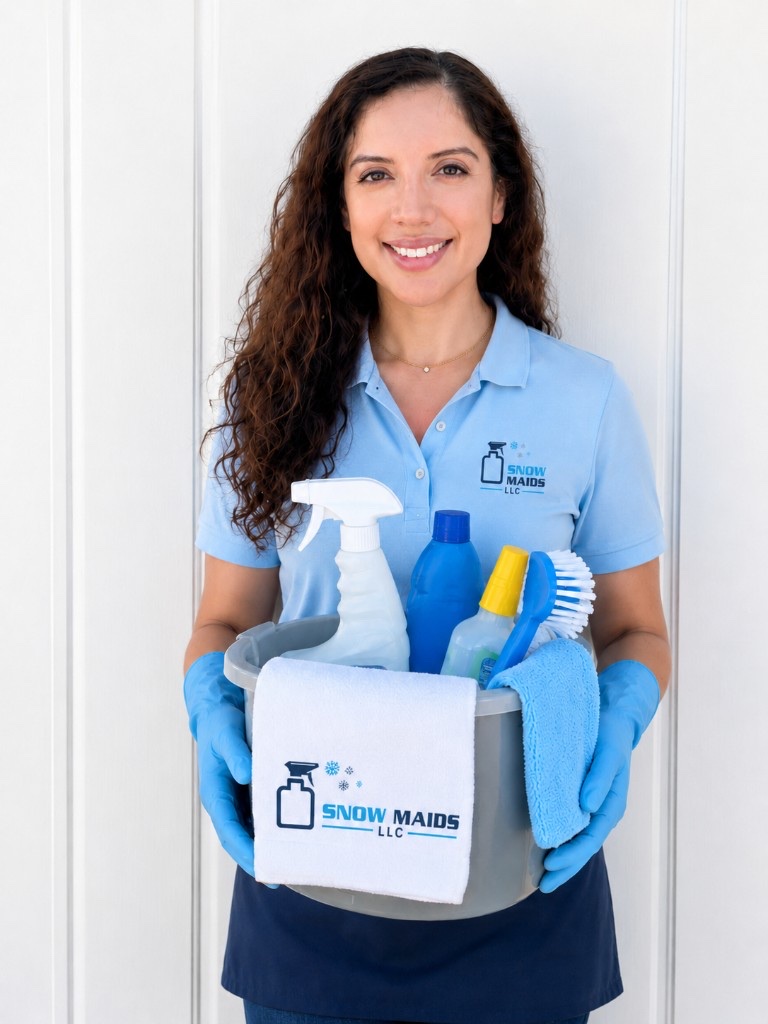
At Snow Maids, LLC, we understand that you don't have the time to worry about dust bunny migrations, dirty breakrooms, or germ-ridden keyboards. You have a business to run, clients to serve, and goals to crush. That is why we provide reliable, tailored, "squeaky cleanings" designed to give you your time back and keep your team operating at peak performance.
Serving Castle Rock, Denver, Centennial, Lone Tree, Englewood, Littleton, Highlands Ranch, and the surrounding areas, our professional commercial cleaning services are customized to fit your unique space, schedule, and business needs. Let us handle the dirt, the dust, and the germs so your team can focus on what they do best.
Ready to boost focus, cut down on sick days, and elevate your workplace culture? Contact us today to learn more about our commercial cleaning options and get a custom plan for your office.
Get a professional commercial cleaning quote from Snow Maids, LLC today!
Why a Clean Workspace Is the Productivity Hack Most Businesses Overlook
Understanding how a clean workspace improves employee productivity is one of the most practical steps any business manager or office leader can take in 2026. Yet despite mountains of research supporting the connection, cleanliness is still one of the last things most organizations think about when trying to get more out of their teams.
Here is a quick look at the core ways a clean workspace drives productivity:
- Better focus - Clutter competes for your brain's attention, making it harder to concentrate on the task in front of you
- Fewer sick days - Cleaner surfaces and better air quality mean fewer illnesses spreading through the office
- Lower stress - Tidy environments reduce cortisol levels and create a calmer, more psychologically safe atmosphere
- Higher morale - Employees who work in well-maintained spaces feel more valued by their employer
- Sharper cognitive performance - Improved air quality and reduced visual noise directly support memory, decision-making, and problem-solving
The numbers back this up. According to survey data, 94% of employees report feeling more productive in a clean workspace, and 77% say they concentrate better and work more efficiently when their environment is organized. A Dutch academic study found that higher measured cleanliness correlates significantly with both higher perceived productivity and greater work satisfaction among office employees.
And then there is this: office desks harbor more than 400 times the amount of bacteria found on a typical toilet seat. That single fact tends to change the conversation quickly.
Whether you manage a five-person team in a shared suite or oversee a large open-plan floor, the environment your employees work in shapes how well they think, how often they get sick, and how much they care about showing up and doing great work. This guide walks you through exactly what the research says and what you can do about it.

How a clean workspace improves employee productivity terms you need:
- commercial cleaning benefits for your business
- commercial cleaning options for offices and retail spaces
The Science of Cleanliness: How a Clean Workspace Improves Employee Productivity
When we talk about a clean office, we are not just talking about keeping things looking pretty for clients. There is a deep, biological, and neurological connection between our physical surroundings and how our brains process information.
Many office managers spend thousands of dollars on productivity software, project management tools, and team-building retreats, completely ignoring the dust on the desks and the clutter in the hallways. But cognitive science shows that the physical environment is the foundation upon which all other work habits are built.
A landmark study by the Princeton Neuroscience Institute looked at how the human brain processes visual stimuli in disorganized versus organized environments. The researchers found that visual clutter competes directly for your brain's processing capacity. When your desk is covered in old coffee cups, scattered sticky notes, and random folders, your visual cortex is constantly being overloaded. Your brain has to work significantly harder to filter out these distractions just to focus on the task at hand.
This constant filtering drains your prefrontal cortex—the area of the brain responsible for executive functions like decision-making, task prioritization, and impulse control. By the time 2:00 PM rolls around, your team isn't just tired from working; they are mentally exhausted from fighting their environment.
Furthermore, cluttered environments have been shown to elevate cortisol levels (the body's primary stress hormone). High cortisol levels over extended periods lead to mental fatigue, slower reaction times, and an increased rate of technical errors. By establishing a clean, structured environment, you drastically reduce this subconscious cognitive load, freeing up mental energy for high-level creative thinking and problem-solving.
To keep your office running at peak cognitive efficiency, investing in Professional Office Cleaning Solutions is one of the most effective strategic moves you can make.
Cognitive Load and Focus: How a Clean Workspace Improves Employee Productivity
The relationship between visual order and attention span is direct. When an employee sits down at a clean, sanitized desk on a Monday morning, they experience a sense of mental clarity. There are no visual "to-do" lists screaming for their attention—no sticky notes from three weeks ago, no layer of dust on the monitor, and no crumbs from last Thursday’s lunch.
This lack of distraction supports what psychologists call the "flow state"—the optimal state of consciousness where we feel our best and perform our best. In a messy workspace, entering this state is incredibly difficult. Every time an employee looks up, their eyes land on a physical distraction, causing minor but frequent task-switching errors.
In fact, research shows that the average employee in a cluttered office wastes roughly 4.3 hours per week searching for misplaced items, digital assets, or paperwork. That is over 17 hours of lost productivity per employee every single month! When everything has a designated, clean home, executive function thrives. Employees can prioritize tasks easily, transition between projects without friction, and maintain their focus for longer stretches of time.
Health, Absenteeism, and the Biological Impact of Office Germs
While cognitive load is a silent productivity killer, biological pathogens are a highly visible and expensive one. The average office desk is a hotbed for microbes. As mentioned earlier, research has revealed that office desks harbor over 400 times more bacteria than a typical toilet seat. Keyboards can contain more than 10 million bacteria per square inch, and office phones are not much better.
When you pack multiple people into an enclosed space, germ transmission happens at a terrifying speed. Studies show that a virus introduced to a single doorknob or shared office surface can spread to 60% of the office’s high-touch surfaces within just a few hours.
This rapid spread has a direct impact on your bottom line. Minor illnesses like seasonal colds, influenza, and stomach bugs account for a massive chunk of workplace absences. In a typical office, a single sick day from one employee can cost a business hundreds of dollars in lost output, not to mention the stress placed on other team members who have to cover their workload.
By implementing strict sanitization protocols, businesses can see a massive reduction in absenteeism. Professional sanitization targets high-touch surfaces—like elevator buttons, refrigerator handles, keyboards, and conference room tables—with EPA-registered disinfectants. Regular, thorough cleaning has been shown to reduce overall employee sick days by up to 30%.
For a deeper dive into how sanitization keeps your team at their desks and performing their best, check out our guide on The Impact of Cleanliness on Employee Health and Absenteeism.
The Psychological and Cultural Benefits of a Spotless Office
Beyond the raw science of germs and cognitive load, we must look at the psychological impact of a clean workplace. Humans are deeply affected by their physical environments. When we walk into a clean, bright, and fresh-smelling space, our mood instantly improves. When we walk into a dark, dusty office with overflowing trash cans and stained carpets, we feel a sense of neglect.
For business owners in Colorado—from Castle Rock to Denver—maintaining a spotless office is a key component of building a thriving company culture. When an employer invests in keeping the workspace clean, it sends a powerful psychological signal to the team: We care about your health, your comfort, and your daily experience.
This gesture of respect builds a strong sense of workplace pride. Employees who work in clean, well-maintained environments are more engaged, report higher job satisfaction, and are less likely to experience burnout. In fact, studies show that happy employees are roughly 13% more productive than their unhappy peers. Cleanliness is a simple, highly controllable variable that directly influences that happiness.
To understand the broader business impacts of a pristine facility, read about the Commercial Cleaning Benefits for Your Business.
Stress Reduction and Mental Well-Being: How a Clean Workspace Improves Employee Productivity
A chaotic physical environment breeds a chaotic mind. When common areas, breakrooms, and individual desks are cluttered, it creates a sense of low-grade, chronic stress. Employees may not consciously realize it, but their brains are registering the mess as an unfinished chore, which triggers the release of stress hormones.
By contrast, a sanitized, uncluttered workspace acts as a buffer against workplace anxiety. It provides a clean slate each morning, giving employees a sense of control over their day. This feeling of control is a cornerstone of psychological safety. When employees feel safe, comfortable, and respected in their physical environment, they are far more likely to speak up, share creative ideas, and collaborate enthusiastically.
Task satisfaction also skyrockets when the physical friction of a messy office is removed. Instead of feeling frustrated by dirty microwaves, sticky countertops, or dusty keyboards, employees can channel all of their energy into their core responsibilities.
Professional Image and Talent Retention
Your office is a physical representation of your brand, your values, and your operational standards. First impressions are formed within a fraction of a second. When clients, partners, or prospective hires walk through your doors, they are immediately evaluating your competence based on what they see.
A spotless lobby, sparkling windows, and fresh carpets project professionalism, attention to detail, and financial stability. It builds instant trust and credibility. Conversely, a dirty office can quietly ruin a business deal before the meeting even starts.
Cleanliness is also a powerful tool for talent retention. In a competitive labor market, top performers have choices. If they have to spend 40 hours a week in a building that smells musty, has stained restroom grout, and dusty desks, they will eventually look for opportunities elsewhere.
In fact, three-quarters of Americans agree that the condition of an office restroom directly reflects how much a company values its employees. If your restrooms are neglected, your staff will feel neglected. By prioritizing high-quality cleaning, you protect your investment in your people and make your office a place where top talent actually wants to work.
Practical Steps for Maintaining a High-Performance Work Environment
Maintaining a pristine office requires a systematic approach. You cannot rely on occasional deep cleans or expect your employees to handle heavy-duty sanitation on top of their actual jobs. To achieve consistent, measurable productivity gains, you need a clear strategy.
Here is a comparison of what it looks like to rely on in-house cleaning versus partnering with a professional service:
| Feature/Metric | In-House / Employee-Led Cleaning | Professional Commercial Cleaning |
|---|---|---|
| Primary Focus | Takes employees away from core revenue-generating tasks | Performed by trained specialists; zero disruption to staff |
| Equipment & Tech | Standard domestic vacuums, basic store-bought wipes | Industrial HEPA vacuums, EPA-registered disinfectants |
| Consistency | Often skipped during busy periods or when staff are sick | Reliable, scheduled after-hours visits (3-5x per week) |
| Air Quality Impact | Minimal; often just redistributes dust with cheap tools | High; deep carpet extraction and HEPA filtration |
| Sanitization Standard | Visual cleaning only (wiping away visible dirt) | True disinfection (killing pathogens at a microscopic level) |
| Productivity ROI | Low; causes resentment and wastes valuable billable hours | High; yields up to a 12% to 20% boost in overall output |
To build a culture of cleanliness without burdening your team, consider implementing these simple, actionable habits:
- Enforce a Clean-Desk Policy: Encourage employees to clear their desks of all paperwork, food wrappers, and personal items at the end of each day. This not only reduces visual clutter but also allows cleaning crews to thoroughly disinfect the actual desk surface.
- Establish Daily Sanitization Habits: Provide easily accessible sanitizing wipes in common areas. Encourage staff to wipe down shared equipment, like copy machines or microwave buttons, after use.
- Minimize Paper Usage: Transition to digital workflows wherever possible. Less paper means fewer filing cabinets, less physical clutter, and fewer places for dust to collect.
- Schedule Professional Maintenance: Combine daily tidying with scheduled professional cleaning. Having a team come in after hours ensures that carpets are vacuumed, trash is emptied, and restrooms are sanitized before your team arrives the next morning.
For practical, localized advice on keeping office spaces in the Denver Metro Area looking their best, explore our Office Cleaning Guide Lakewood Co or check out our top Office Cleaning Tips Colorado Springs Co.
Frequently Asked Questions About Workspace Cleanliness
How does office air quality affect employee cognitive performance?
Indoor air quality is one of the most significant, yet invisible, drivers of employee performance. In sealed office buildings, carbon dioxide (CO2) levels can rise rapidly over the course of the day, especially in crowded meeting rooms.
When CO2 levels exceed 1,000 parts per million (ppm), human cognitive performance, decision-making, and reaction times can drop by up to 60%. Employees start feeling sluggish, sleepy, and suffer from afternoon brain fog.
Additionally, airborne dust, pollen, and pet dander trapped in office carpets can trigger allergy symptoms, which research shows can degrade cognitive performance by roughly 34%. Regular professional cleaning using industrial vacuums with HEPA filters removes these particles from the environment, ensuring your team has clean, oxygen-rich air to keep their minds sharp all day long.
What are the dirtiest areas in a typical office environment?
While most people assume office restrooms are the dirtiest spots, studies show that individual workspaces and breakrooms actually harbor far more bacteria. The top offenders include:
- Office Desks & Keyboards: Because employees eat, sneeze, and work at their desks, these surfaces collect millions of microbes.
- Computer Mice & Phones: High-touch items that are rarely cleaned.
- Breakroom Sponge & Sink: Sponges are moisture traps that spread bacteria across dishes and countertops if not replaced regularly.
- Refrigerator & Microwave Handles: Touched by dozens of hands daily before eating.
- Water Cooler Buttons & Coffee Makers: High-traffic touchpoints that are often overlooked during quick tidying sessions.
How often should a professional office deep clean be scheduled?
For most offices in Castle Rock and the Denver Metro Area, a standard janitorial cleaning should occur 3 to 5 times per week to handle daily trash, surface wiping, and restroom sanitization.
However, a comprehensive deep clean should be scheduled every 6 to 12 months. This includes deep carpet extraction cleaning, upholstery steam cleaning, window washing, and detailed HVAC vent cleaning.
Deep cleans are especially critical during seasonal transitions. For example, scheduling a deep clean in late autumn before the winter flu season hits helps eliminate lingering pathogens. Similarly, a spring deep clean is perfect for removing tracked-in mud, winter road salt, and early pollen.
Conclusion
At the end of the day, understanding how a clean workspace improves employee productivity isn't just an academic exercise—it is a massive competitive advantage. When you invest in a clean, organized, and healthy office, you are investing in your business’s most valuable asset: your people.
At Snow Maids, LLC, we understand that you don't have the time to worry about dust bunny migrations, dirty breakrooms, or germ-ridden keyboards. You have a business to run, clients to serve, and goals to crush. That is why we provide reliable, tailored, "squeaky cleanings" designed to give you your time back and keep your team operating at peak performance.
Serving Castle Rock, Denver, Centennial, Lone Tree, Englewood, Littleton, Highlands Ranch, and the surrounding areas, our professional commercial cleaning services are customized to fit your unique space, schedule, and business needs. Let us handle the dirt, the dust, and the germs so your team can focus on what they do best.
Ready to boost focus, cut down on sick days, and elevate your workplace culture? Contact us today to learn more about our commercial cleaning options and get a custom plan for your office.
Get a professional commercial cleaning quote from Snow Maids, LLC today!
Why a Clean Workspace Is the Productivity Hack Most Businesses Overlook
Understanding how a clean workspace improves employee productivity is one of the most practical steps any business manager or office leader can take in 2026. Yet despite mountains of research supporting the connection, cleanliness is still one of the last things most organizations think about when trying to get more out of their teams.
Here is a quick look at the core ways a clean workspace drives productivity:
- Better focus - Clutter competes for your brain's attention, making it harder to concentrate on the task in front of you
- Fewer sick days - Cleaner surfaces and better air quality mean fewer illnesses spreading through the office
- Lower stress - Tidy environments reduce cortisol levels and create a calmer, more psychologically safe atmosphere
- Higher morale - Employees who work in well-maintained spaces feel more valued by their employer
- Sharper cognitive performance - Improved air quality and reduced visual noise directly support memory, decision-making, and problem-solving
The numbers back this up. According to survey data, 94% of employees report feeling more productive in a clean workspace, and 77% say they concentrate better and work more efficiently when their environment is organized. A Dutch academic study found that higher measured cleanliness correlates significantly with both higher perceived productivity and greater work satisfaction among office employees.
And then there is this: office desks harbor more than 400 times the amount of bacteria found on a typical toilet seat. That single fact tends to change the conversation quickly.
Whether you manage a five-person team in a shared suite or oversee a large open-plan floor, the environment your employees work in shapes how well they think, how often they get sick, and how much they care about showing up and doing great work. This guide walks you through exactly what the research says and what you can do about it.

How a clean workspace improves employee productivity terms you need:
- commercial cleaning benefits for your business
- commercial cleaning options for offices and retail spaces
The Science of Cleanliness: How a Clean Workspace Improves Employee Productivity
When we talk about a clean office, we are not just talking about keeping things looking pretty for clients. There is a deep, biological, and neurological connection between our physical surroundings and how our brains process information.
Many office managers spend thousands of dollars on productivity software, project management tools, and team-building retreats, completely ignoring the dust on the desks and the clutter in the hallways. But cognitive science shows that the physical environment is the foundation upon which all other work habits are built.
A landmark study by the Princeton Neuroscience Institute looked at how the human brain processes visual stimuli in disorganized versus organized environments. The researchers found that visual clutter competes directly for your brain's processing capacity. When your desk is covered in old coffee cups, scattered sticky notes, and random folders, your visual cortex is constantly being overloaded. Your brain has to work significantly harder to filter out these distractions just to focus on the task at hand.
This constant filtering drains your prefrontal cortex—the area of the brain responsible for executive functions like decision-making, task prioritization, and impulse control. By the time 2:00 PM rolls around, your team isn't just tired from working; they are mentally exhausted from fighting their environment.
Furthermore, cluttered environments have been shown to elevate cortisol levels (the body's primary stress hormone). High cortisol levels over extended periods lead to mental fatigue, slower reaction times, and an increased rate of technical errors. By establishing a clean, structured environment, you drastically reduce this subconscious cognitive load, freeing up mental energy for high-level creative thinking and problem-solving.
To keep your office running at peak cognitive efficiency, investing in Professional Office Cleaning Solutions is one of the most effective strategic moves you can make.
Cognitive Load and Focus: How a Clean Workspace Improves Employee Productivity
The relationship between visual order and attention span is direct. When an employee sits down at a clean, sanitized desk on a Monday morning, they experience a sense of mental clarity. There are no visual "to-do" lists screaming for their attention—no sticky notes from three weeks ago, no layer of dust on the monitor, and no crumbs from last Thursday’s lunch.
This lack of distraction supports what psychologists call the "flow state"—the optimal state of consciousness where we feel our best and perform our best. In a messy workspace, entering this state is incredibly difficult. Every time an employee looks up, their eyes land on a physical distraction, causing minor but frequent task-switching errors.
In fact, research shows that the average employee in a cluttered office wastes roughly 4.3 hours per week searching for misplaced items, digital assets, or paperwork. That is over 17 hours of lost productivity per employee every single month! When everything has a designated, clean home, executive function thrives. Employees can prioritize tasks easily, transition between projects without friction, and maintain their focus for longer stretches of time.
Health, Absenteeism, and the Biological Impact of Office Germs
While cognitive load is a silent productivity killer, biological pathogens are a highly visible and expensive one. The average office desk is a hotbed for microbes. As mentioned earlier, research has revealed that office desks harbor over 400 times more bacteria than a typical toilet seat. Keyboards can contain more than 10 million bacteria per square inch, and office phones are not much better.
When you pack multiple people into an enclosed space, germ transmission happens at a terrifying speed. Studies show that a virus introduced to a single doorknob or shared office surface can spread to 60% of the office’s high-touch surfaces within just a few hours.
This rapid spread has a direct impact on your bottom line. Minor illnesses like seasonal colds, influenza, and stomach bugs account for a massive chunk of workplace absences. In a typical office, a single sick day from one employee can cost a business hundreds of dollars in lost output, not to mention the stress placed on other team members who have to cover their workload.
By implementing strict sanitization protocols, businesses can see a massive reduction in absenteeism. Professional sanitization targets high-touch surfaces—like elevator buttons, refrigerator handles, keyboards, and conference room tables—with EPA-registered disinfectants. Regular, thorough cleaning has been shown to reduce overall employee sick days by up to 30%.
For a deeper dive into how sanitization keeps your team at their desks and performing their best, check out our guide on The Impact of Cleanliness on Employee Health and Absenteeism.
The Psychological and Cultural Benefits of a Spotless Office
Beyond the raw science of germs and cognitive load, we must look at the psychological impact of a clean workplace. Humans are deeply affected by their physical environments. When we walk into a clean, bright, and fresh-smelling space, our mood instantly improves. When we walk into a dark, dusty office with overflowing trash cans and stained carpets, we feel a sense of neglect.
For business owners in Colorado—from Castle Rock to Denver—maintaining a spotless office is a key component of building a thriving company culture. When an employer invests in keeping the workspace clean, it sends a powerful psychological signal to the team: We care about your health, your comfort, and your daily experience.
This gesture of respect builds a strong sense of workplace pride. Employees who work in clean, well-maintained environments are more engaged, report higher job satisfaction, and are less likely to experience burnout. In fact, studies show that happy employees are roughly 13% more productive than their unhappy peers. Cleanliness is a simple, highly controllable variable that directly influences that happiness.
To understand the broader business impacts of a pristine facility, read about the Commercial Cleaning Benefits for Your Business.
Stress Reduction and Mental Well-Being: How a Clean Workspace Improves Employee Productivity
A chaotic physical environment breeds a chaotic mind. When common areas, breakrooms, and individual desks are cluttered, it creates a sense of low-grade, chronic stress. Employees may not consciously realize it, but their brains are registering the mess as an unfinished chore, which triggers the release of stress hormones.
By contrast, a sanitized, uncluttered workspace acts as a buffer against workplace anxiety. It provides a clean slate each morning, giving employees a sense of control over their day. This feeling of control is a cornerstone of psychological safety. When employees feel safe, comfortable, and respected in their physical environment, they are far more likely to speak up, share creative ideas, and collaborate enthusiastically.
Task satisfaction also skyrockets when the physical friction of a messy office is removed. Instead of feeling frustrated by dirty microwaves, sticky countertops, or dusty keyboards, employees can channel all of their energy into their core responsibilities.
Professional Image and Talent Retention
Your office is a physical representation of your brand, your values, and your operational standards. First impressions are formed within a fraction of a second. When clients, partners, or prospective hires walk through your doors, they are immediately evaluating your competence based on what they see.
A spotless lobby, sparkling windows, and fresh carpets project professionalism, attention to detail, and financial stability. It builds instant trust and credibility. Conversely, a dirty office can quietly ruin a business deal before the meeting even starts.
Cleanliness is also a powerful tool for talent retention. In a competitive labor market, top performers have choices. If they have to spend 40 hours a week in a building that smells musty, has stained restroom grout, and dusty desks, they will eventually look for opportunities elsewhere.
In fact, three-quarters of Americans agree that the condition of an office restroom directly reflects how much a company values its employees. If your restrooms are neglected, your staff will feel neglected. By prioritizing high-quality cleaning, you protect your investment in your people and make your office a place where top talent actually wants to work.
Practical Steps for Maintaining a High-Performance Work Environment
Maintaining a pristine office requires a systematic approach. You cannot rely on occasional deep cleans or expect your employees to handle heavy-duty sanitation on top of their actual jobs. To achieve consistent, measurable productivity gains, you need a clear strategy.
Here is a comparison of what it looks like to rely on in-house cleaning versus partnering with a professional service:
| Feature/Metric | In-House / Employee-Led Cleaning | Professional Commercial Cleaning |
|---|---|---|
| Primary Focus | Takes employees away from core revenue-generating tasks | Performed by trained specialists; zero disruption to staff |
| Equipment & Tech | Standard domestic vacuums, basic store-bought wipes | Industrial HEPA vacuums, EPA-registered disinfectants |
| Consistency | Often skipped during busy periods or when staff are sick | Reliable, scheduled after-hours visits (3-5x per week) |
| Air Quality Impact | Minimal; often just redistributes dust with cheap tools | High; deep carpet extraction and HEPA filtration |
| Sanitization Standard | Visual cleaning only (wiping away visible dirt) | True disinfection (killing pathogens at a microscopic level) |
| Productivity ROI | Low; causes resentment and wastes valuable billable hours | High; yields up to a 12% to 20% boost in overall output |
To build a culture of cleanliness without burdening your team, consider implementing these simple, actionable habits:
- Enforce a Clean-Desk Policy: Encourage employees to clear their desks of all paperwork, food wrappers, and personal items at the end of each day. This not only reduces visual clutter but also allows cleaning crews to thoroughly disinfect the actual desk surface.
- Establish Daily Sanitization Habits: Provide easily accessible sanitizing wipes in common areas. Encourage staff to wipe down shared equipment, like copy machines or microwave buttons, after use.
- Minimize Paper Usage: Transition to digital workflows wherever possible. Less paper means fewer filing cabinets, less physical clutter, and fewer places for dust to collect.
- Schedule Professional Maintenance: Combine daily tidying with scheduled professional cleaning. Having a team come in after hours ensures that carpets are vacuumed, trash is emptied, and restrooms are sanitized before your team arrives the next morning.
For practical, localized advice on keeping office spaces in the Denver Metro Area looking their best, explore our Office Cleaning Guide Lakewood Co or check out our top Office Cleaning Tips Colorado Springs Co.
Frequently Asked Questions About Workspace Cleanliness
How does office air quality affect employee cognitive performance?
Indoor air quality is one of the most significant, yet invisible, drivers of employee performance. In sealed office buildings, carbon dioxide (CO2) levels can rise rapidly over the course of the day, especially in crowded meeting rooms.
When CO2 levels exceed 1,000 parts per million (ppm), human cognitive performance, decision-making, and reaction times can drop by up to 60%. Employees start feeling sluggish, sleepy, and suffer from afternoon brain fog.
Additionally, airborne dust, pollen, and pet dander trapped in office carpets can trigger allergy symptoms, which research shows can degrade cognitive performance by roughly 34%. Regular professional cleaning using industrial vacuums with HEPA filters removes these particles from the environment, ensuring your team has clean, oxygen-rich air to keep their minds sharp all day long.
What are the dirtiest areas in a typical office environment?
While most people assume office restrooms are the dirtiest spots, studies show that individual workspaces and breakrooms actually harbor far more bacteria. The top offenders include:
- Office Desks & Keyboards: Because employees eat, sneeze, and work at their desks, these surfaces collect millions of microbes.
- Computer Mice & Phones: High-touch items that are rarely cleaned.
- Breakroom Sponge & Sink: Sponges are moisture traps that spread bacteria across dishes and countertops if not replaced regularly.
- Refrigerator & Microwave Handles: Touched by dozens of hands daily before eating.
- Water Cooler Buttons & Coffee Makers: High-traffic touchpoints that are often overlooked during quick tidying sessions.
How often should a professional office deep clean be scheduled?
For most offices in Castle Rock and the Denver Metro Area, a standard janitorial cleaning should occur 3 to 5 times per week to handle daily trash, surface wiping, and restroom sanitization.
However, a comprehensive deep clean should be scheduled every 6 to 12 months. This includes deep carpet extraction cleaning, upholstery steam cleaning, window washing, and detailed HVAC vent cleaning.
Deep cleans are especially critical during seasonal transitions. For example, scheduling a deep clean in late autumn before the winter flu season hits helps eliminate lingering pathogens. Similarly, a spring deep clean is perfect for removing tracked-in mud, winter road salt, and early pollen.
Conclusion
At the end of the day, understanding how a clean workspace improves employee productivity isn't just an academic exercise—it is a massive competitive advantage. When you invest in a clean, organized, and healthy office, you are investing in your business’s most valuable asset: your people.
At Snow Maids, LLC, we understand that you don't have the time to worry about dust bunny migrations, dirty breakrooms, or germ-ridden keyboards. You have a business to run, clients to serve, and goals to crush. That is why we provide reliable, tailored, "squeaky cleanings" designed to give you your time back and keep your team operating at peak performance.
Serving Castle Rock, Denver, Centennial, Lone Tree, Englewood, Littleton, Highlands Ranch, and the surrounding areas, our professional commercial cleaning services are customized to fit your unique space, schedule, and business needs. Let us handle the dirt, the dust, and the germs so your team can focus on what they do best.
Ready to boost focus, cut down on sick days, and elevate your workplace culture? Contact us today to learn more about our commercial cleaning options and get a custom plan for your office.
Get a professional commercial cleaning quote from Snow Maids, LLC today!
Why a Clean Workspace Is the Productivity Hack Most Businesses Overlook
Understanding how a clean workspace improves employee productivity is one of the most practical steps any business manager or office leader can take in 2026. Yet despite mountains of research supporting the connection, cleanliness is still one of the last things most organizations think about when trying to get more out of their teams.
Here is a quick look at the core ways a clean workspace drives productivity:
- Better focus - Clutter competes for your brain's attention, making it harder to concentrate on the task in front of you
- Fewer sick days - Cleaner surfaces and better air quality mean fewer illnesses spreading through the office
- Lower stress - Tidy environments reduce cortisol levels and create a calmer, more psychologically safe atmosphere
- Higher morale - Employees who work in well-maintained spaces feel more valued by their employer
- Sharper cognitive performance - Improved air quality and reduced visual noise directly support memory, decision-making, and problem-solving
The numbers back this up. According to survey data, 94% of employees report feeling more productive in a clean workspace, and 77% say they concentrate better and work more efficiently when their environment is organized. A Dutch academic study found that higher measured cleanliness correlates significantly with both higher perceived productivity and greater work satisfaction among office employees.
And then there is this: office desks harbor more than 400 times the amount of bacteria found on a typical toilet seat. That single fact tends to change the conversation quickly.
Whether you manage a five-person team in a shared suite or oversee a large open-plan floor, the environment your employees work in shapes how well they think, how often they get sick, and how much they care about showing up and doing great work. This guide walks you through exactly what the research says and what you can do about it.

How a clean workspace improves employee productivity terms you need:
- commercial cleaning benefits for your business
- commercial cleaning options for offices and retail spaces
The Science of Cleanliness: How a Clean Workspace Improves Employee Productivity
When we talk about a clean office, we are not just talking about keeping things looking pretty for clients. There is a deep, biological, and neurological connection between our physical surroundings and how our brains process information.
Many office managers spend thousands of dollars on productivity software, project management tools, and team-building retreats, completely ignoring the dust on the desks and the clutter in the hallways. But cognitive science shows that the physical environment is the foundation upon which all other work habits are built.
A landmark study by the Princeton Neuroscience Institute looked at how the human brain processes visual stimuli in disorganized versus organized environments. The researchers found that visual clutter competes directly for your brain's processing capacity. When your desk is covered in old coffee cups, scattered sticky notes, and random folders, your visual cortex is constantly being overloaded. Your brain has to work significantly harder to filter out these distractions just to focus on the task at hand.
This constant filtering drains your prefrontal cortex—the area of the brain responsible for executive functions like decision-making, task prioritization, and impulse control. By the time 2:00 PM rolls around, your team isn't just tired from working; they are mentally exhausted from fighting their environment.
Furthermore, cluttered environments have been shown to elevate cortisol levels (the body's primary stress hormone). High cortisol levels over extended periods lead to mental fatigue, slower reaction times, and an increased rate of technical errors. By establishing a clean, structured environment, you drastically reduce this subconscious cognitive load, freeing up mental energy for high-level creative thinking and problem-solving.
To keep your office running at peak cognitive efficiency, investing in Professional Office Cleaning Solutions is one of the most effective strategic moves you can make.
Cognitive Load and Focus: How a Clean Workspace Improves Employee Productivity
The relationship between visual order and attention span is direct. When an employee sits down at a clean, sanitized desk on a Monday morning, they experience a sense of mental clarity. There are no visual "to-do" lists screaming for their attention—no sticky notes from three weeks ago, no layer of dust on the monitor, and no crumbs from last Thursday’s lunch.
This lack of distraction supports what psychologists call the "flow state"—the optimal state of consciousness where we feel our best and perform our best. In a messy workspace, entering this state is incredibly difficult. Every time an employee looks up, their eyes land on a physical distraction, causing minor but frequent task-switching errors.
In fact, research shows that the average employee in a cluttered office wastes roughly 4.3 hours per week searching for misplaced items, digital assets, or paperwork. That is over 17 hours of lost productivity per employee every single month! When everything has a designated, clean home, executive function thrives. Employees can prioritize tasks easily, transition between projects without friction, and maintain their focus for longer stretches of time.
Health, Absenteeism, and the Biological Impact of Office Germs
While cognitive load is a silent productivity killer, biological pathogens are a highly visible and expensive one. The average office desk is a hotbed for microbes. As mentioned earlier, research has revealed that office desks harbor over 400 times more bacteria than a typical toilet seat. Keyboards can contain more than 10 million bacteria per square inch, and office phones are not much better.
When you pack multiple people into an enclosed space, germ transmission happens at a terrifying speed. Studies show that a virus introduced to a single doorknob or shared office surface can spread to 60% of the office’s high-touch surfaces within just a few hours.
This rapid spread has a direct impact on your bottom line. Minor illnesses like seasonal colds, influenza, and stomach bugs account for a massive chunk of workplace absences. In a typical office, a single sick day from one employee can cost a business hundreds of dollars in lost output, not to mention the stress placed on other team members who have to cover their workload.
By implementing strict sanitization protocols, businesses can see a massive reduction in absenteeism. Professional sanitization targets high-touch surfaces—like elevator buttons, refrigerator handles, keyboards, and conference room tables—with EPA-registered disinfectants. Regular, thorough cleaning has been shown to reduce overall employee sick days by up to 30%.
For a deeper dive into how sanitization keeps your team at their desks and performing their best, check out our guide on The Impact of Cleanliness on Employee Health and Absenteeism.
The Psychological and Cultural Benefits of a Spotless Office
Beyond the raw science of germs and cognitive load, we must look at the psychological impact of a clean workplace. Humans are deeply affected by their physical environments. When we walk into a clean, bright, and fresh-smelling space, our mood instantly improves. When we walk into a dark, dusty office with overflowing trash cans and stained carpets, we feel a sense of neglect.
For business owners in Colorado—from Castle Rock to Denver—maintaining a spotless office is a key component of building a thriving company culture. When an employer invests in keeping the workspace clean, it sends a powerful psychological signal to the team: We care about your health, your comfort, and your daily experience.
This gesture of respect builds a strong sense of workplace pride. Employees who work in clean, well-maintained environments are more engaged, report higher job satisfaction, and are less likely to experience burnout. In fact, studies show that happy employees are roughly 13% more productive than their unhappy peers. Cleanliness is a simple, highly controllable variable that directly influences that happiness.
To understand the broader business impacts of a pristine facility, read about the Commercial Cleaning Benefits for Your Business.
Stress Reduction and Mental Well-Being: How a Clean Workspace Improves Employee Productivity
A chaotic physical environment breeds a chaotic mind. When common areas, breakrooms, and individual desks are cluttered, it creates a sense of low-grade, chronic stress. Employees may not consciously realize it, but their brains are registering the mess as an unfinished chore, which triggers the release of stress hormones.
By contrast, a sanitized, uncluttered workspace acts as a buffer against workplace anxiety. It provides a clean slate each morning, giving employees a sense of control over their day. This feeling of control is a cornerstone of psychological safety. When employees feel safe, comfortable, and respected in their physical environment, they are far more likely to speak up, share creative ideas, and collaborate enthusiastically.
Task satisfaction also skyrockets when the physical friction of a messy office is removed. Instead of feeling frustrated by dirty microwaves, sticky countertops, or dusty keyboards, employees can channel all of their energy into their core responsibilities.
Professional Image and Talent Retention
Your office is a physical representation of your brand, your values, and your operational standards. First impressions are formed within a fraction of a second. When clients, partners, or prospective hires walk through your doors, they are immediately evaluating your competence based on what they see.
A spotless lobby, sparkling windows, and fresh carpets project professionalism, attention to detail, and financial stability. It builds instant trust and credibility. Conversely, a dirty office can quietly ruin a business deal before the meeting even starts.
Cleanliness is also a powerful tool for talent retention. In a competitive labor market, top performers have choices. If they have to spend 40 hours a week in a building that smells musty, has stained restroom grout, and dusty desks, they will eventually look for opportunities elsewhere.
In fact, three-quarters of Americans agree that the condition of an office restroom directly reflects how much a company values its employees. If your restrooms are neglected, your staff will feel neglected. By prioritizing high-quality cleaning, you protect your investment in your people and make your office a place where top talent actually wants to work.
Practical Steps for Maintaining a High-Performance Work Environment
Maintaining a pristine office requires a systematic approach. You cannot rely on occasional deep cleans or expect your employees to handle heavy-duty sanitation on top of their actual jobs. To achieve consistent, measurable productivity gains, you need a clear strategy.
Here is a comparison of what it looks like to rely on in-house cleaning versus partnering with a professional service:
| Feature/Metric | In-House / Employee-Led Cleaning | Professional Commercial Cleaning |
|---|---|---|
| Primary Focus | Takes employees away from core revenue-generating tasks | Performed by trained specialists; zero disruption to staff |
| Equipment & Tech | Standard domestic vacuums, basic store-bought wipes | Industrial HEPA vacuums, EPA-registered disinfectants |
| Consistency | Often skipped during busy periods or when staff are sick | Reliable, scheduled after-hours visits (3-5x per week) |
| Air Quality Impact | Minimal; often just redistributes dust with cheap tools | High; deep carpet extraction and HEPA filtration |
| Sanitization Standard | Visual cleaning only (wiping away visible dirt) | True disinfection (killing pathogens at a microscopic level) |
| Productivity ROI | Low; causes resentment and wastes valuable billable hours | High; yields up to a 12% to 20% boost in overall output |
To build a culture of cleanliness without burdening your team, consider implementing these simple, actionable habits:
- Enforce a Clean-Desk Policy: Encourage employees to clear their desks of all paperwork, food wrappers, and personal items at the end of each day. This not only reduces visual clutter but also allows cleaning crews to thoroughly disinfect the actual desk surface.
- Establish Daily Sanitization Habits: Provide easily accessible sanitizing wipes in common areas. Encourage staff to wipe down shared equipment, like copy machines or microwave buttons, after use.
- Minimize Paper Usage: Transition to digital workflows wherever possible. Less paper means fewer filing cabinets, less physical clutter, and fewer places for dust to collect.
- Schedule Professional Maintenance: Combine daily tidying with scheduled professional cleaning. Having a team come in after hours ensures that carpets are vacuumed, trash is emptied, and restrooms are sanitized before your team arrives the next morning.
For practical, localized advice on keeping office spaces in the Denver Metro Area looking their best, explore our Office Cleaning Guide Lakewood Co or check out our top Office Cleaning Tips Colorado Springs Co.
Frequently Asked Questions About Workspace Cleanliness
How does office air quality affect employee cognitive performance?
Indoor air quality is one of the most significant, yet invisible, drivers of employee performance. In sealed office buildings, carbon dioxide (CO2) levels can rise rapidly over the course of the day, especially in crowded meeting rooms.
When CO2 levels exceed 1,000 parts per million (ppm), human cognitive performance, decision-making, and reaction times can drop by up to 60%. Employees start feeling sluggish, sleepy, and suffer from afternoon brain fog.
Additionally, airborne dust, pollen, and pet dander trapped in office carpets can trigger allergy symptoms, which research shows can degrade cognitive performance by roughly 34%. Regular professional cleaning using industrial vacuums with HEPA filters removes these particles from the environment, ensuring your team has clean, oxygen-rich air to keep their minds sharp all day long.
What are the dirtiest areas in a typical office environment?
While most people assume office restrooms are the dirtiest spots, studies show that individual workspaces and breakrooms actually harbor far more bacteria. The top offenders include:
- Office Desks & Keyboards: Because employees eat, sneeze, and work at their desks, these surfaces collect millions of microbes.
- Computer Mice & Phones: High-touch items that are rarely cleaned.
- Breakroom Sponge & Sink: Sponges are moisture traps that spread bacteria across dishes and countertops if not replaced regularly.
- Refrigerator & Microwave Handles: Touched by dozens of hands daily before eating.
- Water Cooler Buttons & Coffee Makers: High-traffic touchpoints that are often overlooked during quick tidying sessions.
How often should a professional office deep clean be scheduled?
For most offices in Castle Rock and the Denver Metro Area, a standard janitorial cleaning should occur 3 to 5 times per week to handle daily trash, surface wiping, and restroom sanitization.
However, a comprehensive deep clean should be scheduled every 6 to 12 months. This includes deep carpet extraction cleaning, upholstery steam cleaning, window washing, and detailed HVAC vent cleaning.
Deep cleans are especially critical during seasonal transitions. For example, scheduling a deep clean in late autumn before the winter flu season hits helps eliminate lingering pathogens. Similarly, a spring deep clean is perfect for removing tracked-in mud, winter road salt, and early pollen.
Conclusion
At the end of the day, understanding how a clean workspace improves employee productivity isn't just an academic exercise—it is a massive competitive advantage. When you invest in a clean, organized, and healthy office, you are investing in your business’s most valuable asset: your people.
At Snow Maids, LLC, we understand that you don't have the time to worry about dust bunny migrations, dirty breakrooms, or germ-ridden keyboards. You have a business to run, clients to serve, and goals to crush. That is why we provide reliable, tailored, "squeaky cleanings" designed to give you your time back and keep your team operating at peak performance.
Serving Castle Rock, Denver, Centennial, Lone Tree, Englewood, Littleton, Highlands Ranch, and the surrounding areas, our professional commercial cleaning services are customized to fit your unique space, schedule, and business needs. Let us handle the dirt, the dust, and the germs so your team can focus on what they do best.
Ready to boost focus, cut down on sick days, and elevate your workplace culture? Contact us today to learn more about our commercial cleaning options and get a custom plan for your office.
Get a professional commercial cleaning quote from Snow Maids, LLC today!
Why a Clean Workspace Is the Productivity Hack Most Businesses Overlook
Understanding how a clean workspace improves employee productivity is one of the most practical steps any business manager or office leader can take in 2026. Yet despite mountains of research supporting the connection, cleanliness is still one of the last things most organizations think about when trying to get more out of their teams.
Here is a quick look at the core ways a clean workspace drives productivity:
- Better focus - Clutter competes for your brain's attention, making it harder to concentrate on the task in front of you
- Fewer sick days - Cleaner surfaces and better air quality mean fewer illnesses spreading through the office
- Lower stress - Tidy environments reduce cortisol levels and create a calmer, more psychologically safe atmosphere
- Higher morale - Employees who work in well-maintained spaces feel more valued by their employer
- Sharper cognitive performance - Improved air quality and reduced visual noise directly support memory, decision-making, and problem-solving
The numbers back this up. According to survey data, 94% of employees report feeling more productive in a clean workspace, and 77% say they concentrate better and work more efficiently when their environment is organized. A Dutch academic study found that higher measured cleanliness correlates significantly with both higher perceived productivity and greater work satisfaction among office employees.
And then there is this: office desks harbor more than 400 times the amount of bacteria found on a typical toilet seat. That single fact tends to change the conversation quickly.
Whether you manage a five-person team in a shared suite or oversee a large open-plan floor, the environment your employees work in shapes how well they think, how often they get sick, and how much they care about showing up and doing great work. This guide walks you through exactly what the research says and what you can do about it.
How a clean workspace improves employee productivity terms you need:
- commercial cleaning benefits for your business
- commercial cleaning options for offices and retail spaces
The Science of Cleanliness: How a Clean Workspace Improves Employee Productivity
When we talk about a clean office, we are not just talking about keeping things looking pretty for clients. There is a deep, biological, and neurological connection between our physical surroundings and how our brains process information.
Many office managers spend thousands of dollars on productivity software, project management tools, and team-building retreats, completely ignoring the dust on the desks and the clutter in the hallways. But cognitive science shows that the physical environment is the foundation upon which all other work habits are built.
A landmark study by the Princeton Neuroscience Institute looked at how the human brain processes visual stimuli in disorganized versus organized environments. The researchers found that visual clutter competes directly for your brain's processing capacity. When your desk is covered in old coffee cups, scattered sticky notes, and random folders, your visual cortex is constantly being overloaded. Your brain has to work significantly harder to filter out these distractions just to focus on the task at hand.
This constant filtering drains your prefrontal cortex—the area of the brain responsible for executive functions like decision-making, task prioritization, and impulse control. By the time 2:00 PM rolls around, your team isn't just tired from working; they are mentally exhausted from fighting their environment.
Furthermore, cluttered environments have been shown to elevate cortisol levels (the body's primary stress hormone). High cortisol levels over extended periods lead to mental fatigue, slower reaction times, and an increased rate of technical errors. By establishing a clean, structured environment, you drastically reduce this subconscious cognitive load, freeing up mental energy for high-level creative thinking and problem-solving.
To keep your office running at peak cognitive efficiency, investing in Professional Office Cleaning Solutions is one of the most effective strategic moves you can make.
Cognitive Load and Focus: How a Clean Workspace Improves Employee Productivity
The relationship between visual order and attention span is direct. When an employee sits down at a clean, sanitized desk on a Monday morning, they experience a sense of mental clarity. There are no visual "to-do" lists screaming for their attention—no sticky notes from three weeks ago, no layer of dust on the monitor, and no crumbs from last Thursday’s lunch.
This lack of distraction supports what psychologists call the "flow state"—the optimal state of consciousness where we feel our best and perform our best. In a messy workspace, entering this state is incredibly difficult. Every time an employee looks up, their eyes land on a physical distraction, causing minor but frequent task-switching errors.
In fact, research shows that the average employee in a cluttered office wastes roughly 4.3 hours per week searching for misplaced items, digital assets, or paperwork. That is over 17 hours of lost productivity per employee every single month! When everything has a designated, clean home, executive function thrives. Employees can prioritize tasks easily, transition between projects without friction, and maintain their focus for longer stretches of time.
Health, Absenteeism, and the Biological Impact of Office Germs
While cognitive load is a silent productivity killer, biological pathogens are a highly visible and expensive one. The average office desk is a hotbed for microbes. As mentioned earlier, research has revealed that office desks harbor over 400 times more bacteria than a typical toilet seat. Keyboards can contain more than 10 million bacteria per square inch, and office phones are not much better.
When you pack multiple people into an enclosed space, germ transmission happens at a terrifying speed. Studies show that a virus introduced to a single doorknob or shared office surface can spread to 60% of the office’s high-touch surfaces within just a few hours.
This rapid spread has a direct impact on your bottom line. Minor illnesses like seasonal colds, influenza, and stomach bugs account for a massive chunk of workplace absences. In a typical office, a single sick day from one employee can cost a business hundreds of dollars in lost output, not to mention the stress placed on other team members who have to cover their workload.
By implementing strict sanitization protocols, businesses can see a massive reduction in absenteeism. Professional sanitization targets high-touch surfaces—like elevator buttons, refrigerator handles, keyboards, and conference room tables—with EPA-registered disinfectants. Regular, thorough cleaning has been shown to reduce overall employee sick days by up to 30%.
For a deeper dive into how sanitization keeps your team at their desks and performing their best, check out our guide on The Impact of Cleanliness on Employee Health and Absenteeism.
The Psychological and Cultural Benefits of a Spotless Office
Beyond the raw science of germs and cognitive load, we must look at the psychological impact of a clean workplace. Humans are deeply affected by their physical environments. When we walk into a clean, bright, and fresh-smelling space, our mood instantly improves. When we walk into a dark, dusty office with overflowing trash cans and stained carpets, we feel a sense of neglect.
For business owners in Colorado—from Castle Rock to Denver—maintaining a spotless office is a key component of building a thriving company culture. When an employer invests in keeping the workspace clean, it sends a powerful psychological signal to the team: We care about your health, your comfort, and your daily experience.
This gesture of respect builds a strong sense of workplace pride. Employees who work in clean, well-maintained environments are more engaged, report higher job satisfaction, and are less likely to experience burnout. In fact, studies show that happy employees are roughly 13% more productive than their unhappy peers. Cleanliness is a simple, highly controllable variable that directly influences that happiness.
To understand the broader business impacts of a pristine facility, read about the Commercial Cleaning Benefits for Your Business.
Stress Reduction and Mental Well-Being: How a Clean Workspace Improves Employee Productivity
A chaotic physical environment breeds a chaotic mind. When common areas, breakrooms, and individual desks are cluttered, it creates a sense of low-grade, chronic stress. Employees may not consciously realize it, but their brains are registering the mess as an unfinished chore, which triggers the release of stress hormones.
By contrast, a sanitized, uncluttered workspace acts as a buffer against workplace anxiety. It provides a clean slate each morning, giving employees a sense of control over their day. This feeling of control is a cornerstone of psychological safety. When employees feel safe, comfortable, and respected in their physical environment, they are far more likely to speak up, share creative ideas, and collaborate enthusiastically.
Task satisfaction also skyrockets when the physical friction of a messy office is removed. Instead of feeling frustrated by dirty microwaves, sticky countertops, or dusty keyboards, employees can channel all of their energy into their core responsibilities.
Professional Image and Talent Retention
Your office is a physical representation of your brand, your values, and your operational standards. First impressions are formed within a fraction of a second. When clients, partners, or prospective hires walk through your doors, they are immediately evaluating your competence based on what they see.
A spotless lobby, sparkling windows, and fresh carpets project professionalism, attention to detail, and financial stability. It builds instant trust and credibility. Conversely, a dirty office can quietly ruin a business deal before the meeting even starts.
Cleanliness is also a powerful tool for talent retention. In a competitive labor market, top performers have choices. If they have to spend 40 hours a week in a building that smells musty, has stained restroom grout, and dusty desks, they will eventually look for opportunities elsewhere.
In fact, three-quarters of Americans agree that the condition of an office restroom directly reflects how much a company values its employees. If your restrooms are neglected, your staff will feel neglected. By prioritizing high-quality cleaning, you protect your investment in your people and make your office a place where top talent actually wants to work.
Practical Steps for Maintaining a High-Performance Work Environment
Maintaining a pristine office requires a systematic approach. You cannot rely on occasional deep cleans or expect your employees to handle heavy-duty sanitation on top of their actual jobs. To achieve consistent, measurable productivity gains, you need a clear strategy.
Here is a comparison of what it looks like to rely on in-house cleaning versus partnering with a professional service:
| Feature/Metric | In-House / Employee-Led Cleaning | Professional Commercial Cleaning |
|---|---|---|
| Primary Focus | Takes employees away from core revenue-generating tasks | Performed by trained specialists; zero disruption to staff |
| Equipment & Tech | Standard domestic vacuums, basic store-bought wipes | Industrial HEPA vacuums, EPA-registered disinfectants |
| Consistency | Often skipped during busy periods or when staff are sick | Reliable, scheduled after-hours visits (3-5x per week) |
| Air Quality Impact | Minimal; often just redistributes dust with cheap tools | High; deep carpet extraction and HEPA filtration |
| Sanitization Standard | Visual cleaning only (wiping away visible dirt) | True disinfection (killing pathogens at a microscopic level) |
| Productivity ROI | Low; causes resentment and wastes valuable billable hours | High; yields up to a 12% to 20% boost in overall output |
To build a culture of cleanliness without burdening your team, consider implementing these simple, actionable habits:
- Enforce a Clean-Desk Policy: Encourage employees to clear their desks of all paperwork, food wrappers, and personal items at the end of each day. This not only reduces visual clutter but also allows cleaning crews to thoroughly disinfect the actual desk surface.
- Establish Daily Sanitization Habits: Provide easily accessible sanitizing wipes in common areas. Encourage staff to wipe down shared equipment, like copy machines or microwave buttons, after use.
- Minimize Paper Usage: Transition to digital workflows wherever possible. Less paper means fewer filing cabinets, less physical clutter, and fewer places for dust to collect.
- Schedule Professional Maintenance: Combine daily tidying with scheduled professional cleaning. Having a team come in after hours ensures that carpets are vacuumed, trash is emptied, and restrooms are sanitized before your team arrives the next morning.
For practical, localized advice on keeping office spaces in the Denver Metro Area looking their best, explore our Office Cleaning Guide Lakewood Co or check out our top Office Cleaning Tips Colorado Springs Co.
Frequently Asked Questions About Workspace Cleanliness
How does office air quality affect employee cognitive performance?
Indoor air quality is one of the most significant, yet invisible, drivers of employee performance. In sealed office buildings, carbon dioxide (CO2) levels can rise rapidly over the course of the day, especially in crowded meeting rooms.
When CO2 levels exceed 1,000 parts per million (ppm), human cognitive performance, decision-making, and reaction times can drop by up to 60%. Employees start feeling sluggish, sleepy, and suffer from afternoon brain fog.
Additionally, airborne dust, pollen, and pet dander trapped in office carpets can trigger allergy symptoms, which research shows can degrade cognitive performance by roughly 34%. Regular professional cleaning using industrial vacuums with HEPA filters removes these particles from the environment, ensuring your team has clean, oxygen-rich air to keep their minds sharp all day long.
What are the dirtiest areas in a typical office environment?
While most people assume office restrooms are the dirtiest spots, studies show that individual workspaces and breakrooms actually harbor far more bacteria. The top offenders include:
- Office Desks & Keyboards: Because employees eat, sneeze, and work at their desks, these surfaces collect millions of microbes.
- Computer Mice & Phones: High-touch items that are rarely cleaned.
- Breakroom Sponge & Sink: Sponges are moisture traps that spread bacteria across dishes and countertops if not replaced regularly.
- Refrigerator & Microwave Handles: Touched by dozens of hands daily before eating.
- Water Cooler Buttons & Coffee Makers: High-traffic touchpoints that are often overlooked during quick tidying sessions.
How often should a professional office deep clean be scheduled?
For most offices in Castle Rock and the Denver Metro Area, a standard janitorial cleaning should occur 3 to 5 times per week to handle daily trash, surface wiping, and restroom sanitization.
However, a comprehensive deep clean should be scheduled every 6 to 12 months. This includes deep carpet extraction cleaning, upholstery steam cleaning, window washing, and detailed HVAC vent cleaning.
Deep cleans are especially critical during seasonal transitions. For example, scheduling a deep clean in late autumn before the winter flu season hits helps eliminate lingering pathogens. Similarly, a spring deep clean is perfect for removing tracked-in mud, winter road salt, and early pollen.
Conclusion
At the end of the day, understanding how a clean workspace improves employee productivity isn't just an academic exercise—it is a massive competitive advantage. When you invest in a clean, organized, and healthy office, you are investing in your business’s most valuable asset: your people.
At Snow Maids, LLC, we understand that you don't have the time to worry about dust bunny migrations, dirty breakrooms, or germ-ridden keyboards. You have a business to run, clients to serve, and goals to crush. That is why we provide reliable, tailored, "squeaky cleanings" designed to give you your time back and keep your team operating at peak performance.
Serving Castle Rock, Denver, Centennial, Lone Tree, Englewood, Littleton, Highlands Ranch, and the surrounding areas, our professional commercial cleaning services are customized to fit your unique space, schedule, and business needs. Let us handle the dirt, the dust, and the germs so your team can focus on what they do best.
Ready to boost focus, cut down on sick days, and elevate your workplace culture? Contact us today to learn more about our commercial cleaning options and get a custom plan for your office.
Get a professional commercial cleaning quote from Snow Maids, LLC today!
More from the Snow Maids Journal
- how-to-guides Who provides the best bi weekly house cleaning services in Elizabeth, CO? Read the article
- how-to-guides Who offers post construction cleaning services for a new home build in Castle Rock? Read the article
- how-to-guides Who are the top-rated maid services in Highlands Ranch? Read the article