Why Commercial Cleaning Reduces Employee Sick Days — And What It Costs When You Ignore It
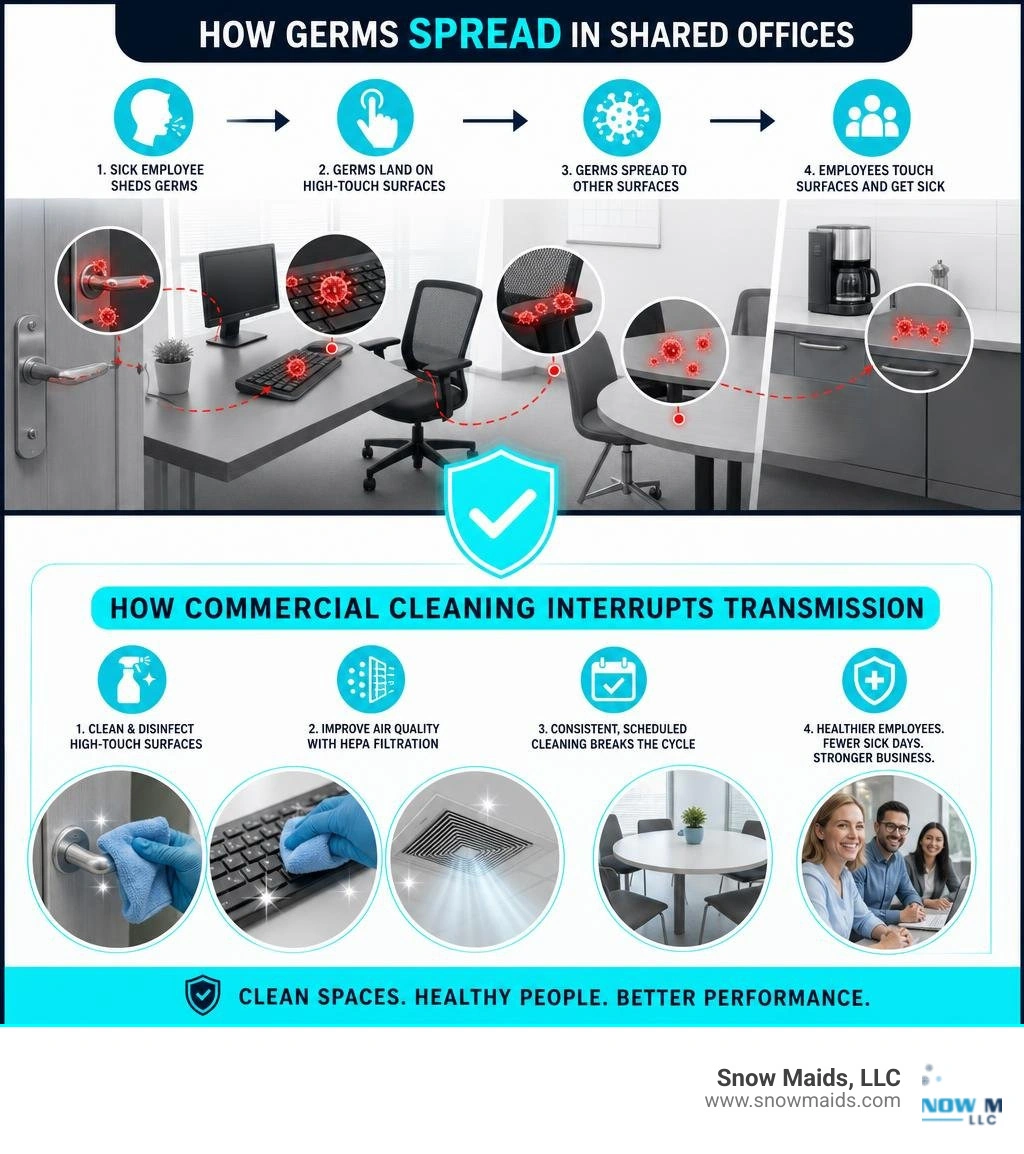
Understanding how commercial cleaning reduces employee sick days starts with a simple reality: shared workspaces are germ highways. Every doorknob, keyboard, breakroom counter, and conference table touched by one sick employee becomes a potential transmission point for everyone else. Research shows that a virus introduced to a single desk or doorknob can spread to 60% of office surfaces within just a few hours. Once that cycle starts, it is very hard to stop.
How commercial cleaning reduces employee sick days — quick summary:
- Eliminates pathogens on high-touch surfaces before they spread to other employees
- Improves indoor air quality by removing dust, allergens, and airborne particles through HEPA filtration
- Breaks the transmission cycle through consistent, scheduled disinfection rather than one-off reactive cleaning
- Targets high-risk zones like restrooms, breakrooms, and shared workstations where contamination is highest
- Reduces absenteeism costs — research shows comprehensive cleaning programs can cut absenteeism costs by up to 46%
The financial stakes are real. Health-related lost productive time costs U.S. employers an estimated $225.8 billion per year — roughly $1,685 per employee annually. For businesses in the Denver Metro Area, that adds up fast. And yet many organizations still treat commercial cleaning as a low-priority expense rather than what it actually is: a frontline defense against workplace illness.
The good news is that the connection between professional cleaning and fewer sick days is well-documented, measurable, and actionable.
Quick how commercial cleaning reduces employee sick days definitions:
- commercial cleaning benefits for your business
- commercial cleaning options for offices and retail spaces
- commercial cleaning vs having employees clean comparison
The Hidden Toll of Workplace Absenteeism and Illness
When an employee calls in sick, the impact ripples far beyond a single empty desk. For businesses operating in Centennial, Englewood, or Littleton, the sudden absence of a key team member throws a wrench into daily operations.
There are two primary ways employee illness drains your business's bottom line:
- Direct Absenteeism: This is the obvious cost. According to the Chartered Institute of Personnel and Development (CIPD), the average employee takes roughly 7.7 sick days per year, costing employers an average of $869 USD per worker annually in direct costs alone. When you factor in the cost of hiring temporary coverage, paying overtime to remaining staff, and missed project deadlines, the true operational impact is much higher. Unplanned absences are estimated to cause a 54% drop in overall workplace productivity and a 39% drop in sales and customer service quality.
- Presenteeism (The Domino Effect): Presenteeism occurs when employees show up to work while actively sick. In many corporate cultures, "powering through" a cold is viewed as a sign of dedication. In reality, it is a disaster for workplace health. A single sick employee using shared office equipment, touching the breakroom microwave, or sitting in a collaborative meeting space can compromise an entire department within 48 hours. This triggers a domino effect of overlapping sick days that can cripple your operations for weeks.
To dive deeper into how keeping a clean environment directly influences these operational metrics, read our guide on The Impact of Cleanliness on Employee Health and Absenteeism.
The Science of How Commercial Cleaning Reduces Employee Sick Days
To prevent the spread of illness, we must first understand how pathogens travel through a commercial facility. Germs do not move on their own; they rely on human contact and environmental vectors. In a typical office, pathogens are transmitted via two primary pathways:
- Fomite Transmission (Surface-to-Hand-to-Face): An infected individual touches their nose or mouth, then touches a shared surface (a fomite) like a copier screen or restroom door handle. A healthy employee touches that same surface, transfers the pathogens to their own hands, and eventually touches their eyes, nose, or mouth, introducing the virus into their system.
- Aerosol and Droplet Transmission: Coughing, sneezing, and even talking release microscopic droplets into the air. While large droplets settle quickly onto nearby surfaces, smaller aerosols can remain suspended in the air or settle into carpet fibers, only to be kicked back up into the breathing zone by foot traffic.
This is where strategic, professional cleaning acts as a circuit breaker. By implementing structured protocols, commercial cleaning disrupts these transmission chains.
According to data from the Healthy Workplace Project, implementing a systematic "Wash, Wipe, Sanitize" protocol can reduce the probability of infection for the common cold and influenza by approximately 80%. Furthermore, this proactive approach can reduce the number of virus-contaminated surfaces in an office by 62%, culminating in an overall reduction in absenteeism of up to 46%.
For a broader look at how these practices protect your bottom line, explore the Commercial Cleaning Benefits for Your Business.
How Commercial Cleaning Reduces Employee Sick Days by Eliminating Pathogens
Not all surfaces are created equal when it comes to harboring germs. Professional cleaners focus their efforts on "bio-hotspots"—areas that receive the highest volume of human contact throughout the day.
Without daily targeted disinfection, these high-touch surfaces turn into microbial breeding grounds. For example, studies have revealed that:
- Shared computer mice can harbor 41% more microbiological activity than individually used mice.
- Hot-desking workstations—which are highly common in modern hybrid offices in Denver and Highlands Ranch—show 18% higher microbiological activity than fixed-desk environments.
- Standard office keyboards can harbor bacteria that survive for up to 24 hours, meaning a virus left behind on Friday evening is still fully capable of infecting a worker on Monday morning.
Our Professional Office Cleaning Solutions are specifically engineered to target these invisible threats, utilizing commercial-grade sanitizing agents that neutralize pathogens on contact.
How Commercial Cleaning Reduces Employee Sick Days Through Improved Air Quality
While surface disinfection is vital, we cannot ignore the air your employees breathe. Indoor air quality (IAQ) plays a massive role in respiratory health. In closed office environments, dust, pollen, mold spores, and airborne bacteria constantly recirculate through the HVAC system.
This buildup of airborne irritants leads to chronic, low-grade health issues such as headaches, dry throats, itchy eyes, and sinus congestion. Often, employees mistake these allergy flare-ups for minor colds, leading them to take sick leave or work at a highly reduced capacity.
Professional commercial cleaning improves IAQ through several key mechanisms:
- True HEPA Filtration: Standard commercial vacuums often kick fine dust particles back out into the air through their exhaust. Professional cleaners use advanced vacuums equipped with Certified HEPA filters, which capture 99.97% of airborne particles down to 0.3 microns, trapping dust, pollen, and pet dander permanently.
- Microfiber Technology: Microfiber cloths carry a natural positive charge that attracts and holds negatively charged dust particles, preventing them from becoming airborne during the dusting process.
- Deep Extraction Carpet Cleaning: Carpets act as giant filters, trapping heavy dirt and allergens over time. Regular deep extraction removes these deeply embedded particles before they can be kicked back up into the breathing zone by daily foot traffic.
To learn more about your options for keeping your air and surfaces clean, check out our guide on Commercial Cleaning Options for Offices and Retail Spaces.
Professional Disinfection vs. Routine Office Tidying
Many business owners believe their office is "clean" because the trash cans are empty and the desks look neat. However, there is a massive difference between visual tidiness and microbiological cleanliness.
Routine office tidying—often done by employees themselves or low-cost, untrained cleaners—focuses purely on appearance. It involves wiping down surfaces to remove visible dust, emptying trash bins, and straightening up papers. While this makes the office look presentable to clients, it does absolutely nothing to stop the spread of flu, norovirus, or the common cold.
Professional commercial cleaning, on the other hand, is an evidence-based science. It relies on specific protocols, trained personnel, and specialized equipment:
- EPA-Registered Disinfectants: True disinfection requires chemical solutions certified by the EPA to kill specific viruses and bacteria. Professional cleaners know which chemicals to use on different surfaces to ensure safety and efficacy.
- Dwell Time Compliance: Simply spraying a chemical and immediately wiping it away does not kill germs. Every disinfectant has a mandatory "dwell time"—the exact number of minutes the surface must remain visibly wet to successfully destroy pathogens. Professional cleaners are trained to respect these dwell times.
- Cross-Contamination Prevention: Using the same cloth to clean the breakroom counter that was just used in the restroom is a guaranteed way to spread illness. Professional janitorial programs use color-coded microfiber systems (e.g., red for restrooms, blue for common areas, green for kitchens) to ensure tools never cross-contaminate different zones.
| Feature | Routine Office Tidying | Professional Commercial Cleaning |
|---|---|---|
| Primary Goal | Aesthetic appearance and neatness | Pathogen elimination and health protection |
| Chemicals Used | Off-the-shelf consumer sprays | EPA-registered, hospital-grade disinfectants |
| Dust Control | Feather dusters (spreads dust into the air) | HEPA vacuums and positively charged microfiber |
| Sanitization | Superficial wiping without dwell time | Strict adherence to chemical contact/dwell times |
| Cross-Contamination | Same rags used across multiple rooms | Color-coded systems to isolate high-risk zones |
| Staff Training | Minimal or none (often outsourced to employees) | Comprehensive training on OSHA & CDC standards |
High-Risk Zones: Where Targeted Cleaning Matters Most
To maximize the return on your cleaning investment, it is crucial to focus resources on the areas of your facility where germs congregate. By targeting these high-risk zones, you can drastically reduce the transmission of illnesses in your workplace.
- Restrooms: Restrooms naturally contain the highest concentration of bacteria and gastrointestinal viruses. Faucets, soap dispensers, flush valves, and stall door latches require daily deep sanitization.
- Breakrooms and Shared Kitchens: Because employees handle food here, the risk of cross-contamination is incredibly high. Did you know that up to 75% of breakroom sink faucet handles have been found to harbor high levels of bacterial contamination? Microwave door handles, refrigerator handles, and coffee pot buttons are also major contamination zones.
- Shared Workstations and Hot-Desking Areas: In modern hybrid offices throughout Centennial, Lone Tree, and Parker, employees frequently share desks. Without daily disinfection of keyboards, computer mice, phones, and desk surfaces, these spaces quickly become illness hubs.
- Conference Rooms: High-traffic meeting rooms host multiple groups of people throughout the day. The backs of chairs, conference tables, and AV remote controls are touched constantly but rarely cleaned by standard staff.
High-Risk Office Touchpoints Checklist
- [ ] Main entrance door handles and push plates
- [ ] Elevator buttons and stairwell handrails
- [ ] Restroom faucets, soap dispensers, and flush handles
- [ ] Breakroom microwave buttons, refrigerator handles, and sink faucets
- [ ] Shared copier, printer, and scanner touchscreens
- [ ] Conference room tables, chairs, and remote controls
- [ ] Individual and shared keyboards, computer mice, and desk phones
Frequently Asked Questions about Workplace Hygiene
How often should high-touch surfaces be cleaned to prevent illness?
For most standard office environments, high-touch surfaces should be cleaned and disinfected at least once daily. During peak cold and flu seasons (typically late autumn through early spring), or during local outbreaks, the frequency should be increased. Adding a midday sweep of shared areas like restrooms and breakrooms ensures that pathogens left behind in the morning do not linger to infect the afternoon shift.
Can professional carpet cleaning reduce office allergies?
Yes, absolutely. Carpets act as a giant filter, trapping dust, pollen, mold spores, and outdoor pollutants tracked in on employees' shoes. Over time, these fibers become saturated. Whenever someone walks across the carpet, these particles are kicked back up into the air, triggering allergy symptoms, sinus headaches, and asthma flare-ups.
Regular deep carpet extraction using professional-grade equipment removes these deeply embedded allergens, significantly improving indoor air quality and reducing the number of respiratory-related sick days.
To understand how professional-grade extraction compares to standard household methods, read about How Regular Professional Cleaning Maintains Your Home's Value.
How do businesses measure the ROI of a commercial cleaning program?
Measuring the return on investment of your commercial cleaning program is straightforward when you look at the data:
- Track Absenteeism Rates: Compare your average monthly sick days before and after implementing a professional cleaning program. A 20% to 30% reduction in sick leave usage is common within the first six months of daily professional service.
- Calculate Lost Productivity Savings: Multiply the number of saved sick days by the average daily cost of an absent employee (including lost productivity and overtime for coverage).
- Monitor Employee Feedback: Use simple quarterly surveys to ask employees about their comfort levels, allergy symptoms at work, and overall satisfaction with office cleanliness. A clean office correlates with a 77% increase in workplace satisfaction and an 86% increase in focus and productivity.
Conclusion
At the end of the day, a cleaner office is a healthier, more profitable business. Investing in a professional janitorial program is not just about keeping your space looking presentable for clients; it is a strategic business decision that directly protects your workforce, maintains consistent project timelines, and saves your business thousands of dollars in lost productivity.
At Snow Maids, LLC, we specialize in delivering tailored residential and commercial cleaning services across Castle Rock and the wider Denver Metro Area—including Castle Pines, Centennial, Englewood, Lone Tree, Littleton, Highlands Ranch, and Parker. Our professional, reliable, "squeaky cleanings" are designed to fit your unique routine and space, giving you and your team your valuable time back.
Ready to protect your team and cut down on costly sick days? Contact us today to request a custom quote and schedule a walkthrough of your facility. Discover how our commercial cleaning services can keep your business running smoothly and healthily all year round.
Why Commercial Cleaning Reduces Employee Sick Days — And What It Costs When You Ignore It
Understanding how commercial cleaning reduces employee sick days starts with a simple reality: shared workspaces are germ highways. Every doorknob, keyboard, breakroom counter, and conference table touched by one sick employee becomes a potential transmission point for everyone else. Research shows that a virus introduced to a single desk or doorknob can spread to 60% of office surfaces within just a few hours. Once that cycle starts, it is very hard to stop.
How commercial cleaning reduces employee sick days — quick summary:
- Eliminates pathogens on high-touch surfaces before they spread to other employees
- Improves indoor air quality by removing dust, allergens, and airborne particles through HEPA filtration
- Breaks the transmission cycle through consistent, scheduled disinfection rather than one-off reactive cleaning
- Targets high-risk zones like restrooms, breakrooms, and shared workstations where contamination is highest
- Reduces absenteeism costs — research shows comprehensive cleaning programs can cut absenteeism costs by up to 46%
The financial stakes are real. Health-related lost productive time costs U.S. employers an estimated $225.8 billion per year — roughly $1,685 per employee annually. For businesses in the Denver Metro Area, that adds up fast. And yet many organizations still treat commercial cleaning as a low-priority expense rather than what it actually is: a frontline defense against workplace illness.
The good news is that the connection between professional cleaning and fewer sick days is well-documented, measurable, and actionable.

Quick how commercial cleaning reduces employee sick days definitions:
- commercial cleaning benefits for your business
- commercial cleaning options for offices and retail spaces
- commercial cleaning vs having employees clean comparison
The Hidden Toll of Workplace Absenteeism and Illness
When an employee calls in sick, the impact ripples far beyond a single empty desk. For businesses operating in Centennial, Englewood, or Littleton, the sudden absence of a key team member throws a wrench into daily operations.
There are two primary ways employee illness drains your business's bottom line:
- Direct Absenteeism: This is the obvious cost. According to the Chartered Institute of Personnel and Development (CIPD), the average employee takes roughly 7.7 sick days per year, costing employers an average of $869 USD per worker annually in direct costs alone. When you factor in the cost of hiring temporary coverage, paying overtime to remaining staff, and missed project deadlines, the true operational impact is much higher. Unplanned absences are estimated to cause a 54% drop in overall workplace productivity and a 39% drop in sales and customer service quality.
- Presenteeism (The Domino Effect): Presenteeism occurs when employees show up to work while actively sick. In many corporate cultures, "powering through" a cold is viewed as a sign of dedication. In reality, it is a disaster for workplace health. A single sick employee using shared office equipment, touching the breakroom microwave, or sitting in a collaborative meeting space can compromise an entire department within 48 hours. This triggers a domino effect of overlapping sick days that can cripple your operations for weeks.
To dive deeper into how keeping a clean environment directly influences these operational metrics, read our guide on The Impact of Cleanliness on Employee Health and Absenteeism.
The Science of How Commercial Cleaning Reduces Employee Sick Days
To prevent the spread of illness, we must first understand how pathogens travel through a commercial facility. Germs do not move on their own; they rely on human contact and environmental vectors. In a typical office, pathogens are transmitted via two primary pathways:
- Fomite Transmission (Surface-to-Hand-to-Face): An infected individual touches their nose or mouth, then touches a shared surface (a fomite) like a copier screen or restroom door handle. A healthy employee touches that same surface, transfers the pathogens to their own hands, and eventually touches their eyes, nose, or mouth, introducing the virus into their system.
- Aerosol and Droplet Transmission: Coughing, sneezing, and even talking release microscopic droplets into the air. While large droplets settle quickly onto nearby surfaces, smaller aerosols can remain suspended in the air or settle into carpet fibers, only to be kicked back up into the breathing zone by foot traffic.
This is where strategic, professional cleaning acts as a circuit breaker. By implementing structured protocols, commercial cleaning disrupts these transmission chains.
According to data from the Healthy Workplace Project, implementing a systematic "Wash, Wipe, Sanitize" protocol can reduce the probability of infection for the common cold and influenza by approximately 80%. Furthermore, this proactive approach can reduce the number of virus-contaminated surfaces in an office by 62%, culminating in an overall reduction in absenteeism of up to 46%.
For a broader look at how these practices protect your bottom line, explore the Commercial Cleaning Benefits for Your Business.
How Commercial Cleaning Reduces Employee Sick Days by Eliminating Pathogens
Not all surfaces are created equal when it comes to harboring germs. Professional cleaners focus their efforts on "bio-hotspots"—areas that receive the highest volume of human contact throughout the day.
Without daily targeted disinfection, these high-touch surfaces turn into microbial breeding grounds. For example, studies have revealed that:
- Shared computer mice can harbor 41% more microbiological activity than individually used mice.
- Hot-desking workstations—which are highly common in modern hybrid offices in Denver and Highlands Ranch—show 18% higher microbiological activity than fixed-desk environments.
- Standard office keyboards can harbor bacteria that survive for up to 24 hours, meaning a virus left behind on Friday evening is still fully capable of infecting a worker on Monday morning.
Our Professional Office Cleaning Solutions are specifically engineered to target these invisible threats, utilizing commercial-grade sanitizing agents that neutralize pathogens on contact.
How Commercial Cleaning Reduces Employee Sick Days Through Improved Air Quality
While surface disinfection is vital, we cannot ignore the air your employees breathe. Indoor air quality (IAQ) plays a massive role in respiratory health. In closed office environments, dust, pollen, mold spores, and airborne bacteria constantly recirculate through the HVAC system.
This buildup of airborne irritants leads to chronic, low-grade health issues such as headaches, dry throats, itchy eyes, and sinus congestion. Often, employees mistake these allergy flare-ups for minor colds, leading them to take sick leave or work at a highly reduced capacity.
Professional commercial cleaning improves IAQ through several key mechanisms:
- True HEPA Filtration: Standard commercial vacuums often kick fine dust particles back out into the air through their exhaust. Professional cleaners use advanced vacuums equipped with Certified HEPA filters, which capture 99.97% of airborne particles down to 0.3 microns, trapping dust, pollen, and pet dander permanently.
- Microfiber Technology: Microfiber cloths carry a natural positive charge that attracts and holds negatively charged dust particles, preventing them from becoming airborne during the dusting process.
- Deep Extraction Carpet Cleaning: Carpets act as giant filters, trapping heavy dirt and allergens over time. Regular deep extraction removes these deeply embedded particles before they can be kicked back up into the breathing zone by daily foot traffic.
To learn more about your options for keeping your air and surfaces clean, check out our guide on Commercial Cleaning Options for Offices and Retail Spaces.
Professional Disinfection vs. Routine Office Tidying
Many business owners believe their office is "clean" because the trash cans are empty and the desks look neat. However, there is a massive difference between visual tidiness and microbiological cleanliness.
Routine office tidying—often done by employees themselves or low-cost, untrained cleaners—focuses purely on appearance. It involves wiping down surfaces to remove visible dust, emptying trash bins, and straightening up papers. While this makes the office look presentable to clients, it does absolutely nothing to stop the spread of flu, norovirus, or the common cold.
Professional commercial cleaning, on the other hand, is an evidence-based science. It relies on specific protocols, trained personnel, and specialized equipment:
- EPA-Registered Disinfectants: True disinfection requires chemical solutions certified by the EPA to kill specific viruses and bacteria. Professional cleaners know which chemicals to use on different surfaces to ensure safety and efficacy.
- Dwell Time Compliance: Simply spraying a chemical and immediately wiping it away does not kill germs. Every disinfectant has a mandatory "dwell time"—the exact number of minutes the surface must remain visibly wet to successfully destroy pathogens. Professional cleaners are trained to respect these dwell times.
- Cross-Contamination Prevention: Using the same cloth to clean the breakroom counter that was just used in the restroom is a guaranteed way to spread illness. Professional janitorial programs use color-coded microfiber systems (e.g., red for restrooms, blue for common areas, green for kitchens) to ensure tools never cross-contaminate different zones.
| Feature | Routine Office Tidying | Professional Commercial Cleaning |
|---|---|---|
| Primary Goal | Aesthetic appearance and neatness | Pathogen elimination and health protection |
| Chemicals Used | Off-the-shelf consumer sprays | EPA-registered, hospital-grade disinfectants |
| Dust Control | Feather dusters (spreads dust into the air) | HEPA vacuums and positively charged microfiber |
| Sanitization | Superficial wiping without dwell time | Strict adherence to chemical contact/dwell times |
| Cross-Contamination | Same rags used across multiple rooms | Color-coded systems to isolate high-risk zones |
| Staff Training | Minimal or none (often outsourced to employees) | Comprehensive training on OSHA & CDC standards |
High-Risk Zones: Where Targeted Cleaning Matters Most
To maximize the return on your cleaning investment, it is crucial to focus resources on the areas of your facility where germs congregate. By targeting these high-risk zones, you can drastically reduce the transmission of illnesses in your workplace.
- Restrooms: Restrooms naturally contain the highest concentration of bacteria and gastrointestinal viruses. Faucets, soap dispensers, flush valves, and stall door latches require daily deep sanitization.
- Breakrooms and Shared Kitchens: Because employees handle food here, the risk of cross-contamination is incredibly high. Did you know that up to 75% of breakroom sink faucet handles have been found to harbor high levels of bacterial contamination? Microwave door handles, refrigerator handles, and coffee pot buttons are also major contamination zones.
- Shared Workstations and Hot-Desking Areas: In modern hybrid offices throughout Centennial, Lone Tree, and Parker, employees frequently share desks. Without daily disinfection of keyboards, computer mice, phones, and desk surfaces, these spaces quickly become illness hubs.
- Conference Rooms: High-traffic meeting rooms host multiple groups of people throughout the day. The backs of chairs, conference tables, and AV remote controls are touched constantly but rarely cleaned by standard staff.
High-Risk Office Touchpoints Checklist
- [ ] Main entrance door handles and push plates
- [ ] Elevator buttons and stairwell handrails
- [ ] Restroom faucets, soap dispensers, and flush handles
- [ ] Breakroom microwave buttons, refrigerator handles, and sink faucets
- [ ] Shared copier, printer, and scanner touchscreens
- [ ] Conference room tables, chairs, and remote controls
- [ ] Individual and shared keyboards, computer mice, and desk phones
Frequently Asked Questions about Workplace Hygiene
How often should high-touch surfaces be cleaned to prevent illness?
For most standard office environments, high-touch surfaces should be cleaned and disinfected at least once daily. During peak cold and flu seasons (typically late autumn through early spring), or during local outbreaks, the frequency should be increased. Adding a midday sweep of shared areas like restrooms and breakrooms ensures that pathogens left behind in the morning do not linger to infect the afternoon shift.
Can professional carpet cleaning reduce office allergies?
Yes, absolutely. Carpets act as a giant filter, trapping dust, pollen, mold spores, and outdoor pollutants tracked in on employees' shoes. Over time, these fibers become saturated. Whenever someone walks across the carpet, these particles are kicked back up into the air, triggering allergy symptoms, sinus headaches, and asthma flare-ups.
Regular deep carpet extraction using professional-grade equipment removes these deeply embedded allergens, significantly improving indoor air quality and reducing the number of respiratory-related sick days.
To understand how professional-grade extraction compares to standard household methods, read about How Regular Professional Cleaning Maintains Your Home's Value.
How do businesses measure the ROI of a commercial cleaning program?
Measuring the return on investment of your commercial cleaning program is straightforward when you look at the data:
- Track Absenteeism Rates: Compare your average monthly sick days before and after implementing a professional cleaning program. A 20% to 30% reduction in sick leave usage is common within the first six months of daily professional service.
- Calculate Lost Productivity Savings: Multiply the number of saved sick days by the average daily cost of an absent employee (including lost productivity and overtime for coverage).
- Monitor Employee Feedback: Use simple quarterly surveys to ask employees about their comfort levels, allergy symptoms at work, and overall satisfaction with office cleanliness. A clean office correlates with a 77% increase in workplace satisfaction and an 86% increase in focus and productivity.
Conclusion
At the end of the day, a cleaner office is a healthier, more profitable business. Investing in a professional janitorial program is not just about keeping your space looking presentable for clients; it is a strategic business decision that directly protects your workforce, maintains consistent project timelines, and saves your business thousands of dollars in lost productivity.
At Snow Maids, LLC, we specialize in delivering tailored residential and commercial cleaning services across Castle Rock and the wider Denver Metro Area—including Castle Pines, Centennial, Englewood, Lone Tree, Littleton, Highlands Ranch, and Parker. Our professional, reliable, "squeaky cleanings" are designed to fit your unique routine and space, giving you and your team your valuable time back.
Ready to protect your team and cut down on costly sick days? Contact us today to request a custom quote and schedule a walkthrough of your facility. Discover how our commercial cleaning services can keep your business running smoothly and healthily all year round.
Why Commercial Cleaning Reduces Employee Sick Days — And What It Costs When You Ignore It
Understanding how commercial cleaning reduces employee sick days starts with a simple reality: shared workspaces are germ highways. Every doorknob, keyboard, breakroom counter, and conference table touched by one sick employee becomes a potential transmission point for everyone else. Research shows that a virus introduced to a single desk or doorknob can spread to 60% of office surfaces within just a few hours. Once that cycle starts, it is very hard to stop.
How commercial cleaning reduces employee sick days — quick summary:
- Eliminates pathogens on high-touch surfaces before they spread to other employees
- Improves indoor air quality by removing dust, allergens, and airborne particles through HEPA filtration
- Breaks the transmission cycle through consistent, scheduled disinfection rather than one-off reactive cleaning
- Targets high-risk zones like restrooms, breakrooms, and shared workstations where contamination is highest
- Reduces absenteeism costs — research shows comprehensive cleaning programs can cut absenteeism costs by up to 46%
The financial stakes are real. Health-related lost productive time costs U.S. employers an estimated $225.8 billion per year — roughly $1,685 per employee annually. For businesses in the Denver Metro Area, that adds up fast. And yet many organizations still treat commercial cleaning as a low-priority expense rather than what it actually is: a frontline defense against workplace illness.
The good news is that the connection between professional cleaning and fewer sick days is well-documented, measurable, and actionable.

Quick how commercial cleaning reduces employee sick days definitions:
- commercial cleaning benefits for your business
- commercial cleaning options for offices and retail spaces
- commercial cleaning vs having employees clean comparison
The Hidden Toll of Workplace Absenteeism and Illness
When an employee calls in sick, the impact ripples far beyond a single empty desk. For businesses operating in Centennial, Englewood, or Littleton, the sudden absence of a key team member throws a wrench into daily operations.
There are two primary ways employee illness drains your business's bottom line:
- Direct Absenteeism: This is the obvious cost. According to the Chartered Institute of Personnel and Development (CIPD), the average employee takes roughly 7.7 sick days per year, costing employers an average of $869 USD per worker annually in direct costs alone. When you factor in the cost of hiring temporary coverage, paying overtime to remaining staff, and missed project deadlines, the true operational impact is much higher. Unplanned absences are estimated to cause a 54% drop in overall workplace productivity and a 39% drop in sales and customer service quality.
- Presenteeism (The Domino Effect): Presenteeism occurs when employees show up to work while actively sick. In many corporate cultures, "powering through" a cold is viewed as a sign of dedication. In reality, it is a disaster for workplace health. A single sick employee using shared office equipment, touching the breakroom microwave, or sitting in a collaborative meeting space can compromise an entire department within 48 hours. This triggers a domino effect of overlapping sick days that can cripple your operations for weeks.
To dive deeper into how keeping a clean environment directly influences these operational metrics, read our guide on The Impact of Cleanliness on Employee Health and Absenteeism.
The Science of How Commercial Cleaning Reduces Employee Sick Days
To prevent the spread of illness, we must first understand how pathogens travel through a commercial facility. Germs do not move on their own; they rely on human contact and environmental vectors. In a typical office, pathogens are transmitted via two primary pathways:
- Fomite Transmission (Surface-to-Hand-to-Face): An infected individual touches their nose or mouth, then touches a shared surface (a fomite) like a copier screen or restroom door handle. A healthy employee touches that same surface, transfers the pathogens to their own hands, and eventually touches their eyes, nose, or mouth, introducing the virus into their system.
- Aerosol and Droplet Transmission: Coughing, sneezing, and even talking release microscopic droplets into the air. While large droplets settle quickly onto nearby surfaces, smaller aerosols can remain suspended in the air or settle into carpet fibers, only to be kicked back up into the breathing zone by foot traffic.
This is where strategic, professional cleaning acts as a circuit breaker. By implementing structured protocols, commercial cleaning disrupts these transmission chains.
According to data from the Healthy Workplace Project, implementing a systematic "Wash, Wipe, Sanitize" protocol can reduce the probability of infection for the common cold and influenza by approximately 80%. Furthermore, this proactive approach can reduce the number of virus-contaminated surfaces in an office by 62%, culminating in an overall reduction in absenteeism of up to 46%.
For a broader look at how these practices protect your bottom line, explore the Commercial Cleaning Benefits for Your Business.
How Commercial Cleaning Reduces Employee Sick Days by Eliminating Pathogens
Not all surfaces are created equal when it comes to harboring germs. Professional cleaners focus their efforts on "bio-hotspots"—areas that receive the highest volume of human contact throughout the day.
Without daily targeted disinfection, these high-touch surfaces turn into microbial breeding grounds. For example, studies have revealed that:
- Shared computer mice can harbor 41% more microbiological activity than individually used mice.
- Hot-desking workstations—which are highly common in modern hybrid offices in Denver and Highlands Ranch—show 18% higher microbiological activity than fixed-desk environments.
- Standard office keyboards can harbor bacteria that survive for up to 24 hours, meaning a virus left behind on Friday evening is still fully capable of infecting a worker on Monday morning.
Our Professional Office Cleaning Solutions are specifically engineered to target these invisible threats, utilizing commercial-grade sanitizing agents that neutralize pathogens on contact.
How Commercial Cleaning Reduces Employee Sick Days Through Improved Air Quality
While surface disinfection is vital, we cannot ignore the air your employees breathe. Indoor air quality (IAQ) plays a massive role in respiratory health. In closed office environments, dust, pollen, mold spores, and airborne bacteria constantly recirculate through the HVAC system.
This buildup of airborne irritants leads to chronic, low-grade health issues such as headaches, dry throats, itchy eyes, and sinus congestion. Often, employees mistake these allergy flare-ups for minor colds, leading them to take sick leave or work at a highly reduced capacity.
Professional commercial cleaning improves IAQ through several key mechanisms:
- True HEPA Filtration: Standard commercial vacuums often kick fine dust particles back out into the air through their exhaust. Professional cleaners use advanced vacuums equipped with Certified HEPA filters, which capture 99.97% of airborne particles down to 0.3 microns, trapping dust, pollen, and pet dander permanently.
- Microfiber Technology: Microfiber cloths carry a natural positive charge that attracts and holds negatively charged dust particles, preventing them from becoming airborne during the dusting process.
- Deep Extraction Carpet Cleaning: Carpets act as giant filters, trapping heavy dirt and allergens over time. Regular deep extraction removes these deeply embedded particles before they can be kicked back up into the breathing zone by daily foot traffic.
To learn more about your options for keeping your air and surfaces clean, check out our guide on Commercial Cleaning Options for Offices and Retail Spaces.
Professional Disinfection vs. Routine Office Tidying
Many business owners believe their office is "clean" because the trash cans are empty and the desks look neat. However, there is a massive difference between visual tidiness and microbiological cleanliness.
Routine office tidying—often done by employees themselves or low-cost, untrained cleaners—focuses purely on appearance. It involves wiping down surfaces to remove visible dust, emptying trash bins, and straightening up papers. While this makes the office look presentable to clients, it does absolutely nothing to stop the spread of flu, norovirus, or the common cold.
Professional commercial cleaning, on the other hand, is an evidence-based science. It relies on specific protocols, trained personnel, and specialized equipment:
- EPA-Registered Disinfectants: True disinfection requires chemical solutions certified by the EPA to kill specific viruses and bacteria. Professional cleaners know which chemicals to use on different surfaces to ensure safety and efficacy.
- Dwell Time Compliance: Simply spraying a chemical and immediately wiping it away does not kill germs. Every disinfectant has a mandatory "dwell time"—the exact number of minutes the surface must remain visibly wet to successfully destroy pathogens. Professional cleaners are trained to respect these dwell times.
- Cross-Contamination Prevention: Using the same cloth to clean the breakroom counter that was just used in the restroom is a guaranteed way to spread illness. Professional janitorial programs use color-coded microfiber systems (e.g., red for restrooms, blue for common areas, green for kitchens) to ensure tools never cross-contaminate different zones.
| Feature | Routine Office Tidying | Professional Commercial Cleaning |
|---|---|---|
| Primary Goal | Aesthetic appearance and neatness | Pathogen elimination and health protection |
| Chemicals Used | Off-the-shelf consumer sprays | EPA-registered, hospital-grade disinfectants |
| Dust Control | Feather dusters (spreads dust into the air) | HEPA vacuums and positively charged microfiber |
| Sanitization | Superficial wiping without dwell time | Strict adherence to chemical contact/dwell times |
| Cross-Contamination | Same rags used across multiple rooms | Color-coded systems to isolate high-risk zones |
| Staff Training | Minimal or none (often outsourced to employees) | Comprehensive training on OSHA & CDC standards |
High-Risk Zones: Where Targeted Cleaning Matters Most
To maximize the return on your cleaning investment, it is crucial to focus resources on the areas of your facility where germs congregate. By targeting these high-risk zones, you can drastically reduce the transmission of illnesses in your workplace.
- Restrooms: Restrooms naturally contain the highest concentration of bacteria and gastrointestinal viruses. Faucets, soap dispensers, flush valves, and stall door latches require daily deep sanitization.
- Breakrooms and Shared Kitchens: Because employees handle food here, the risk of cross-contamination is incredibly high. Did you know that up to 75% of breakroom sink faucet handles have been found to harbor high levels of bacterial contamination? Microwave door handles, refrigerator handles, and coffee pot buttons are also major contamination zones.
- Shared Workstations and Hot-Desking Areas: In modern hybrid offices throughout Centennial, Lone Tree, and Parker, employees frequently share desks. Without daily disinfection of keyboards, computer mice, phones, and desk surfaces, these spaces quickly become illness hubs.
- Conference Rooms: High-traffic meeting rooms host multiple groups of people throughout the day. The backs of chairs, conference tables, and AV remote controls are touched constantly but rarely cleaned by standard staff.
High-Risk Office Touchpoints Checklist
- [ ] Main entrance door handles and push plates
- [ ] Elevator buttons and stairwell handrails
- [ ] Restroom faucets, soap dispensers, and flush handles
- [ ] Breakroom microwave buttons, refrigerator handles, and sink faucets
- [ ] Shared copier, printer, and scanner touchscreens
- [ ] Conference room tables, chairs, and remote controls
- [ ] Individual and shared keyboards, computer mice, and desk phones
Frequently Asked Questions about Workplace Hygiene
How often should high-touch surfaces be cleaned to prevent illness?
For most standard office environments, high-touch surfaces should be cleaned and disinfected at least once daily. During peak cold and flu seasons (typically late autumn through early spring), or during local outbreaks, the frequency should be increased. Adding a midday sweep of shared areas like restrooms and breakrooms ensures that pathogens left behind in the morning do not linger to infect the afternoon shift.
Can professional carpet cleaning reduce office allergies?
Yes, absolutely. Carpets act as a giant filter, trapping dust, pollen, mold spores, and outdoor pollutants tracked in on employees' shoes. Over time, these fibers become saturated. Whenever someone walks across the carpet, these particles are kicked back up into the air, triggering allergy symptoms, sinus headaches, and asthma flare-ups.
Regular deep carpet extraction using professional-grade equipment removes these deeply embedded allergens, significantly improving indoor air quality and reducing the number of respiratory-related sick days.
To understand how professional-grade extraction compares to standard household methods, read about How Regular Professional Cleaning Maintains Your Home's Value.
How do businesses measure the ROI of a commercial cleaning program?
Measuring the return on investment of your commercial cleaning program is straightforward when you look at the data:
- Track Absenteeism Rates: Compare your average monthly sick days before and after implementing a professional cleaning program. A 20% to 30% reduction in sick leave usage is common within the first six months of daily professional service.
- Calculate Lost Productivity Savings: Multiply the number of saved sick days by the average daily cost of an absent employee (including lost productivity and overtime for coverage).
- Monitor Employee Feedback: Use simple quarterly surveys to ask employees about their comfort levels, allergy symptoms at work, and overall satisfaction with office cleanliness. A clean office correlates with a 77% increase in workplace satisfaction and an 86% increase in focus and productivity.
Conclusion
At the end of the day, a cleaner office is a healthier, more profitable business. Investing in a professional janitorial program is not just about keeping your space looking presentable for clients; it is a strategic business decision that directly protects your workforce, maintains consistent project timelines, and saves your business thousands of dollars in lost productivity.
At Snow Maids, LLC, we specialize in delivering tailored residential and commercial cleaning services across Castle Rock and the wider Denver Metro Area—including Castle Pines, Centennial, Englewood, Lone Tree, Littleton, Highlands Ranch, and Parker. Our professional, reliable, "squeaky cleanings" are designed to fit your unique routine and space, giving you and your team your valuable time back.
Ready to protect your team and cut down on costly sick days? Contact us today to request a custom quote and schedule a walkthrough of your facility. Discover how our commercial cleaning services can keep your business running smoothly and healthily all year round.

Why Commercial Cleaning Reduces Employee Sick Days — And What It Costs When You Ignore It
Understanding how commercial cleaning reduces employee sick days starts with a simple reality: shared workspaces are germ highways. Every doorknob, keyboard, breakroom counter, and conference table touched by one sick employee becomes a potential transmission point for everyone else. Research shows that a virus introduced to a single desk or doorknob can spread to 60% of office surfaces within just a few hours. Once that cycle starts, it is very hard to stop.
How commercial cleaning reduces employee sick days — quick summary:
- Eliminates pathogens on high-touch surfaces before they spread to other employees
- Improves indoor air quality by removing dust, allergens, and airborne particles through HEPA filtration
- Breaks the transmission cycle through consistent, scheduled disinfection rather than one-off reactive cleaning
- Targets high-risk zones like restrooms, breakrooms, and shared workstations where contamination is highest
- Reduces absenteeism costs — research shows comprehensive cleaning programs can cut absenteeism costs by up to 46%
The financial stakes are real. Health-related lost productive time costs U.S. employers an estimated $225.8 billion per year — roughly $1,685 per employee annually. For businesses in the Denver Metro Area, that adds up fast. And yet many organizations still treat commercial cleaning as a low-priority expense rather than what it actually is: a frontline defense against workplace illness.
The good news is that the connection between professional cleaning and fewer sick days is well-documented, measurable, and actionable.

Quick how commercial cleaning reduces employee sick days definitions:
- commercial cleaning benefits for your business
- commercial cleaning options for offices and retail spaces
- commercial cleaning vs having employees clean comparison
The Hidden Toll of Workplace Absenteeism and Illness
When an employee calls in sick, the impact ripples far beyond a single empty desk. For businesses operating in Centennial, Englewood, or Littleton, the sudden absence of a key team member throws a wrench into daily operations.
There are two primary ways employee illness drains your business's bottom line:
- Direct Absenteeism: This is the obvious cost. According to the Chartered Institute of Personnel and Development (CIPD), the average employee takes roughly 7.7 sick days per year, costing employers an average of $869 USD per worker annually in direct costs alone. When you factor in the cost of hiring temporary coverage, paying overtime to remaining staff, and missed project deadlines, the true operational impact is much higher. Unplanned absences are estimated to cause a 54% drop in overall workplace productivity and a 39% drop in sales and customer service quality.
- Presenteeism (The Domino Effect): Presenteeism occurs when employees show up to work while actively sick. In many corporate cultures, "powering through" a cold is viewed as a sign of dedication. In reality, it is a disaster for workplace health. A single sick employee using shared office equipment, touching the breakroom microwave, or sitting in a collaborative meeting space can compromise an entire department within 48 hours. This triggers a domino effect of overlapping sick days that can cripple your operations for weeks.
To dive deeper into how keeping a clean environment directly influences these operational metrics, read our guide on The Impact of Cleanliness on Employee Health and Absenteeism.
The Science of How Commercial Cleaning Reduces Employee Sick Days
To prevent the spread of illness, we must first understand how pathogens travel through a commercial facility. Germs do not move on their own; they rely on human contact and environmental vectors. In a typical office, pathogens are transmitted via two primary pathways:
- Fomite Transmission (Surface-to-Hand-to-Face): An infected individual touches their nose or mouth, then touches a shared surface (a fomite) like a copier screen or restroom door handle. A healthy employee touches that same surface, transfers the pathogens to their own hands, and eventually touches their eyes, nose, or mouth, introducing the virus into their system.
- Aerosol and Droplet Transmission: Coughing, sneezing, and even talking release microscopic droplets into the air. While large droplets settle quickly onto nearby surfaces, smaller aerosols can remain suspended in the air or settle into carpet fibers, only to be kicked back up into the breathing zone by foot traffic.
This is where strategic, professional cleaning acts as a circuit breaker. By implementing structured protocols, commercial cleaning disrupts these transmission chains.
According to data from the Healthy Workplace Project, implementing a systematic "Wash, Wipe, Sanitize" protocol can reduce the probability of infection for the common cold and influenza by approximately 80%. Furthermore, this proactive approach can reduce the number of virus-contaminated surfaces in an office by 62%, culminating in an overall reduction in absenteeism of up to 46%.
For a broader look at how these practices protect your bottom line, explore the Commercial Cleaning Benefits for Your Business.
How Commercial Cleaning Reduces Employee Sick Days by Eliminating Pathogens
Not all surfaces are created equal when it comes to harboring germs. Professional cleaners focus their efforts on "bio-hotspots"—areas that receive the highest volume of human contact throughout the day.
Without daily targeted disinfection, these high-touch surfaces turn into microbial breeding grounds. For example, studies have revealed that:
- Shared computer mice can harbor 41% more microbiological activity than individually used mice.
- Hot-desking workstations—which are highly common in modern hybrid offices in Denver and Highlands Ranch—show 18% higher microbiological activity than fixed-desk environments.
- Standard office keyboards can harbor bacteria that survive for up to 24 hours, meaning a virus left behind on Friday evening is still fully capable of infecting a worker on Monday morning.
Our Professional Office Cleaning Solutions are specifically engineered to target these invisible threats, utilizing commercial-grade sanitizing agents that neutralize pathogens on contact.
How Commercial Cleaning Reduces Employee Sick Days Through Improved Air Quality
While surface disinfection is vital, we cannot ignore the air your employees breathe. Indoor air quality (IAQ) plays a massive role in respiratory health. In closed office environments, dust, pollen, mold spores, and airborne bacteria constantly recirculate through the HVAC system.
This buildup of airborne irritants leads to chronic, low-grade health issues such as headaches, dry throats, itchy eyes, and sinus congestion. Often, employees mistake these allergy flare-ups for minor colds, leading them to take sick leave or work at a highly reduced capacity.
Professional commercial cleaning improves IAQ through several key mechanisms:
- True HEPA Filtration: Standard commercial vacuums often kick fine dust particles back out into the air through their exhaust. Professional cleaners use advanced vacuums equipped with Certified HEPA filters, which capture 99.97% of airborne particles down to 0.3 microns, trapping dust, pollen, and pet dander permanently.
- Microfiber Technology: Microfiber cloths carry a natural positive charge that attracts and holds negatively charged dust particles, preventing them from becoming airborne during the dusting process.
- Deep Extraction Carpet Cleaning: Carpets act as giant filters, trapping heavy dirt and allergens over time. Regular deep extraction removes these deeply embedded particles before they can be kicked back up into the breathing zone by daily foot traffic.
To learn more about your options for keeping your air and surfaces clean, check out our guide on Commercial Cleaning Options for Offices and Retail Spaces.
Professional Disinfection vs. Routine Office Tidying
Many business owners believe their office is "clean" because the trash cans are empty and the desks look neat. However, there is a massive difference between visual tidiness and microbiological cleanliness.
Routine office tidying—often done by employees themselves or low-cost, untrained cleaners—focuses purely on appearance. It involves wiping down surfaces to remove visible dust, emptying trash bins, and straightening up papers. While this makes the office look presentable to clients, it does absolutely nothing to stop the spread of flu, norovirus, or the common cold.
Professional commercial cleaning, on the other hand, is an evidence-based science. It relies on specific protocols, trained personnel, and specialized equipment:
- EPA-Registered Disinfectants: True disinfection requires chemical solutions certified by the EPA to kill specific viruses and bacteria. Professional cleaners know which chemicals to use on different surfaces to ensure safety and efficacy.
- Dwell Time Compliance: Simply spraying a chemical and immediately wiping it away does not kill germs. Every disinfectant has a mandatory "dwell time"—the exact number of minutes the surface must remain visibly wet to successfully destroy pathogens. Professional cleaners are trained to respect these dwell times.
- Cross-Contamination Prevention: Using the same cloth to clean the breakroom counter that was just used in the restroom is a guaranteed way to spread illness. Professional janitorial programs use color-coded microfiber systems (e.g., red for restrooms, blue for common areas, green for kitchens) to ensure tools never cross-contaminate different zones.
| Feature | Routine Office Tidying | Professional Commercial Cleaning |
|---|---|---|
| Primary Goal | Aesthetic appearance and neatness | Pathogen elimination and health protection |
| Chemicals Used | Off-the-shelf consumer sprays | EPA-registered, hospital-grade disinfectants |
| Dust Control | Feather dusters (spreads dust into the air) | HEPA vacuums and positively charged microfiber |
| Sanitization | Superficial wiping without dwell time | Strict adherence to chemical contact/dwell times |
| Cross-Contamination | Same rags used across multiple rooms | Color-coded systems to isolate high-risk zones |
| Staff Training | Minimal or none (often outsourced to employees) | Comprehensive training on OSHA & CDC standards |
High-Risk Zones: Where Targeted Cleaning Matters Most
To maximize the return on your cleaning investment, it is crucial to focus resources on the areas of your facility where germs congregate. By targeting these high-risk zones, you can drastically reduce the transmission of illnesses in your workplace.
- Restrooms: Restrooms naturally contain the highest concentration of bacteria and gastrointestinal viruses. Faucets, soap dispensers, flush valves, and stall door latches require daily deep sanitization.
- Breakrooms and Shared Kitchens: Because employees handle food here, the risk of cross-contamination is incredibly high. Did you know that up to 75% of breakroom sink faucet handles have been found to harbor high levels of bacterial contamination? Microwave door handles, refrigerator handles, and coffee pot buttons are also major contamination zones.
- Shared Workstations and Hot-Desking Areas: In modern hybrid offices throughout Centennial, Lone Tree, and Parker, employees frequently share desks. Without daily disinfection of keyboards, computer mice, phones, and desk surfaces, these spaces quickly become illness hubs.
- Conference Rooms: High-traffic meeting rooms host multiple groups of people throughout the day. The backs of chairs, conference tables, and AV remote controls are touched constantly but rarely cleaned by standard staff.
High-Risk Office Touchpoints Checklist
- [ ] Main entrance door handles and push plates
- [ ] Elevator buttons and stairwell handrails
- [ ] Restroom faucets, soap dispensers, and flush handles
- [ ] Breakroom microwave buttons, refrigerator handles, and sink faucets
- [ ] Shared copier, printer, and scanner touchscreens
- [ ] Conference room tables, chairs, and remote controls
- [ ] Individual and shared keyboards, computer mice, and desk phones
Frequently Asked Questions about Workplace Hygiene
How often should high-touch surfaces be cleaned to prevent illness?
For most standard office environments, high-touch surfaces should be cleaned and disinfected at least once daily. During peak cold and flu seasons (typically late autumn through early spring), or during local outbreaks, the frequency should be increased. Adding a midday sweep of shared areas like restrooms and breakrooms ensures that pathogens left behind in the morning do not linger to infect the afternoon shift.
Can professional carpet cleaning reduce office allergies?
Yes, absolutely. Carpets act as a giant filter, trapping dust, pollen, mold spores, and outdoor pollutants tracked in on employees' shoes. Over time, these fibers become saturated. Whenever someone walks across the carpet, these particles are kicked back up into the air, triggering allergy symptoms, sinus headaches, and asthma flare-ups.
Regular deep carpet extraction using professional-grade equipment removes these deeply embedded allergens, significantly improving indoor air quality and reducing the number of respiratory-related sick days.
To understand how professional-grade extraction compares to standard household methods, read about How Regular Professional Cleaning Maintains Your Home's Value.
How do businesses measure the ROI of a commercial cleaning program?
Measuring the return on investment of your commercial cleaning program is straightforward when you look at the data:
- Track Absenteeism Rates: Compare your average monthly sick days before and after implementing a professional cleaning program. A 20% to 30% reduction in sick leave usage is common within the first six months of daily professional service.
- Calculate Lost Productivity Savings: Multiply the number of saved sick days by the average daily cost of an absent employee (including lost productivity and overtime for coverage).
- Monitor Employee Feedback: Use simple quarterly surveys to ask employees about their comfort levels, allergy symptoms at work, and overall satisfaction with office cleanliness. A clean office correlates with a 77% increase in workplace satisfaction and an 86% increase in focus and productivity.
Conclusion
At the end of the day, a cleaner office is a healthier, more profitable business. Investing in a professional janitorial program is not just about keeping your space looking presentable for clients; it is a strategic business decision that directly protects your workforce, maintains consistent project timelines, and saves your business thousands of dollars in lost productivity.
At Snow Maids, LLC, we specialize in delivering tailored residential and commercial cleaning services across Castle Rock and the wider Denver Metro Area—including Castle Pines, Centennial, Englewood, Lone Tree, Littleton, Highlands Ranch, and Parker. Our professional, reliable, "squeaky cleanings" are designed to fit your unique routine and space, giving you and your team your valuable time back.
Ready to protect your team and cut down on costly sick days? Contact us today to request a custom quote and schedule a walkthrough of your facility. Discover how our commercial cleaning services can keep your business running smoothly and healthily all year round.
Why Commercial Cleaning Reduces Employee Sick Days — And What It Costs When You Ignore It
Understanding how commercial cleaning reduces employee sick days starts with a simple reality: shared workspaces are germ highways. Every doorknob, keyboard, breakroom counter, and conference table touched by one sick employee becomes a potential transmission point for everyone else. Research shows that a virus introduced to a single desk or doorknob can spread to 60% of office surfaces within just a few hours. Once that cycle starts, it is very hard to stop.
How commercial cleaning reduces employee sick days — quick summary:
- Eliminates pathogens on high-touch surfaces before they spread to other employees
- Improves indoor air quality by removing dust, allergens, and airborne particles through HEPA filtration
- Breaks the transmission cycle through consistent, scheduled disinfection rather than one-off reactive cleaning
- Targets high-risk zones like restrooms, breakrooms, and shared workstations where contamination is highest
- Reduces absenteeism costs — research shows comprehensive cleaning programs can cut absenteeism costs by up to 46%
The financial stakes are real. Health-related lost productive time costs U.S. employers an estimated $225.8 billion per year — roughly $1,685 per employee annually. For businesses in the Denver Metro Area, that adds up fast. And yet many organizations still treat commercial cleaning as a low-priority expense rather than what it actually is: a frontline defense against workplace illness.
The good news is that the connection between professional cleaning and fewer sick days is well-documented, measurable, and actionable.

Quick how commercial cleaning reduces employee sick days definitions:
- commercial cleaning benefits for your business
- commercial cleaning options for offices and retail spaces
- commercial cleaning vs having employees clean comparison
The Hidden Toll of Workplace Absenteeism and Illness
When an employee calls in sick, the impact ripples far beyond a single empty desk. For businesses operating in Centennial, Englewood, or Littleton, the sudden absence of a key team member throws a wrench into daily operations.
There are two primary ways employee illness drains your business's bottom line:
- Direct Absenteeism: This is the obvious cost. According to the Chartered Institute of Personnel and Development (CIPD), the average employee takes roughly 7.7 sick days per year, costing employers an average of $869 USD per worker annually in direct costs alone. When you factor in the cost of hiring temporary coverage, paying overtime to remaining staff, and missed project deadlines, the true operational impact is much higher. Unplanned absences are estimated to cause a 54% drop in overall workplace productivity and a 39% drop in sales and customer service quality.
- Presenteeism (The Domino Effect): Presenteeism occurs when employees show up to work while actively sick. In many corporate cultures, "powering through" a cold is viewed as a sign of dedication. In reality, it is a disaster for workplace health. A single sick employee using shared office equipment, touching the breakroom microwave, or sitting in a collaborative meeting space can compromise an entire department within 48 hours. This triggers a domino effect of overlapping sick days that can cripple your operations for weeks.
To dive deeper into how keeping a clean environment directly influences these operational metrics, read our guide on The Impact of Cleanliness on Employee Health and Absenteeism.
The Science of How Commercial Cleaning Reduces Employee Sick Days
To prevent the spread of illness, we must first understand how pathogens travel through a commercial facility. Germs do not move on their own; they rely on human contact and environmental vectors. In a typical office, pathogens are transmitted via two primary pathways:
- Fomite Transmission (Surface-to-Hand-to-Face): An infected individual touches their nose or mouth, then touches a shared surface (a fomite) like a copier screen or restroom door handle. A healthy employee touches that same surface, transfers the pathogens to their own hands, and eventually touches their eyes, nose, or mouth, introducing the virus into their system.
- Aerosol and Droplet Transmission: Coughing, sneezing, and even talking release microscopic droplets into the air. While large droplets settle quickly onto nearby surfaces, smaller aerosols can remain suspended in the air or settle into carpet fibers, only to be kicked back up into the breathing zone by foot traffic.
This is where strategic, professional cleaning acts as a circuit breaker. By implementing structured protocols, commercial cleaning disrupts these transmission chains.
According to data from the Healthy Workplace Project, implementing a systematic "Wash, Wipe, Sanitize" protocol can reduce the probability of infection for the common cold and influenza by approximately 80%. Furthermore, this proactive approach can reduce the number of virus-contaminated surfaces in an office by 62%, culminating in an overall reduction in absenteeism of up to 46%.
For a broader look at how these practices protect your bottom line, explore the Commercial Cleaning Benefits for Your Business.
How Commercial Cleaning Reduces Employee Sick Days by Eliminating Pathogens
Not all surfaces are created equal when it comes to harboring germs. Professional cleaners focus their efforts on "bio-hotspots"—areas that receive the highest volume of human contact throughout the day.
Without daily targeted disinfection, these high-touch surfaces turn into microbial breeding grounds. For example, studies have revealed that:
- Shared computer mice can harbor 41% more microbiological activity than individually used mice.
- Hot-desking workstations—which are highly common in modern hybrid offices in Denver and Highlands Ranch—show 18% higher microbiological activity than fixed-desk environments.
- Standard office keyboards can harbor bacteria that survive for up to 24 hours, meaning a virus left behind on Friday evening is still fully capable of infecting a worker on Monday morning.
Our Professional Office Cleaning Solutions are specifically engineered to target these invisible threats, utilizing commercial-grade sanitizing agents that neutralize pathogens on contact.
How Commercial Cleaning Reduces Employee Sick Days Through Improved Air Quality
While surface disinfection is vital, we cannot ignore the air your employees breathe. Indoor air quality (IAQ) plays a massive role in respiratory health. In closed office environments, dust, pollen, mold spores, and airborne bacteria constantly recirculate through the HVAC system.
This buildup of airborne irritants leads to chronic, low-grade health issues such as headaches, dry throats, itchy eyes, and sinus congestion. Often, employees mistake these allergy flare-ups for minor colds, leading them to take sick leave or work at a highly reduced capacity.
Professional commercial cleaning improves IAQ through several key mechanisms:
- True HEPA Filtration: Standard commercial vacuums often kick fine dust particles back out into the air through their exhaust. Professional cleaners use advanced vacuums equipped with Certified HEPA filters, which capture 99.97% of airborne particles down to 0.3 microns, trapping dust, pollen, and pet dander permanently.
- Microfiber Technology: Microfiber cloths carry a natural positive charge that attracts and holds negatively charged dust particles, preventing them from becoming airborne during the dusting process.
- Deep Extraction Carpet Cleaning: Carpets act as giant filters, trapping heavy dirt and allergens over time. Regular deep extraction removes these deeply embedded particles before they can be kicked back up into the breathing zone by daily foot traffic.
To learn more about your options for keeping your air and surfaces clean, check out our guide on Commercial Cleaning Options for Offices and Retail Spaces.
Professional Disinfection vs. Routine Office Tidying
Many business owners believe their office is "clean" because the trash cans are empty and the desks look neat. However, there is a massive difference between visual tidiness and microbiological cleanliness.
Routine office tidying—often done by employees themselves or low-cost, untrained cleaners—focuses purely on appearance. It involves wiping down surfaces to remove visible dust, emptying trash bins, and straightening up papers. While this makes the office look presentable to clients, it does absolutely nothing to stop the spread of flu, norovirus, or the common cold.
Professional commercial cleaning, on the other hand, is an evidence-based science. It relies on specific protocols, trained personnel, and specialized equipment:
- EPA-Registered Disinfectants: True disinfection requires chemical solutions certified by the EPA to kill specific viruses and bacteria. Professional cleaners know which chemicals to use on different surfaces to ensure safety and efficacy.
- Dwell Time Compliance: Simply spraying a chemical and immediately wiping it away does not kill germs. Every disinfectant has a mandatory "dwell time"—the exact number of minutes the surface must remain visibly wet to successfully destroy pathogens. Professional cleaners are trained to respect these dwell times.
- Cross-Contamination Prevention: Using the same cloth to clean the breakroom counter that was just used in the restroom is a guaranteed way to spread illness. Professional janitorial programs use color-coded microfiber systems (e.g., red for restrooms, blue for common areas, green for kitchens) to ensure tools never cross-contaminate different zones.
| Feature | Routine Office Tidying | Professional Commercial Cleaning |
|---|---|---|
| Primary Goal | Aesthetic appearance and neatness | Pathogen elimination and health protection |
| Chemicals Used | Off-the-shelf consumer sprays | EPA-registered, hospital-grade disinfectants |
| Dust Control | Feather dusters (spreads dust into the air) | HEPA vacuums and positively charged microfiber |
| Sanitization | Superficial wiping without dwell time | Strict adherence to chemical contact/dwell times |
| Cross-Contamination | Same rags used across multiple rooms | Color-coded systems to isolate high-risk zones |
| Staff Training | Minimal or none (often outsourced to employees) | Comprehensive training on OSHA & CDC standards |
High-Risk Zones: Where Targeted Cleaning Matters Most
To maximize the return on your cleaning investment, it is crucial to focus resources on the areas of your facility where germs congregate. By targeting these high-risk zones, you can drastically reduce the transmission of illnesses in your workplace.
- Restrooms: Restrooms naturally contain the highest concentration of bacteria and gastrointestinal viruses. Faucets, soap dispensers, flush valves, and stall door latches require daily deep sanitization.
- Breakrooms and Shared Kitchens: Because employees handle food here, the risk of cross-contamination is incredibly high. Did you know that up to 75% of breakroom sink faucet handles have been found to harbor high levels of bacterial contamination? Microwave door handles, refrigerator handles, and coffee pot buttons are also major contamination zones.
- Shared Workstations and Hot-Desking Areas: In modern hybrid offices throughout Centennial, Lone Tree, and Parker, employees frequently share desks. Without daily disinfection of keyboards, computer mice, phones, and desk surfaces, these spaces quickly become illness hubs.
- Conference Rooms: High-traffic meeting rooms host multiple groups of people throughout the day. The backs of chairs, conference tables, and AV remote controls are touched constantly but rarely cleaned by standard staff.
High-Risk Office Touchpoints Checklist
- [ ] Main entrance door handles and push plates
- [ ] Elevator buttons and stairwell handrails
- [ ] Restroom faucets, soap dispensers, and flush handles
- [ ] Breakroom microwave buttons, refrigerator handles, and sink faucets
- [ ] Shared copier, printer, and scanner touchscreens
- [ ] Conference room tables, chairs, and remote controls
- [ ] Individual and shared keyboards, computer mice, and desk phones
Frequently Asked Questions about Workplace Hygiene
How often should high-touch surfaces be cleaned to prevent illness?
For most standard office environments, high-touch surfaces should be cleaned and disinfected at least once daily. During peak cold and flu seasons (typically late autumn through early spring), or during local outbreaks, the frequency should be increased. Adding a midday sweep of shared areas like restrooms and breakrooms ensures that pathogens left behind in the morning do not linger to infect the afternoon shift.
Can professional carpet cleaning reduce office allergies?
Yes, absolutely. Carpets act as a giant filter, trapping dust, pollen, mold spores, and outdoor pollutants tracked in on employees' shoes. Over time, these fibers become saturated. Whenever someone walks across the carpet, these particles are kicked back up into the air, triggering allergy symptoms, sinus headaches, and asthma flare-ups.
Regular deep carpet extraction using professional-grade equipment removes these deeply embedded allergens, significantly improving indoor air quality and reducing the number of respiratory-related sick days.
To understand how professional-grade extraction compares to standard household methods, read about How Regular Professional Cleaning Maintains Your Home's Value.
How do businesses measure the ROI of a commercial cleaning program?
Measuring the return on investment of your commercial cleaning program is straightforward when you look at the data:
- Track Absenteeism Rates: Compare your average monthly sick days before and after implementing a professional cleaning program. A 20% to 30% reduction in sick leave usage is common within the first six months of daily professional service.
- Calculate Lost Productivity Savings: Multiply the number of saved sick days by the average daily cost of an absent employee (including lost productivity and overtime for coverage).
- Monitor Employee Feedback: Use simple quarterly surveys to ask employees about their comfort levels, allergy symptoms at work, and overall satisfaction with office cleanliness. A clean office correlates with a 77% increase in workplace satisfaction and an 86% increase in focus and productivity.
Conclusion
At the end of the day, a cleaner office is a healthier, more profitable business. Investing in a professional janitorial program is not just about keeping your space looking presentable for clients; it is a strategic business decision that directly protects your workforce, maintains consistent project timelines, and saves your business thousands of dollars in lost productivity.
At Snow Maids, LLC, we specialize in delivering tailored residential and commercial cleaning services across Castle Rock and the wider Denver Metro Area—including Castle Pines, Centennial, Englewood, Lone Tree, Littleton, Highlands Ranch, and Parker. Our professional, reliable, "squeaky cleanings" are designed to fit your unique routine and space, giving you and your team your valuable time back.
Ready to protect your team and cut down on costly sick days? Contact us today to request a custom quote and schedule a walkthrough of your facility. Discover how our commercial cleaning services can keep your business running smoothly and healthily all year round.
Customer Testimonials
"Katy is always amazing. Next time, however, I would prefer she knock on my office door to let me know she is ready to clean my office before she goes. Thank you!"
"Amazed by their service! House looked amazing and immediately planned on scheduling a future cleaning. Estimate process and scheduling was very easy - they were available quickly to do a deep clean. You can tell they put effort into their work and the results showed. Thanks so much for a clean house!"
"Did a deep clean with Snow Maids and it was amazing sight to come home to. Can't wait to have them clean our home regularly to keep up with the day to day grind. Their team did a great job and worth it so much!"


