Why Cleanliness Is One of the Most Powerful Reputation Tools Your Business Has
How regular cleaning protects your business reputation is simpler than most business owners expect — and more impactful than almost any other operational decision you make.
Here is a quick answer:
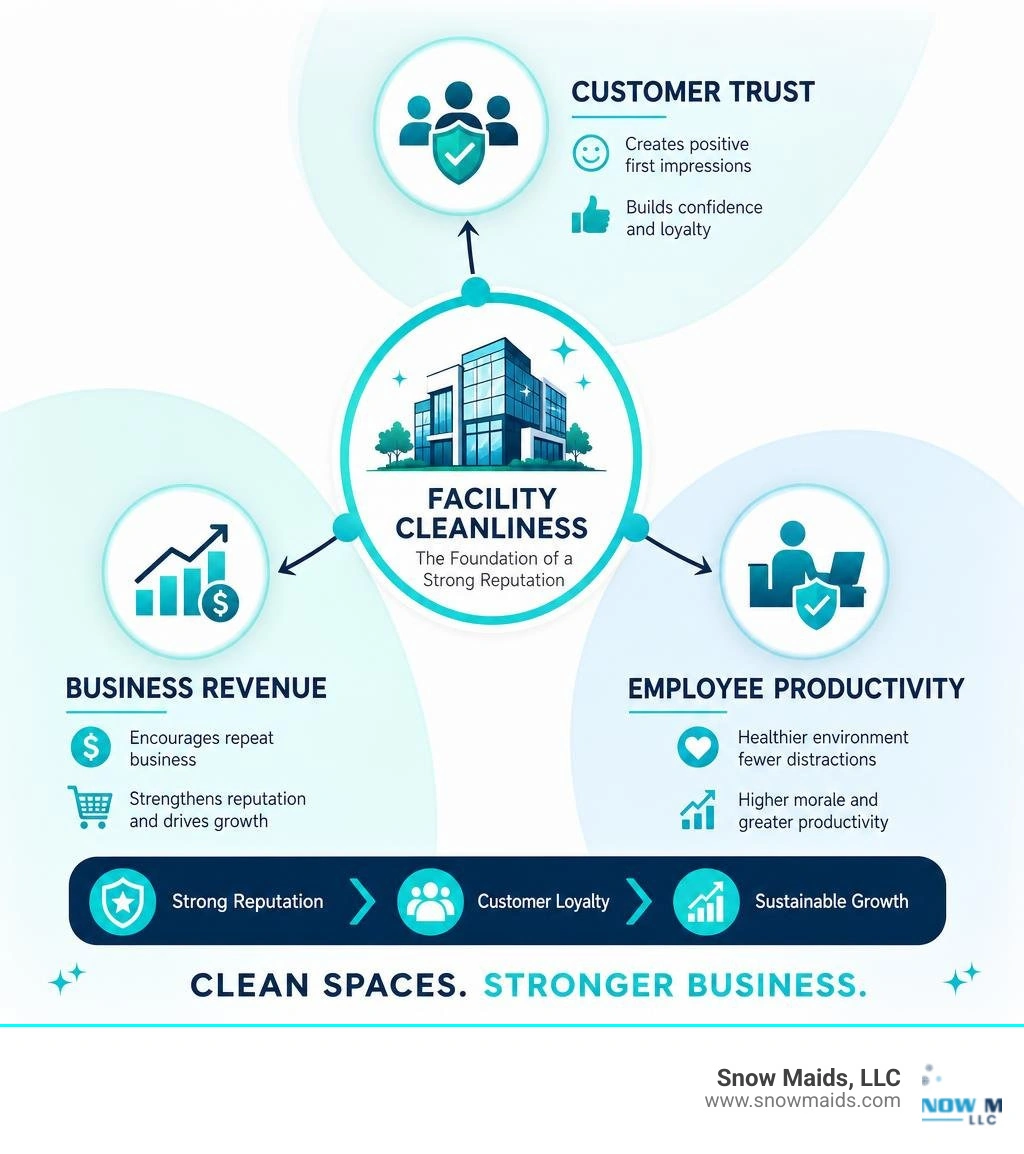
- First impressions: Customers form opinions within seconds of entering your space. A clean environment signals professionalism and earns trust immediately.
- Customer retention: Businesses with consistent professional cleaning report 15–25% higher customer return rates.
- Online reviews: Cleanliness issues are among the most common triggers for negative reviews — and one bad photo of a dirty restroom can spread fast.
- Employee performance: Clean workplaces reduce sick days by up to 35% and can improve productivity by as much as 28%.
- Asset protection: Regular cleaning extends the life of carpets, floors, and HVAC systems, reducing long-term replacement costs.
- Compliance: In industries like food service and healthcare, cleanliness is not optional — it is a legal requirement tied directly to your license to operate.
Most business owners focus on their product, their team, and their marketing. But the moment a client walks into a dusty office, a smudged lobby, or a poorly maintained restroom, none of that other work matters. The judgment happens fast, and it sticks.
For businesses in the Denver Metro Area, where competition is strong and customers have plenty of choices, your facility's cleanliness is quietly working either for you or against you — every single day.
Similar topics to how regular cleaning protects your business reputation:
- how commercial cleaning reduces employee sick days
- how a clean workspace improves employee productivity
- commercial cleaning benefits for your business
The Psychology of First Impressions: Why Cleanliness Dictates Customer Trust

When a customer walks through the doors of your Centennial storefront or Littleton office, their brain instantly goes to work. Within a mere seven seconds, they have formed a subconscious opinion about your brand's quality, reliability, and attention to detail. This rapid-fire evaluation is heavily rooted in environmental psychology.
If your entryway features smudged glass doors, dusty baseboards, or a lingering odor, the client doesn't just think, "They forgot to dust today." Instead, they subconsciously assume: "If they don't care about their physical space, they probably don't care about their work, their products, or their customers."
Cleanliness functions as a silent communicator of operational discipline. A spotless facility signals that your leadership is organized, attentive, and in complete control. Conversely, a neglected environment erodes trust instantly. It creates hesitation, prompting prospective clients to wonder what other details your business is overlooking.
The Most Common Reputation Killers
Certain cleanliness issues trigger immediate alarm bells for visitors. If you want to protect your brand image, these are the critical problem areas you must address:
- Dirty Restrooms: This is the ultimate dealbreaker. A dirty restroom is a direct threat to client retention. If a customer sees stained grout, overflowing trash bins, or grime around sinks, they will immediately associate it with poor overall hygiene. In restaurants, a dirty restroom leads guests to assume the kitchen is in a similar state of neglect.
- Dusty Surfaces: Built-up dust on boardroom tables, waiting room side tables, or retail shelving suggests a lack of daily oversight. It looks tired and sends a message that your business is stagnant.
- Unpleasant Odors: Scent has a direct pathway to the brain's emotional centers. Stuffy air, musty carpets, or lingering food odors can make visitors feel instantly uncomfortable, driving them to leave your facility sooner than planned.
In our digital-first landscape, these physical flaws quickly transform into virtual liabilities. A single photo of a dirty restroom or a dusty display shared on a local Denver community page can severely damage your digital word-of-mouth. Businesses with professional cleaning services see a 20–30% increase in positive reviews, largely because they eliminate these visual and sensory triggers. To learn more about how physical standards influence overall brand trust, check out our guide on Commercial Cleaning Benefits for Your Business.
How Regular Cleaning Protects Your Business Reputation Across Industries
A "one-size-fits-all" approach to commercial cleaning doesn't work. Every industry has unique standards, compliance requirements, and customer expectations. What constitutes clean for a warehouse in Englewood is vastly different from what is required for a medical clinic in Lone Tree.
Understanding these differences is essential for maintaining your brand image and ensuring you remain fully compliant with industry regulations. To help you build an effective framework, our Business Cleaning Guide 2026 offers a deep dive into structured cleaning strategies tailored for modern businesses.
How Regular Cleaning Protects Your Business Reputation in Retail and Offices
In professional office spaces and busy retail environments, cleanliness has a measurable impact on customer behavior and transaction outcomes.
For retail stores in shopping centers across Highlands Ranch or Castle Rock, visual appeal directly translates to sales metrics. Studies show that clean retail stores experience a 23% longer customer dwell time and an 18% increase in product handling. When a store smells fresh, floors shine, and displays are completely free of dust, customers feel comfortable taking their time, browsing more items, and interacting with products. This comfortable environment directly drives up average transaction values.
In corporate offices, cleanliness acts as a powerful sales closer. Professional office environments that prioritize hygiene report a 28% improvement in client meeting outcomes. When you host prospective partners or high-value clients, a clean conference room and a pristine lobby set a stage of prestige and competence.
To explore the ideal cleaning schedules and service levels for these environments, read our detailed comparison on Commercial Cleaning Options for Offices and Retail Spaces and learn how to implement these standards with our guide on Professional Office Cleaning Solutions.
How Regular Cleaning Protects Your Business Reputation in Medical and Restaurant Spaces
For medical facilities and food service establishments, cleanliness is not merely about aesthetic appeal; it is a critical pillar of risk management, safety, and legal compliance.
In restaurants, cafes, and bars, a single negative health inspection score can instantly destroy a brand's reputation. Local health inspections are public record, and modern diners frequently check these scores before booking a table. Regular professional cleaning prevents grease buildup, sanitizes food prep areas, and eliminates biological hazards, ensuring your business proudly displays a top-tier inspection grade.
For medical clinics, dental offices, and physical therapy centers, medical-grade sanitization is non-negotiable. Patients visiting these spaces are often vulnerable or highly sensitive to hygiene. Visible dust, sticky floors, or neglected waiting rooms can trigger immediate anxiety, causing patients to lose confidence in your clinical care. Proper infection control protocols must be executed consistently to keep your facility safe and compliant.
To illustrate how expectations and requirements shift across different sectors, here is a comparison of industry-specific standards:
| Industry Sector | Primary Focus Areas | Compliance & Regulatory Drivers | Reputational Impact of Failure |
|---|---|---|---|
| Corporate Offices | Lobbies, conference rooms, individual desks, communal breakrooms | OSHA general workplace safety standards | Lost client contracts, lower staff morale, high employee turnover |
| Retail Stores | High-traffic entryways, product displays, fitting rooms, checkout counters | ADA accessibility, local slip-and-fall safety codes | Reduced customer dwell time, fewer return visits, negative online reviews |
| Restaurants | Commercial kitchens, food contact surfaces, guest restrooms, dining areas | Local health department codes, FDA food safety regulations | Health department fines, forced closures, devastating public reviews |
| Medical Facilities | Patient exam rooms, waiting areas, high-touch medical equipment, restrooms | OSHA bloodborne pathogens, CDC infection control guidelines | Malpractice risks, loss of licensing, immediate loss of patient trust |
| Warehouses & Industrial | Loading docks, employee locker rooms, clear floor pathways | OSHA safety standards, fire hazard prevention (grease/dust) | Worksite accidents, failed safety audits, operational downtime |
Evaluating Your Provider: KPIs and Inspection Processes
To ensure your commercial cleaning partner is actively protecting—rather than quietly hurting—your business reputation, you must establish clear, measurable Key Performance Indicators (KPIs). Relying on subjective "looks good" walk-throughs is not enough to maintain professional standards.
We recommend using a structured evaluation process that measures the following KPIs:
- High-Touch Sanitation Audits: Use ATP bioluminescence testing or regular visual inspections on high-touch surfaces (door handles, elevator buttons, light switches) to verify that disinfection is actually occurring.
- Restroom Quality Inspections: Check grout lines, the undersides of fixtures, and supply stock levels (soap, paper towels) against a daily checklist.
- Floor Maintenance Consistency: Monitor hard floors for dullness or scratches, and evaluate carpets for traffic-lane wear and lingering odors.
- Feedback and Response Times: Track how quickly your cleaning provider responds to and resolves any missed areas or emergency cleaning requests.
The Internal Impact: Employee Health, Morale, and Productivity
While the outward-facing benefits of a clean business are obvious, the internal impact on your workforce is equally profound. Your employees spend a significant portion of their lives inside your facility. The physical state of their workspace directly influences their mental clarity, physical health, and overall job satisfaction.
A clean, organized environment shows your team that leadership values their well-being. When employees walk into an office that is consistently fresh, tidy, and sanitized, they start their workday with a sense of pride and focus. On the other hand, working in a cluttered, dusty, or musty space leads to chronic frustration, low morale, and increased mental fatigue.
Investing in professional commercial cleaning delivers substantial, measurable improvements to your workforce:
- 35% Reduction in Employee Sick Days: Viruses and bacteria can spread to up to 60% of shared office surfaces (like keyboards, breakroom counters, and copier buttons) within just a few hours. Regular, professional-grade disinfection stops this spread in its tracks. To see the data behind this impact, read about How Commercial Cleaning Reduces Employee Sick Days.
- 28% Improvement in Productivity: A clean, organized workspace reduces visual distractions and lowers cognitive load, allowing your team to focus entirely on their core tasks. For a deeper look at this connection, explore our article on How a Clean Workspace Improves Employee Productivity.
- Lower Employee Turnover: A healthy, pleasant work environment is a key driver of employee retention. Businesses that maintain high cleanliness standards report a 31% reduction in staff turnover, saving thousands of dollars in recruiting and training costs. Learn more about the long-term health benefits of professional maintenance in our comprehensive guide on The Impact of Cleanliness on Employee Health and Absenteeism.
Protecting Long-Term Assets and Avoiding Hidden Financial Risks
Many businesses view commercial cleaning as a simple background expense. In reality, it is a highly effective asset protection strategy that delivers a 200% to 400% ROI within the first year.
Neglecting your facility's daily and weekly maintenance leads to rapid wear and tear on your physical assets. Dust and dirt act like sandpaper under the feet of your customers and employees, grinding down expensive commercial carpets and scratching hard-surface flooring. Without regular professional extraction, carpets that should easily last 7 to 10 years may need to be replaced in as little as 3 years.
Additionally, dust buildup in your facility's HVAC vents forces your heating and cooling systems to work significantly harder, driving up energy bills and leading to premature system failures. Regular cleaning keeps these systems running efficiently, protecting your bottom line from sudden, costly repairs.
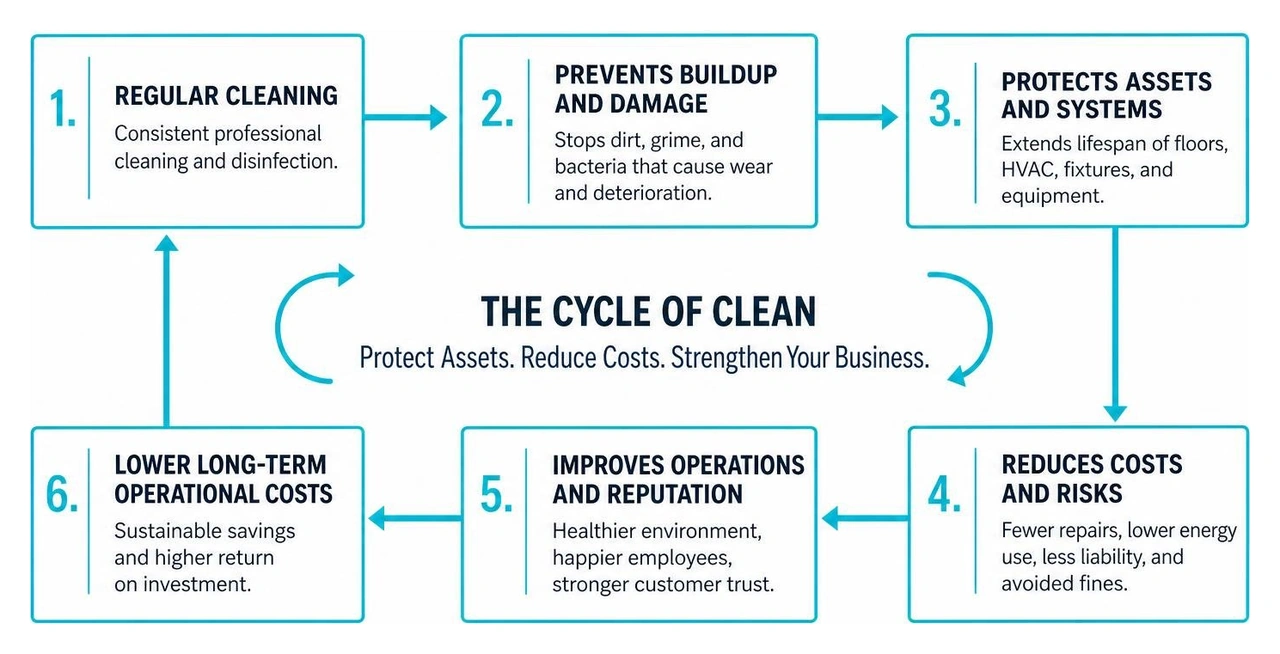
To help you understand the true financial stakes, we have outlined the most common hidden costs of a poorly maintained facility:
- Accelerated Asset Depreciation: Replacing commercial carpets, refinishing hardwood, or repairing prematurely worn HVAC systems can cost your business tens of thousands of dollars in unexpected capital expenditures.
- Slip-and-Fall Liability: Dusty, oily, or wet floors are major safety hazards. A single slip-and-fall lawsuit can easily cost your business far more than an entire year of professional commercial cleaning.
- Regulatory Compliance Fines: Failing to meet OSHA, CDC, or local health department standards can result in costly fines, legal penalties, or even forced operational shutdowns.
- Lost Customer Lifetime Value: When a customer decides not to return to your business because of a dirty environment, you don't just lose that day's sale—you lose their entire lifetime spend, along with the referrals they would have generated.
Many business owners try to save money by assigning cleaning duties to their existing staff. However, this approach almost always backfires. It pulls your team away from their primary roles, lowers morale, and rarely results in a truly clean space. To see why outsourcing is the smarter financial move, read our detailed Commercial Cleaning vs Having Employees Clean Comparison.
Frequently Asked Questions about Business Cleanliness
How often should my business schedule professional commercial cleaning?
The ideal cleaning frequency depends entirely on your industry, the size of your facility, and your daily foot traffic. Most professional offices benefit from basic daily cleaning (trash removal, restroom sanitization, high-touch disinfection) combined with a weekly deep clean. High-traffic retail spaces and medical clinics require daily, comprehensive cleaning to maintain safety and visual standards, while industrial facilities or warehouses may only need structured weekly or bi-weekly cleaning.
What is the difference between daily janitorial services and deep commercial cleaning?
Daily janitorial services focus on maintaining day-to-day tidiness and hygiene. This includes tasks like emptying trash bins, sweeping and mopping floors, wiping down countertops, and cleaning restrooms. Deep commercial cleaning is a highly specialized service that addresses built-up grime and hard-to-reach areas. This includes carpet hot-water extraction, floor stripping and waxing, detailing high-level vents, and deep sanitization of restroom grout lines. Most businesses need a combination of daily janitorial care and periodic deep cleaning (every 6 to 12 months) to keep their facility in peak condition.
How does commercial cleaning support audit readiness and regulatory compliance?
Professional commercial cleaning providers use EPA-registered, commercial-grade disinfectants and follow strict safety guidelines established by OSHA and the CDC. By keeping detailed logs, service reports, and safety data sheets (SDS) for all cleaning agents used, professional providers ensure your business is always prepared for surprise safety audits, health inspections, or corporate compliance reviews.
Conclusion
In business, your reputation is your most valuable asset. While you work hard to refine your products, train your staff, and polish your marketing, the physical state of your facility speaks volumes before you ever say a word. Knowing how regular cleaning protects your business reputation is the key to building lasting trust, keeping your team healthy, and protecting your physical assets.
At Snow Maids, LLC, we understand the unique needs of businesses throughout the Denver Metro Area. Whether you operate a busy professional office in Centennial, a medical clinic in Lone Tree, or a retail storefront in Castle Rock, we deliver the reliable, "squeaky clean" results you need to stand out from the competition. Our professional, background-checked teams work around your schedule to ensure your space is always pristine, compliant, and ready to impress.
Let us handle the dirty work so you can focus on growing your business with complete peace of mind. Contact us today to schedule a walkthrough and discover how our tailored commercial cleaning solutions can protect your brand's reputation for years to come.
Get your customized commercial cleaning quote from Snow Maids, LLC today!
Why Cleanliness Is One of the Most Powerful Reputation Tools Your Business Has
How regular cleaning protects your business reputation is simpler than most business owners expect — and more impactful than almost any other operational decision you make.
Here is a quick answer:
- First impressions: Customers form opinions within seconds of entering your space. A clean environment signals professionalism and earns trust immediately.
- Customer retention: Businesses with consistent professional cleaning report 15–25% higher customer return rates.
- Online reviews: Cleanliness issues are among the most common triggers for negative reviews — and one bad photo of a dirty restroom can spread fast.
- Employee performance: Clean workplaces reduce sick days by up to 35% and can improve productivity by as much as 28%.
- Asset protection: Regular cleaning extends the life of carpets, floors, and HVAC systems, reducing long-term replacement costs.
- Compliance: In industries like food service and healthcare, cleanliness is not optional — it is a legal requirement tied directly to your license to operate.
Most business owners focus on their product, their team, and their marketing. But the moment a client walks into a dusty office, a smudged lobby, or a poorly maintained restroom, none of that other work matters. The judgment happens fast, and it sticks.
For businesses in the Denver Metro Area, where competition is strong and customers have plenty of choices, your facility's cleanliness is quietly working either for you or against you — every single day.

Similar topics to how regular cleaning protects your business reputation:
- how commercial cleaning reduces employee sick days
- how a clean workspace improves employee productivity
- commercial cleaning benefits for your business
The Psychology of First Impressions: Why Cleanliness Dictates Customer Trust

When a customer walks through the doors of your Centennial storefront or Littleton office, their brain instantly goes to work. Within a mere seven seconds, they have formed a subconscious opinion about your brand's quality, reliability, and attention to detail. This rapid-fire evaluation is heavily rooted in environmental psychology.
If your entryway features smudged glass doors, dusty baseboards, or a lingering odor, the client doesn't just think, "They forgot to dust today." Instead, they subconsciously assume: "If they don't care about their physical space, they probably don't care about their work, their products, or their customers."
Cleanliness functions as a silent communicator of operational discipline. A spotless facility signals that your leadership is organized, attentive, and in complete control. Conversely, a neglected environment erodes trust instantly. It creates hesitation, prompting prospective clients to wonder what other details your business is overlooking.
The Most Common Reputation Killers
Certain cleanliness issues trigger immediate alarm bells for visitors. If you want to protect your brand image, these are the critical problem areas you must address:
- Dirty Restrooms: This is the ultimate dealbreaker. A dirty restroom is a direct threat to client retention. If a customer sees stained grout, overflowing trash bins, or grime around sinks, they will immediately associate it with poor overall hygiene. In restaurants, a dirty restroom leads guests to assume the kitchen is in a similar state of neglect.
- Dusty Surfaces: Built-up dust on boardroom tables, waiting room side tables, or retail shelving suggests a lack of daily oversight. It looks tired and sends a message that your business is stagnant.
- Unpleasant Odors: Scent has a direct pathway to the brain's emotional centers. Stuffy air, musty carpets, or lingering food odors can make visitors feel instantly uncomfortable, driving them to leave your facility sooner than planned.
In our digital-first landscape, these physical flaws quickly transform into virtual liabilities. A single photo of a dirty restroom or a dusty display shared on a local Denver community page can severely damage your digital word-of-mouth. Businesses with professional cleaning services see a 20–30% increase in positive reviews, largely because they eliminate these visual and sensory triggers. To learn more about how physical standards influence overall brand trust, check out our guide on Commercial Cleaning Benefits for Your Business.
How Regular Cleaning Protects Your Business Reputation Across Industries
A "one-size-fits-all" approach to commercial cleaning doesn't work. Every industry has unique standards, compliance requirements, and customer expectations. What constitutes clean for a warehouse in Englewood is vastly different from what is required for a medical clinic in Lone Tree.
Understanding these differences is essential for maintaining your brand image and ensuring you remain fully compliant with industry regulations. To help you build an effective framework, our Business Cleaning Guide 2026 offers a deep dive into structured cleaning strategies tailored for modern businesses.
How Regular Cleaning Protects Your Business Reputation in Retail and Offices
In professional office spaces and busy retail environments, cleanliness has a measurable impact on customer behavior and transaction outcomes.
For retail stores in shopping centers across Highlands Ranch or Castle Rock, visual appeal directly translates to sales metrics. Studies show that clean retail stores experience a 23% longer customer dwell time and an 18% increase in product handling. When a store smells fresh, floors shine, and displays are completely free of dust, customers feel comfortable taking their time, browsing more items, and interacting with products. This comfortable environment directly drives up average transaction values.
In corporate offices, cleanliness acts as a powerful sales closer. Professional office environments that prioritize hygiene report a 28% improvement in client meeting outcomes. When you host prospective partners or high-value clients, a clean conference room and a pristine lobby set a stage of prestige and competence.
To explore the ideal cleaning schedules and service levels for these environments, read our detailed comparison on Commercial Cleaning Options for Offices and Retail Spaces and learn how to implement these standards with our guide on Professional Office Cleaning Solutions.
How Regular Cleaning Protects Your Business Reputation in Medical and Restaurant Spaces
For medical facilities and food service establishments, cleanliness is not merely about aesthetic appeal; it is a critical pillar of risk management, safety, and legal compliance.
In restaurants, cafes, and bars, a single negative health inspection score can instantly destroy a brand's reputation. Local health inspections are public record, and modern diners frequently check these scores before booking a table. Regular professional cleaning prevents grease buildup, sanitizes food prep areas, and eliminates biological hazards, ensuring your business proudly displays a top-tier inspection grade.
For medical clinics, dental offices, and physical therapy centers, medical-grade sanitization is non-negotiable. Patients visiting these spaces are often vulnerable or highly sensitive to hygiene. Visible dust, sticky floors, or neglected waiting rooms can trigger immediate anxiety, causing patients to lose confidence in your clinical care. Proper infection control protocols must be executed consistently to keep your facility safe and compliant.
To illustrate how expectations and requirements shift across different sectors, here is a comparison of industry-specific standards:
| Industry Sector | Primary Focus Areas | Compliance & Regulatory Drivers | Reputational Impact of Failure |
|---|---|---|---|
| Corporate Offices | Lobbies, conference rooms, individual desks, communal breakrooms | OSHA general workplace safety standards | Lost client contracts, lower staff morale, high employee turnover |
| Retail Stores | High-traffic entryways, product displays, fitting rooms, checkout counters | ADA accessibility, local slip-and-fall safety codes | Reduced customer dwell time, fewer return visits, negative online reviews |
| Restaurants | Commercial kitchens, food contact surfaces, guest restrooms, dining areas | Local health department codes, FDA food safety regulations | Health department fines, forced closures, devastating public reviews |
| Medical Facilities | Patient exam rooms, waiting areas, high-touch medical equipment, restrooms | OSHA bloodborne pathogens, CDC infection control guidelines | Malpractice risks, loss of licensing, immediate loss of patient trust |
| Warehouses & Industrial | Loading docks, employee locker rooms, clear floor pathways | OSHA safety standards, fire hazard prevention (grease/dust) | Worksite accidents, failed safety audits, operational downtime |
Evaluating Your Provider: KPIs and Inspection Processes
To ensure your commercial cleaning partner is actively protecting—rather than quietly hurting—your business reputation, you must establish clear, measurable Key Performance Indicators (KPIs). Relying on subjective "looks good" walk-throughs is not enough to maintain professional standards.
We recommend using a structured evaluation process that measures the following KPIs:
- High-Touch Sanitation Audits: Use ATP bioluminescence testing or regular visual inspections on high-touch surfaces (door handles, elevator buttons, light switches) to verify that disinfection is actually occurring.
- Restroom Quality Inspections: Check grout lines, the undersides of fixtures, and supply stock levels (soap, paper towels) against a daily checklist.
- Floor Maintenance Consistency: Monitor hard floors for dullness or scratches, and evaluate carpets for traffic-lane wear and lingering odors.
- Feedback and Response Times: Track how quickly your cleaning provider responds to and resolves any missed areas or emergency cleaning requests.
The Internal Impact: Employee Health, Morale, and Productivity
While the outward-facing benefits of a clean business are obvious, the internal impact on your workforce is equally profound. Your employees spend a significant portion of their lives inside your facility. The physical state of their workspace directly influences their mental clarity, physical health, and overall job satisfaction.
A clean, organized environment shows your team that leadership values their well-being. When employees walk into an office that is consistently fresh, tidy, and sanitized, they start their workday with a sense of pride and focus. On the other hand, working in a cluttered, dusty, or musty space leads to chronic frustration, low morale, and increased mental fatigue.
Investing in professional commercial cleaning delivers substantial, measurable improvements to your workforce:
- 35% Reduction in Employee Sick Days: Viruses and bacteria can spread to up to 60% of shared office surfaces (like keyboards, breakroom counters, and copier buttons) within just a few hours. Regular, professional-grade disinfection stops this spread in its tracks. To see the data behind this impact, read about How Commercial Cleaning Reduces Employee Sick Days.
- 28% Improvement in Productivity: A clean, organized workspace reduces visual distractions and lowers cognitive load, allowing your team to focus entirely on their core tasks. For a deeper look at this connection, explore our article on How a Clean Workspace Improves Employee Productivity.
- Lower Employee Turnover: A healthy, pleasant work environment is a key driver of employee retention. Businesses that maintain high cleanliness standards report a 31% reduction in staff turnover, saving thousands of dollars in recruiting and training costs. Learn more about the long-term health benefits of professional maintenance in our comprehensive guide on The Impact of Cleanliness on Employee Health and Absenteeism.
Protecting Long-Term Assets and Avoiding Hidden Financial Risks
Many businesses view commercial cleaning as a simple background expense. In reality, it is a highly effective asset protection strategy that delivers a 200% to 400% ROI within the first year.
Neglecting your facility's daily and weekly maintenance leads to rapid wear and tear on your physical assets. Dust and dirt act like sandpaper under the feet of your customers and employees, grinding down expensive commercial carpets and scratching hard-surface flooring. Without regular professional extraction, carpets that should easily last 7 to 10 years may need to be replaced in as little as 3 years.
Additionally, dust buildup in your facility's HVAC vents forces your heating and cooling systems to work significantly harder, driving up energy bills and leading to premature system failures. Regular cleaning keeps these systems running efficiently, protecting your bottom line from sudden, costly repairs.

To help you understand the true financial stakes, we have outlined the most common hidden costs of a poorly maintained facility:
- Accelerated Asset Depreciation: Replacing commercial carpets, refinishing hardwood, or repairing prematurely worn HVAC systems can cost your business tens of thousands of dollars in unexpected capital expenditures.
- Slip-and-Fall Liability: Dusty, oily, or wet floors are major safety hazards. A single slip-and-fall lawsuit can easily cost your business far more than an entire year of professional commercial cleaning.
- Regulatory Compliance Fines: Failing to meet OSHA, CDC, or local health department standards can result in costly fines, legal penalties, or even forced operational shutdowns.
- Lost Customer Lifetime Value: When a customer decides not to return to your business because of a dirty environment, you don't just lose that day's sale—you lose their entire lifetime spend, along with the referrals they would have generated.
Many business owners try to save money by assigning cleaning duties to their existing staff. However, this approach almost always backfires. It pulls your team away from their primary roles, lowers morale, and rarely results in a truly clean space. To see why outsourcing is the smarter financial move, read our detailed Commercial Cleaning vs Having Employees Clean Comparison.
Frequently Asked Questions about Business Cleanliness
How often should my business schedule professional commercial cleaning?
The ideal cleaning frequency depends entirely on your industry, the size of your facility, and your daily foot traffic. Most professional offices benefit from basic daily cleaning (trash removal, restroom sanitization, high-touch disinfection) combined with a weekly deep clean. High-traffic retail spaces and medical clinics require daily, comprehensive cleaning to maintain safety and visual standards, while industrial facilities or warehouses may only need structured weekly or bi-weekly cleaning.
What is the difference between daily janitorial services and deep commercial cleaning?
Daily janitorial services focus on maintaining day-to-day tidiness and hygiene. This includes tasks like emptying trash bins, sweeping and mopping floors, wiping down countertops, and cleaning restrooms. Deep commercial cleaning is a highly specialized service that addresses built-up grime and hard-to-reach areas. This includes carpet hot-water extraction, floor stripping and waxing, detailing high-level vents, and deep sanitization of restroom grout lines. Most businesses need a combination of daily janitorial care and periodic deep cleaning (every 6 to 12 months) to keep their facility in peak condition.
How does commercial cleaning support audit readiness and regulatory compliance?
Professional commercial cleaning providers use EPA-registered, commercial-grade disinfectants and follow strict safety guidelines established by OSHA and the CDC. By keeping detailed logs, service reports, and safety data sheets (SDS) for all cleaning agents used, professional providers ensure your business is always prepared for surprise safety audits, health inspections, or corporate compliance reviews.
Conclusion
In business, your reputation is your most valuable asset. While you work hard to refine your products, train your staff, and polish your marketing, the physical state of your facility speaks volumes before you ever say a word. Knowing how regular cleaning protects your business reputation is the key to building lasting trust, keeping your team healthy, and protecting your physical assets.
At Snow Maids, LLC, we understand the unique needs of businesses throughout the Denver Metro Area. Whether you operate a busy professional office in Centennial, a medical clinic in Lone Tree, or a retail storefront in Castle Rock, we deliver the reliable, "squeaky clean" results you need to stand out from the competition. Our professional, background-checked teams work around your schedule to ensure your space is always pristine, compliant, and ready to impress.
Let us handle the dirty work so you can focus on growing your business with complete peace of mind. Contact us today to schedule a walkthrough and discover how our tailored commercial cleaning solutions can protect your brand's reputation for years to come.
Get your customized commercial cleaning quote from Snow Maids, LLC today!
Why Cleanliness Is One of the Most Powerful Reputation Tools Your Business Has
How regular cleaning protects your business reputation is simpler than most business owners expect — and more impactful than almost any other operational decision you make.
Here is a quick answer:
- First impressions: Customers form opinions within seconds of entering your space. A clean environment signals professionalism and earns trust immediately.
- Customer retention: Businesses with consistent professional cleaning report 15–25% higher customer return rates.
- Online reviews: Cleanliness issues are among the most common triggers for negative reviews — and one bad photo of a dirty restroom can spread fast.
- Employee performance: Clean workplaces reduce sick days by up to 35% and can improve productivity by as much as 28%.
- Asset protection: Regular cleaning extends the life of carpets, floors, and HVAC systems, reducing long-term replacement costs.
- Compliance: In industries like food service and healthcare, cleanliness is not optional — it is a legal requirement tied directly to your license to operate.
Most business owners focus on their product, their team, and their marketing. But the moment a client walks into a dusty office, a smudged lobby, or a poorly maintained restroom, none of that other work matters. The judgment happens fast, and it sticks.
For businesses in the Denver Metro Area, where competition is strong and customers have plenty of choices, your facility's cleanliness is quietly working either for you or against you — every single day.

Similar topics to how regular cleaning protects your business reputation:
- how commercial cleaning reduces employee sick days
- how a clean workspace improves employee productivity
- commercial cleaning benefits for your business
The Psychology of First Impressions: Why Cleanliness Dictates Customer Trust

When a customer walks through the doors of your Centennial storefront or Littleton office, their brain instantly goes to work. Within a mere seven seconds, they have formed a subconscious opinion about your brand's quality, reliability, and attention to detail. This rapid-fire evaluation is heavily rooted in environmental psychology.
If your entryway features smudged glass doors, dusty baseboards, or a lingering odor, the client doesn't just think, "They forgot to dust today." Instead, they subconsciously assume: "If they don't care about their physical space, they probably don't care about their work, their products, or their customers."
Cleanliness functions as a silent communicator of operational discipline. A spotless facility signals that your leadership is organized, attentive, and in complete control. Conversely, a neglected environment erodes trust instantly. It creates hesitation, prompting prospective clients to wonder what other details your business is overlooking.
The Most Common Reputation Killers
Certain cleanliness issues trigger immediate alarm bells for visitors. If you want to protect your brand image, these are the critical problem areas you must address:
- Dirty Restrooms: This is the ultimate dealbreaker. A dirty restroom is a direct threat to client retention. If a customer sees stained grout, overflowing trash bins, or grime around sinks, they will immediately associate it with poor overall hygiene. In restaurants, a dirty restroom leads guests to assume the kitchen is in a similar state of neglect.
- Dusty Surfaces: Built-up dust on boardroom tables, waiting room side tables, or retail shelving suggests a lack of daily oversight. It looks tired and sends a message that your business is stagnant.
- Unpleasant Odors: Scent has a direct pathway to the brain's emotional centers. Stuffy air, musty carpets, or lingering food odors can make visitors feel instantly uncomfortable, driving them to leave your facility sooner than planned.
In our digital-first landscape, these physical flaws quickly transform into virtual liabilities. A single photo of a dirty restroom or a dusty display shared on a local Denver community page can severely damage your digital word-of-mouth. Businesses with professional cleaning services see a 20–30% increase in positive reviews, largely because they eliminate these visual and sensory triggers. To learn more about how physical standards influence overall brand trust, check out our guide on Commercial Cleaning Benefits for Your Business.
How Regular Cleaning Protects Your Business Reputation Across Industries
A "one-size-fits-all" approach to commercial cleaning doesn't work. Every industry has unique standards, compliance requirements, and customer expectations. What constitutes clean for a warehouse in Englewood is vastly different from what is required for a medical clinic in Lone Tree.
Understanding these differences is essential for maintaining your brand image and ensuring you remain fully compliant with industry regulations. To help you build an effective framework, our Business Cleaning Guide 2026 offers a deep dive into structured cleaning strategies tailored for modern businesses.
How Regular Cleaning Protects Your Business Reputation in Retail and Offices
In professional office spaces and busy retail environments, cleanliness has a measurable impact on customer behavior and transaction outcomes.
For retail stores in shopping centers across Highlands Ranch or Castle Rock, visual appeal directly translates to sales metrics. Studies show that clean retail stores experience a 23% longer customer dwell time and an 18% increase in product handling. When a store smells fresh, floors shine, and displays are completely free of dust, customers feel comfortable taking their time, browsing more items, and interacting with products. This comfortable environment directly drives up average transaction values.
In corporate offices, cleanliness acts as a powerful sales closer. Professional office environments that prioritize hygiene report a 28% improvement in client meeting outcomes. When you host prospective partners or high-value clients, a clean conference room and a pristine lobby set a stage of prestige and competence.
To explore the ideal cleaning schedules and service levels for these environments, read our detailed comparison on Commercial Cleaning Options for Offices and Retail Spaces and learn how to implement these standards with our guide on Professional Office Cleaning Solutions.
How Regular Cleaning Protects Your Business Reputation in Medical and Restaurant Spaces
For medical facilities and food service establishments, cleanliness is not merely about aesthetic appeal; it is a critical pillar of risk management, safety, and legal compliance.
In restaurants, cafes, and bars, a single negative health inspection score can instantly destroy a brand's reputation. Local health inspections are public record, and modern diners frequently check these scores before booking a table. Regular professional cleaning prevents grease buildup, sanitizes food prep areas, and eliminates biological hazards, ensuring your business proudly displays a top-tier inspection grade.
For medical clinics, dental offices, and physical therapy centers, medical-grade sanitization is non-negotiable. Patients visiting these spaces are often vulnerable or highly sensitive to hygiene. Visible dust, sticky floors, or neglected waiting rooms can trigger immediate anxiety, causing patients to lose confidence in your clinical care. Proper infection control protocols must be executed consistently to keep your facility safe and compliant.
To illustrate how expectations and requirements shift across different sectors, here is a comparison of industry-specific standards:
| Industry Sector | Primary Focus Areas | Compliance & Regulatory Drivers | Reputational Impact of Failure |
|---|---|---|---|
| Corporate Offices | Lobbies, conference rooms, individual desks, communal breakrooms | OSHA general workplace safety standards | Lost client contracts, lower staff morale, high employee turnover |
| Retail Stores | High-traffic entryways, product displays, fitting rooms, checkout counters | ADA accessibility, local slip-and-fall safety codes | Reduced customer dwell time, fewer return visits, negative online reviews |
| Restaurants | Commercial kitchens, food contact surfaces, guest restrooms, dining areas | Local health department codes, FDA food safety regulations | Health department fines, forced closures, devastating public reviews |
| Medical Facilities | Patient exam rooms, waiting areas, high-touch medical equipment, restrooms | OSHA bloodborne pathogens, CDC infection control guidelines | Malpractice risks, loss of licensing, immediate loss of patient trust |
| Warehouses & Industrial | Loading docks, employee locker rooms, clear floor pathways | OSHA safety standards, fire hazard prevention (grease/dust) | Worksite accidents, failed safety audits, operational downtime |
Evaluating Your Provider: KPIs and Inspection Processes
To ensure your commercial cleaning partner is actively protecting—rather than quietly hurting—your business reputation, you must establish clear, measurable Key Performance Indicators (KPIs). Relying on subjective "looks good" walk-throughs is not enough to maintain professional standards.
We recommend using a structured evaluation process that measures the following KPIs:
- High-Touch Sanitation Audits: Use ATP bioluminescence testing or regular visual inspections on high-touch surfaces (door handles, elevator buttons, light switches) to verify that disinfection is actually occurring.
- Restroom Quality Inspections: Check grout lines, the undersides of fixtures, and supply stock levels (soap, paper towels) against a daily checklist.
- Floor Maintenance Consistency: Monitor hard floors for dullness or scratches, and evaluate carpets for traffic-lane wear and lingering odors.
- Feedback and Response Times: Track how quickly your cleaning provider responds to and resolves any missed areas or emergency cleaning requests.
The Internal Impact: Employee Health, Morale, and Productivity
While the outward-facing benefits of a clean business are obvious, the internal impact on your workforce is equally profound. Your employees spend a significant portion of their lives inside your facility. The physical state of their workspace directly influences their mental clarity, physical health, and overall job satisfaction.
A clean, organized environment shows your team that leadership values their well-being. When employees walk into an office that is consistently fresh, tidy, and sanitized, they start their workday with a sense of pride and focus. On the other hand, working in a cluttered, dusty, or musty space leads to chronic frustration, low morale, and increased mental fatigue.
Investing in professional commercial cleaning delivers substantial, measurable improvements to your workforce:
- 35% Reduction in Employee Sick Days: Viruses and bacteria can spread to up to 60% of shared office surfaces (like keyboards, breakroom counters, and copier buttons) within just a few hours. Regular, professional-grade disinfection stops this spread in its tracks. To see the data behind this impact, read about How Commercial Cleaning Reduces Employee Sick Days.
- 28% Improvement in Productivity: A clean, organized workspace reduces visual distractions and lowers cognitive load, allowing your team to focus entirely on their core tasks. For a deeper look at this connection, explore our article on How a Clean Workspace Improves Employee Productivity.
- Lower Employee Turnover: A healthy, pleasant work environment is a key driver of employee retention. Businesses that maintain high cleanliness standards report a 31% reduction in staff turnover, saving thousands of dollars in recruiting and training costs. Learn more about the long-term health benefits of professional maintenance in our comprehensive guide on The Impact of Cleanliness on Employee Health and Absenteeism.
Protecting Long-Term Assets and Avoiding Hidden Financial Risks
Many businesses view commercial cleaning as a simple background expense. In reality, it is a highly effective asset protection strategy that delivers a 200% to 400% ROI within the first year.
Neglecting your facility's daily and weekly maintenance leads to rapid wear and tear on your physical assets. Dust and dirt act like sandpaper under the feet of your customers and employees, grinding down expensive commercial carpets and scratching hard-surface flooring. Without regular professional extraction, carpets that should easily last 7 to 10 years may need to be replaced in as little as 3 years.
Additionally, dust buildup in your facility's HVAC vents forces your heating and cooling systems to work significantly harder, driving up energy bills and leading to premature system failures. Regular cleaning keeps these systems running efficiently, protecting your bottom line from sudden, costly repairs.

To help you understand the true financial stakes, we have outlined the most common hidden costs of a poorly maintained facility:
- Accelerated Asset Depreciation: Replacing commercial carpets, refinishing hardwood, or repairing prematurely worn HVAC systems can cost your business tens of thousands of dollars in unexpected capital expenditures.
- Slip-and-Fall Liability: Dusty, oily, or wet floors are major safety hazards. A single slip-and-fall lawsuit can easily cost your business far more than an entire year of professional commercial cleaning.
- Regulatory Compliance Fines: Failing to meet OSHA, CDC, or local health department standards can result in costly fines, legal penalties, or even forced operational shutdowns.
- Lost Customer Lifetime Value: When a customer decides not to return to your business because of a dirty environment, you don't just lose that day's sale—you lose their entire lifetime spend, along with the referrals they would have generated.
Many business owners try to save money by assigning cleaning duties to their existing staff. However, this approach almost always backfires. It pulls your team away from their primary roles, lowers morale, and rarely results in a truly clean space. To see why outsourcing is the smarter financial move, read our detailed Commercial Cleaning vs Having Employees Clean Comparison.
Frequently Asked Questions about Business Cleanliness
How often should my business schedule professional commercial cleaning?
The ideal cleaning frequency depends entirely on your industry, the size of your facility, and your daily foot traffic. Most professional offices benefit from basic daily cleaning (trash removal, restroom sanitization, high-touch disinfection) combined with a weekly deep clean. High-traffic retail spaces and medical clinics require daily, comprehensive cleaning to maintain safety and visual standards, while industrial facilities or warehouses may only need structured weekly or bi-weekly cleaning.
What is the difference between daily janitorial services and deep commercial cleaning?
Daily janitorial services focus on maintaining day-to-day tidiness and hygiene. This includes tasks like emptying trash bins, sweeping and mopping floors, wiping down countertops, and cleaning restrooms. Deep commercial cleaning is a highly specialized service that addresses built-up grime and hard-to-reach areas. This includes carpet hot-water extraction, floor stripping and waxing, detailing high-level vents, and deep sanitization of restroom grout lines. Most businesses need a combination of daily janitorial care and periodic deep cleaning (every 6 to 12 months) to keep their facility in peak condition.
How does commercial cleaning support audit readiness and regulatory compliance?
Professional commercial cleaning providers use EPA-registered, commercial-grade disinfectants and follow strict safety guidelines established by OSHA and the CDC. By keeping detailed logs, service reports, and safety data sheets (SDS) for all cleaning agents used, professional providers ensure your business is always prepared for surprise safety audits, health inspections, or corporate compliance reviews.
Conclusion
In business, your reputation is your most valuable asset. While you work hard to refine your products, train your staff, and polish your marketing, the physical state of your facility speaks volumes before you ever say a word. Knowing how regular cleaning protects your business reputation is the key to building lasting trust, keeping your team healthy, and protecting your physical assets.
At Snow Maids, LLC, we understand the unique needs of businesses throughout the Denver Metro Area. Whether you operate a busy professional office in Centennial, a medical clinic in Lone Tree, or a retail storefront in Castle Rock, we deliver the reliable, "squeaky clean" results you need to stand out from the competition. Our professional, background-checked teams work around your schedule to ensure your space is always pristine, compliant, and ready to impress.
Let us handle the dirty work so you can focus on growing your business with complete peace of mind. Contact us today to schedule a walkthrough and discover how our tailored commercial cleaning solutions can protect your brand's reputation for years to come.
Get your customized commercial cleaning quote from Snow Maids, LLC today!

Why Cleanliness Is One of the Most Powerful Reputation Tools Your Business Has
How regular cleaning protects your business reputation is simpler than most business owners expect — and more impactful than almost any other operational decision you make.
Here is a quick answer:
- First impressions: Customers form opinions within seconds of entering your space. A clean environment signals professionalism and earns trust immediately.
- Customer retention: Businesses with consistent professional cleaning report 15–25% higher customer return rates.
- Online reviews: Cleanliness issues are among the most common triggers for negative reviews — and one bad photo of a dirty restroom can spread fast.
- Employee performance: Clean workplaces reduce sick days by up to 35% and can improve productivity by as much as 28%.
- Asset protection: Regular cleaning extends the life of carpets, floors, and HVAC systems, reducing long-term replacement costs.
- Compliance: In industries like food service and healthcare, cleanliness is not optional — it is a legal requirement tied directly to your license to operate.
Most business owners focus on their product, their team, and their marketing. But the moment a client walks into a dusty office, a smudged lobby, or a poorly maintained restroom, none of that other work matters. The judgment happens fast, and it sticks.
For businesses in the Denver Metro Area, where competition is strong and customers have plenty of choices, your facility's cleanliness is quietly working either for you or against you — every single day.

Similar topics to how regular cleaning protects your business reputation:
- how commercial cleaning reduces employee sick days
- how a clean workspace improves employee productivity
- commercial cleaning benefits for your business
The Psychology of First Impressions: Why Cleanliness Dictates Customer Trust

When a customer walks through the doors of your Centennial storefront or Littleton office, their brain instantly goes to work. Within a mere seven seconds, they have formed a subconscious opinion about your brand's quality, reliability, and attention to detail. This rapid-fire evaluation is heavily rooted in environmental psychology.
If your entryway features smudged glass doors, dusty baseboards, or a lingering odor, the client doesn't just think, "They forgot to dust today." Instead, they subconsciously assume: "If they don't care about their physical space, they probably don't care about their work, their products, or their customers."
Cleanliness functions as a silent communicator of operational discipline. A spotless facility signals that your leadership is organized, attentive, and in complete control. Conversely, a neglected environment erodes trust instantly. It creates hesitation, prompting prospective clients to wonder what other details your business is overlooking.
The Most Common Reputation Killers
Certain cleanliness issues trigger immediate alarm bells for visitors. If you want to protect your brand image, these are the critical problem areas you must address:
- Dirty Restrooms: This is the ultimate dealbreaker. A dirty restroom is a direct threat to client retention. If a customer sees stained grout, overflowing trash bins, or grime around sinks, they will immediately associate it with poor overall hygiene. In restaurants, a dirty restroom leads guests to assume the kitchen is in a similar state of neglect.
- Dusty Surfaces: Built-up dust on boardroom tables, waiting room side tables, or retail shelving suggests a lack of daily oversight. It looks tired and sends a message that your business is stagnant.
- Unpleasant Odors: Scent has a direct pathway to the brain's emotional centers. Stuffy air, musty carpets, or lingering food odors can make visitors feel instantly uncomfortable, driving them to leave your facility sooner than planned.
In our digital-first landscape, these physical flaws quickly transform into virtual liabilities. A single photo of a dirty restroom or a dusty display shared on a local Denver community page can severely damage your digital word-of-mouth. Businesses with professional cleaning services see a 20–30% increase in positive reviews, largely because they eliminate these visual and sensory triggers. To learn more about how physical standards influence overall brand trust, check out our guide on Commercial Cleaning Benefits for Your Business.
How Regular Cleaning Protects Your Business Reputation Across Industries
A "one-size-fits-all" approach to commercial cleaning doesn't work. Every industry has unique standards, compliance requirements, and customer expectations. What constitutes clean for a warehouse in Englewood is vastly different from what is required for a medical clinic in Lone Tree.
Understanding these differences is essential for maintaining your brand image and ensuring you remain fully compliant with industry regulations. To help you build an effective framework, our Business Cleaning Guide 2026 offers a deep dive into structured cleaning strategies tailored for modern businesses.
How Regular Cleaning Protects Your Business Reputation in Retail and Offices
In professional office spaces and busy retail environments, cleanliness has a measurable impact on customer behavior and transaction outcomes.
For retail stores in shopping centers across Highlands Ranch or Castle Rock, visual appeal directly translates to sales metrics. Studies show that clean retail stores experience a 23% longer customer dwell time and an 18% increase in product handling. When a store smells fresh, floors shine, and displays are completely free of dust, customers feel comfortable taking their time, browsing more items, and interacting with products. This comfortable environment directly drives up average transaction values.
In corporate offices, cleanliness acts as a powerful sales closer. Professional office environments that prioritize hygiene report a 28% improvement in client meeting outcomes. When you host prospective partners or high-value clients, a clean conference room and a pristine lobby set a stage of prestige and competence.
To explore the ideal cleaning schedules and service levels for these environments, read our detailed comparison on Commercial Cleaning Options for Offices and Retail Spaces and learn how to implement these standards with our guide on Professional Office Cleaning Solutions.
How Regular Cleaning Protects Your Business Reputation in Medical and Restaurant Spaces
For medical facilities and food service establishments, cleanliness is not merely about aesthetic appeal; it is a critical pillar of risk management, safety, and legal compliance.
In restaurants, cafes, and bars, a single negative health inspection score can instantly destroy a brand's reputation. Local health inspections are public record, and modern diners frequently check these scores before booking a table. Regular professional cleaning prevents grease buildup, sanitizes food prep areas, and eliminates biological hazards, ensuring your business proudly displays a top-tier inspection grade.
For medical clinics, dental offices, and physical therapy centers, medical-grade sanitization is non-negotiable. Patients visiting these spaces are often vulnerable or highly sensitive to hygiene. Visible dust, sticky floors, or neglected waiting rooms can trigger immediate anxiety, causing patients to lose confidence in your clinical care. Proper infection control protocols must be executed consistently to keep your facility safe and compliant.
To illustrate how expectations and requirements shift across different sectors, here is a comparison of industry-specific standards:
| Industry Sector | Primary Focus Areas | Compliance & Regulatory Drivers | Reputational Impact of Failure |
|---|---|---|---|
| Corporate Offices | Lobbies, conference rooms, individual desks, communal breakrooms | OSHA general workplace safety standards | Lost client contracts, lower staff morale, high employee turnover |
| Retail Stores | High-traffic entryways, product displays, fitting rooms, checkout counters | ADA accessibility, local slip-and-fall safety codes | Reduced customer dwell time, fewer return visits, negative online reviews |
| Restaurants | Commercial kitchens, food contact surfaces, guest restrooms, dining areas | Local health department codes, FDA food safety regulations | Health department fines, forced closures, devastating public reviews |
| Medical Facilities | Patient exam rooms, waiting areas, high-touch medical equipment, restrooms | OSHA bloodborne pathogens, CDC infection control guidelines | Malpractice risks, loss of licensing, immediate loss of patient trust |
| Warehouses & Industrial | Loading docks, employee locker rooms, clear floor pathways | OSHA safety standards, fire hazard prevention (grease/dust) | Worksite accidents, failed safety audits, operational downtime |
Evaluating Your Provider: KPIs and Inspection Processes
To ensure your commercial cleaning partner is actively protecting—rather than quietly hurting—your business reputation, you must establish clear, measurable Key Performance Indicators (KPIs). Relying on subjective "looks good" walk-throughs is not enough to maintain professional standards.
We recommend using a structured evaluation process that measures the following KPIs:
- High-Touch Sanitation Audits: Use ATP bioluminescence testing or regular visual inspections on high-touch surfaces (door handles, elevator buttons, light switches) to verify that disinfection is actually occurring.
- Restroom Quality Inspections: Check grout lines, the undersides of fixtures, and supply stock levels (soap, paper towels) against a daily checklist.
- Floor Maintenance Consistency: Monitor hard floors for dullness or scratches, and evaluate carpets for traffic-lane wear and lingering odors.
- Feedback and Response Times: Track how quickly your cleaning provider responds to and resolves any missed areas or emergency cleaning requests.
The Internal Impact: Employee Health, Morale, and Productivity
While the outward-facing benefits of a clean business are obvious, the internal impact on your workforce is equally profound. Your employees spend a significant portion of their lives inside your facility. The physical state of their workspace directly influences their mental clarity, physical health, and overall job satisfaction.
A clean, organized environment shows your team that leadership values their well-being. When employees walk into an office that is consistently fresh, tidy, and sanitized, they start their workday with a sense of pride and focus. On the other hand, working in a cluttered, dusty, or musty space leads to chronic frustration, low morale, and increased mental fatigue.
Investing in professional commercial cleaning delivers substantial, measurable improvements to your workforce:
- 35% Reduction in Employee Sick Days: Viruses and bacteria can spread to up to 60% of shared office surfaces (like keyboards, breakroom counters, and copier buttons) within just a few hours. Regular, professional-grade disinfection stops this spread in its tracks. To see the data behind this impact, read about How Commercial Cleaning Reduces Employee Sick Days.
- 28% Improvement in Productivity: A clean, organized workspace reduces visual distractions and lowers cognitive load, allowing your team to focus entirely on their core tasks. For a deeper look at this connection, explore our article on How a Clean Workspace Improves Employee Productivity.
- Lower Employee Turnover: A healthy, pleasant work environment is a key driver of employee retention. Businesses that maintain high cleanliness standards report a 31% reduction in staff turnover, saving thousands of dollars in recruiting and training costs. Learn more about the long-term health benefits of professional maintenance in our comprehensive guide on The Impact of Cleanliness on Employee Health and Absenteeism.
Protecting Long-Term Assets and Avoiding Hidden Financial Risks
Many businesses view commercial cleaning as a simple background expense. In reality, it is a highly effective asset protection strategy that delivers a 200% to 400% ROI within the first year.
Neglecting your facility's daily and weekly maintenance leads to rapid wear and tear on your physical assets. Dust and dirt act like sandpaper under the feet of your customers and employees, grinding down expensive commercial carpets and scratching hard-surface flooring. Without regular professional extraction, carpets that should easily last 7 to 10 years may need to be replaced in as little as 3 years.
Additionally, dust buildup in your facility's HVAC vents forces your heating and cooling systems to work significantly harder, driving up energy bills and leading to premature system failures. Regular cleaning keeps these systems running efficiently, protecting your bottom line from sudden, costly repairs.

To help you understand the true financial stakes, we have outlined the most common hidden costs of a poorly maintained facility:
- Accelerated Asset Depreciation: Replacing commercial carpets, refinishing hardwood, or repairing prematurely worn HVAC systems can cost your business tens of thousands of dollars in unexpected capital expenditures.
- Slip-and-Fall Liability: Dusty, oily, or wet floors are major safety hazards. A single slip-and-fall lawsuit can easily cost your business far more than an entire year of professional commercial cleaning.
- Regulatory Compliance Fines: Failing to meet OSHA, CDC, or local health department standards can result in costly fines, legal penalties, or even forced operational shutdowns.
- Lost Customer Lifetime Value: When a customer decides not to return to your business because of a dirty environment, you don't just lose that day's sale—you lose their entire lifetime spend, along with the referrals they would have generated.
Many business owners try to save money by assigning cleaning duties to their existing staff. However, this approach almost always backfires. It pulls your team away from their primary roles, lowers morale, and rarely results in a truly clean space. To see why outsourcing is the smarter financial move, read our detailed Commercial Cleaning vs Having Employees Clean Comparison.
Frequently Asked Questions about Business Cleanliness
How often should my business schedule professional commercial cleaning?
The ideal cleaning frequency depends entirely on your industry, the size of your facility, and your daily foot traffic. Most professional offices benefit from basic daily cleaning (trash removal, restroom sanitization, high-touch disinfection) combined with a weekly deep clean. High-traffic retail spaces and medical clinics require daily, comprehensive cleaning to maintain safety and visual standards, while industrial facilities or warehouses may only need structured weekly or bi-weekly cleaning.
What is the difference between daily janitorial services and deep commercial cleaning?
Daily janitorial services focus on maintaining day-to-day tidiness and hygiene. This includes tasks like emptying trash bins, sweeping and mopping floors, wiping down countertops, and cleaning restrooms. Deep commercial cleaning is a highly specialized service that addresses built-up grime and hard-to-reach areas. This includes carpet hot-water extraction, floor stripping and waxing, detailing high-level vents, and deep sanitization of restroom grout lines. Most businesses need a combination of daily janitorial care and periodic deep cleaning (every 6 to 12 months) to keep their facility in peak condition.
How does commercial cleaning support audit readiness and regulatory compliance?
Professional commercial cleaning providers use EPA-registered, commercial-grade disinfectants and follow strict safety guidelines established by OSHA and the CDC. By keeping detailed logs, service reports, and safety data sheets (SDS) for all cleaning agents used, professional providers ensure your business is always prepared for surprise safety audits, health inspections, or corporate compliance reviews.
Conclusion
In business, your reputation is your most valuable asset. While you work hard to refine your products, train your staff, and polish your marketing, the physical state of your facility speaks volumes before you ever say a word. Knowing how regular cleaning protects your business reputation is the key to building lasting trust, keeping your team healthy, and protecting your physical assets.
At Snow Maids, LLC, we understand the unique needs of businesses throughout the Denver Metro Area. Whether you operate a busy professional office in Centennial, a medical clinic in Lone Tree, or a retail storefront in Castle Rock, we deliver the reliable, "squeaky clean" results you need to stand out from the competition. Our professional, background-checked teams work around your schedule to ensure your space is always pristine, compliant, and ready to impress.
Let us handle the dirty work so you can focus on growing your business with complete peace of mind. Contact us today to schedule a walkthrough and discover how our tailored commercial cleaning solutions can protect your brand's reputation for years to come.
Get your customized commercial cleaning quote from Snow Maids, LLC today!
Why Cleanliness Is One of the Most Powerful Reputation Tools Your Business Has
How regular cleaning protects your business reputation is simpler than most business owners expect — and more impactful than almost any other operational decision you make.
Here is a quick answer:
- First impressions: Customers form opinions within seconds of entering your space. A clean environment signals professionalism and earns trust immediately.
- Customer retention: Businesses with consistent professional cleaning report 15–25% higher customer return rates.
- Online reviews: Cleanliness issues are among the most common triggers for negative reviews — and one bad photo of a dirty restroom can spread fast.
- Employee performance: Clean workplaces reduce sick days by up to 35% and can improve productivity by as much as 28%.
- Asset protection: Regular cleaning extends the life of carpets, floors, and HVAC systems, reducing long-term replacement costs.
- Compliance: In industries like food service and healthcare, cleanliness is not optional — it is a legal requirement tied directly to your license to operate.
Most business owners focus on their product, their team, and their marketing. But the moment a client walks into a dusty office, a smudged lobby, or a poorly maintained restroom, none of that other work matters. The judgment happens fast, and it sticks.
For businesses in the Denver Metro Area, where competition is strong and customers have plenty of choices, your facility's cleanliness is quietly working either for you or against you — every single day.

Similar topics to how regular cleaning protects your business reputation:
- how commercial cleaning reduces employee sick days
- how a clean workspace improves employee productivity
- commercial cleaning benefits for your business
The Psychology of First Impressions: Why Cleanliness Dictates Customer Trust

When a customer walks through the doors of your Centennial storefront or Littleton office, their brain instantly goes to work. Within a mere seven seconds, they have formed a subconscious opinion about your brand's quality, reliability, and attention to detail. This rapid-fire evaluation is heavily rooted in environmental psychology.
If your entryway features smudged glass doors, dusty baseboards, or a lingering odor, the client doesn't just think, "They forgot to dust today." Instead, they subconsciously assume: "If they don't care about their physical space, they probably don't care about their work, their products, or their customers."
Cleanliness functions as a silent communicator of operational discipline. A spotless facility signals that your leadership is organized, attentive, and in complete control. Conversely, a neglected environment erodes trust instantly. It creates hesitation, prompting prospective clients to wonder what other details your business is overlooking.
The Most Common Reputation Killers
Certain cleanliness issues trigger immediate alarm bells for visitors. If you want to protect your brand image, these are the critical problem areas you must address:
- Dirty Restrooms: This is the ultimate dealbreaker. A dirty restroom is a direct threat to client retention. If a customer sees stained grout, overflowing trash bins, or grime around sinks, they will immediately associate it with poor overall hygiene. In restaurants, a dirty restroom leads guests to assume the kitchen is in a similar state of neglect.
- Dusty Surfaces: Built-up dust on boardroom tables, waiting room side tables, or retail shelving suggests a lack of daily oversight. It looks tired and sends a message that your business is stagnant.
- Unpleasant Odors: Scent has a direct pathway to the brain's emotional centers. Stuffy air, musty carpets, or lingering food odors can make visitors feel instantly uncomfortable, driving them to leave your facility sooner than planned.
In our digital-first landscape, these physical flaws quickly transform into virtual liabilities. A single photo of a dirty restroom or a dusty display shared on a local Denver community page can severely damage your digital word-of-mouth. Businesses with professional cleaning services see a 20–30% increase in positive reviews, largely because they eliminate these visual and sensory triggers. To learn more about how physical standards influence overall brand trust, check out our guide on Commercial Cleaning Benefits for Your Business.
How Regular Cleaning Protects Your Business Reputation Across Industries
A "one-size-fits-all" approach to commercial cleaning doesn't work. Every industry has unique standards, compliance requirements, and customer expectations. What constitutes clean for a warehouse in Englewood is vastly different from what is required for a medical clinic in Lone Tree.
Understanding these differences is essential for maintaining your brand image and ensuring you remain fully compliant with industry regulations. To help you build an effective framework, our Business Cleaning Guide 2026 offers a deep dive into structured cleaning strategies tailored for modern businesses.
How Regular Cleaning Protects Your Business Reputation in Retail and Offices
In professional office spaces and busy retail environments, cleanliness has a measurable impact on customer behavior and transaction outcomes.
For retail stores in shopping centers across Highlands Ranch or Castle Rock, visual appeal directly translates to sales metrics. Studies show that clean retail stores experience a 23% longer customer dwell time and an 18% increase in product handling. When a store smells fresh, floors shine, and displays are completely free of dust, customers feel comfortable taking their time, browsing more items, and interacting with products. This comfortable environment directly drives up average transaction values.
In corporate offices, cleanliness acts as a powerful sales closer. Professional office environments that prioritize hygiene report a 28% improvement in client meeting outcomes. When you host prospective partners or high-value clients, a clean conference room and a pristine lobby set a stage of prestige and competence.
To explore the ideal cleaning schedules and service levels for these environments, read our detailed comparison on Commercial Cleaning Options for Offices and Retail Spaces and learn how to implement these standards with our guide on Professional Office Cleaning Solutions.
How Regular Cleaning Protects Your Business Reputation in Medical and Restaurant Spaces
For medical facilities and food service establishments, cleanliness is not merely about aesthetic appeal; it is a critical pillar of risk management, safety, and legal compliance.
In restaurants, cafes, and bars, a single negative health inspection score can instantly destroy a brand's reputation. Local health inspections are public record, and modern diners frequently check these scores before booking a table. Regular professional cleaning prevents grease buildup, sanitizes food prep areas, and eliminates biological hazards, ensuring your business proudly displays a top-tier inspection grade.
For medical clinics, dental offices, and physical therapy centers, medical-grade sanitization is non-negotiable. Patients visiting these spaces are often vulnerable or highly sensitive to hygiene. Visible dust, sticky floors, or neglected waiting rooms can trigger immediate anxiety, causing patients to lose confidence in your clinical care. Proper infection control protocols must be executed consistently to keep your facility safe and compliant.
To illustrate how expectations and requirements shift across different sectors, here is a comparison of industry-specific standards:
| Industry Sector | Primary Focus Areas | Compliance & Regulatory Drivers | Reputational Impact of Failure |
|---|---|---|---|
| Corporate Offices | Lobbies, conference rooms, individual desks, communal breakrooms | OSHA general workplace safety standards | Lost client contracts, lower staff morale, high employee turnover |
| Retail Stores | High-traffic entryways, product displays, fitting rooms, checkout counters | ADA accessibility, local slip-and-fall safety codes | Reduced customer dwell time, fewer return visits, negative online reviews |
| Restaurants | Commercial kitchens, food contact surfaces, guest restrooms, dining areas | Local health department codes, FDA food safety regulations | Health department fines, forced closures, devastating public reviews |
| Medical Facilities | Patient exam rooms, waiting areas, high-touch medical equipment, restrooms | OSHA bloodborne pathogens, CDC infection control guidelines | Malpractice risks, loss of licensing, immediate loss of patient trust |
| Warehouses & Industrial | Loading docks, employee locker rooms, clear floor pathways | OSHA safety standards, fire hazard prevention (grease/dust) | Worksite accidents, failed safety audits, operational downtime |
Evaluating Your Provider: KPIs and Inspection Processes
To ensure your commercial cleaning partner is actively protecting—rather than quietly hurting—your business reputation, you must establish clear, measurable Key Performance Indicators (KPIs). Relying on subjective "looks good" walk-throughs is not enough to maintain professional standards.
We recommend using a structured evaluation process that measures the following KPIs:
- High-Touch Sanitation Audits: Use ATP bioluminescence testing or regular visual inspections on high-touch surfaces (door handles, elevator buttons, light switches) to verify that disinfection is actually occurring.
- Restroom Quality Inspections: Check grout lines, the undersides of fixtures, and supply stock levels (soap, paper towels) against a daily checklist.
- Floor Maintenance Consistency: Monitor hard floors for dullness or scratches, and evaluate carpets for traffic-lane wear and lingering odors.
- Feedback and Response Times: Track how quickly your cleaning provider responds to and resolves any missed areas or emergency cleaning requests.
The Internal Impact: Employee Health, Morale, and Productivity
While the outward-facing benefits of a clean business are obvious, the internal impact on your workforce is equally profound. Your employees spend a significant portion of their lives inside your facility. The physical state of their workspace directly influences their mental clarity, physical health, and overall job satisfaction.
A clean, organized environment shows your team that leadership values their well-being. When employees walk into an office that is consistently fresh, tidy, and sanitized, they start their workday with a sense of pride and focus. On the other hand, working in a cluttered, dusty, or musty space leads to chronic frustration, low morale, and increased mental fatigue.
Investing in professional commercial cleaning delivers substantial, measurable improvements to your workforce:
- 35% Reduction in Employee Sick Days: Viruses and bacteria can spread to up to 60% of shared office surfaces (like keyboards, breakroom counters, and copier buttons) within just a few hours. Regular, professional-grade disinfection stops this spread in its tracks. To see the data behind this impact, read about How Commercial Cleaning Reduces Employee Sick Days.
- 28% Improvement in Productivity: A clean, organized workspace reduces visual distractions and lowers cognitive load, allowing your team to focus entirely on their core tasks. For a deeper look at this connection, explore our article on How a Clean Workspace Improves Employee Productivity.
- Lower Employee Turnover: A healthy, pleasant work environment is a key driver of employee retention. Businesses that maintain high cleanliness standards report a 31% reduction in staff turnover, saving thousands of dollars in recruiting and training costs. Learn more about the long-term health benefits of professional maintenance in our comprehensive guide on The Impact of Cleanliness on Employee Health and Absenteeism.
Protecting Long-Term Assets and Avoiding Hidden Financial Risks
Many businesses view commercial cleaning as a simple background expense. In reality, it is a highly effective asset protection strategy that delivers a 200% to 400% ROI within the first year.
Neglecting your facility's daily and weekly maintenance leads to rapid wear and tear on your physical assets. Dust and dirt act like sandpaper under the feet of your customers and employees, grinding down expensive commercial carpets and scratching hard-surface flooring. Without regular professional extraction, carpets that should easily last 7 to 10 years may need to be replaced in as little as 3 years.
Additionally, dust buildup in your facility's HVAC vents forces your heating and cooling systems to work significantly harder, driving up energy bills and leading to premature system failures. Regular cleaning keeps these systems running efficiently, protecting your bottom line from sudden, costly repairs.

To help you understand the true financial stakes, we have outlined the most common hidden costs of a poorly maintained facility:
- Accelerated Asset Depreciation: Replacing commercial carpets, refinishing hardwood, or repairing prematurely worn HVAC systems can cost your business tens of thousands of dollars in unexpected capital expenditures.
- Slip-and-Fall Liability: Dusty, oily, or wet floors are major safety hazards. A single slip-and-fall lawsuit can easily cost your business far more than an entire year of professional commercial cleaning.
- Regulatory Compliance Fines: Failing to meet OSHA, CDC, or local health department standards can result in costly fines, legal penalties, or even forced operational shutdowns.
- Lost Customer Lifetime Value: When a customer decides not to return to your business because of a dirty environment, you don't just lose that day's sale—you lose their entire lifetime spend, along with the referrals they would have generated.
Many business owners try to save money by assigning cleaning duties to their existing staff. However, this approach almost always backfires. It pulls your team away from their primary roles, lowers morale, and rarely results in a truly clean space. To see why outsourcing is the smarter financial move, read our detailed Commercial Cleaning vs Having Employees Clean Comparison.
Frequently Asked Questions about Business Cleanliness
How often should my business schedule professional commercial cleaning?
The ideal cleaning frequency depends entirely on your industry, the size of your facility, and your daily foot traffic. Most professional offices benefit from basic daily cleaning (trash removal, restroom sanitization, high-touch disinfection) combined with a weekly deep clean. High-traffic retail spaces and medical clinics require daily, comprehensive cleaning to maintain safety and visual standards, while industrial facilities or warehouses may only need structured weekly or bi-weekly cleaning.
What is the difference between daily janitorial services and deep commercial cleaning?
Daily janitorial services focus on maintaining day-to-day tidiness and hygiene. This includes tasks like emptying trash bins, sweeping and mopping floors, wiping down countertops, and cleaning restrooms. Deep commercial cleaning is a highly specialized service that addresses built-up grime and hard-to-reach areas. This includes carpet hot-water extraction, floor stripping and waxing, detailing high-level vents, and deep sanitization of restroom grout lines. Most businesses need a combination of daily janitorial care and periodic deep cleaning (every 6 to 12 months) to keep their facility in peak condition.
How does commercial cleaning support audit readiness and regulatory compliance?
Professional commercial cleaning providers use EPA-registered, commercial-grade disinfectants and follow strict safety guidelines established by OSHA and the CDC. By keeping detailed logs, service reports, and safety data sheets (SDS) for all cleaning agents used, professional providers ensure your business is always prepared for surprise safety audits, health inspections, or corporate compliance reviews.
Conclusion
In business, your reputation is your most valuable asset. While you work hard to refine your products, train your staff, and polish your marketing, the physical state of your facility speaks volumes before you ever say a word. Knowing how regular cleaning protects your business reputation is the key to building lasting trust, keeping your team healthy, and protecting your physical assets.
At Snow Maids, LLC, we understand the unique needs of businesses throughout the Denver Metro Area. Whether you operate a busy professional office in Centennial, a medical clinic in Lone Tree, or a retail storefront in Castle Rock, we deliver the reliable, "squeaky clean" results you need to stand out from the competition. Our professional, background-checked teams work around your schedule to ensure your space is always pristine, compliant, and ready to impress.
Let us handle the dirty work so you can focus on growing your business with complete peace of mind. Contact us today to schedule a walkthrough and discover how our tailored commercial cleaning solutions can protect your brand's reputation for years to come.
Get your customized commercial cleaning quote from Snow Maids, LLC today!
Customer Testimonials
"Katy is always amazing. Next time, however, I would prefer she knock on my office door to let me know she is ready to clean my office before she goes. Thank you!"
"Amazed by their service! House looked amazing and immediately planned on scheduling a future cleaning. Estimate process and scheduling was very easy - they were available quickly to do a deep clean. You can tell they put effort into their work and the results showed. Thanks so much for a clean house!"
"Did a deep clean with Snow Maids and it was amazing sight to come home to. Can't wait to have them clean our home regularly to keep up with the day to day grind. Their team did a great job and worth it so much!"


